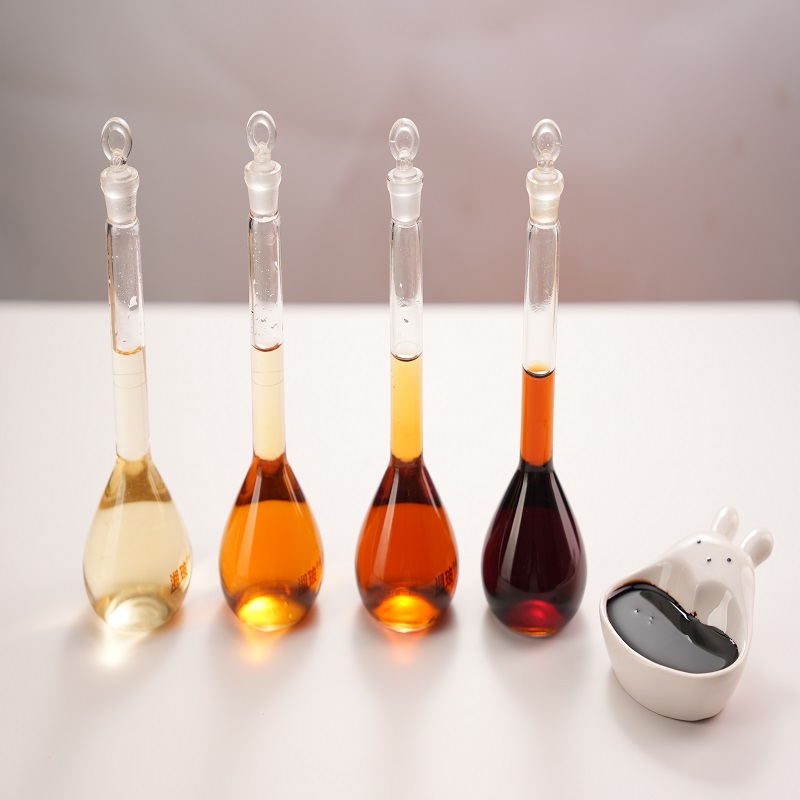
Caramel color strength should be measured only after the laboratory fixes the method, sample basis, concentration, wavelength and optical path. JECFA color intensity uses absorbance at 610 nm for a defined solution and includes a solids basis, while some supplier methods report tinctorial power at 560 nm. Hue index uses measurements at 510 and 610 nm to describe red tone. These values answer different questions, so QA teams should never compare them as if they were interchangeable or use a darker reading alone to approve a material for production.
Decide Which Caramel Color Metric You Need
The phrase caramel color strength is often used loosely. Before testing, define whether the decision requires color intensity, tinctorial power, hue index or finished-product color. Each metric has a different job.
| Metric | Typical measurement inputs | Decision supported |
|---|
| Color intensity | Defined caramel-color solution, 610 nm, controlled path length and solids basis | Compares absorbance under the named specification method |
| Tinctorial power / color strength | Supplier-defined concentration, commonly 560 nm and a 1 cm path | Compares lots or grades only when the same method is used |
| Hue index | Absorbance relationship involving 510 and 610 nm | Describes relative red character under the named calculation |
| Finished-product color | Actual formula, process, pack and chosen instrument/color space | Decides whether the application target is met |
The JECFA specification defines color intensity at 610 nm. A supplier’s technical FAQ separately describes tinctorial power at 560 nm and hue index as a function of absorbance at 510 and 610 nm. Record the source and method identifier beside every value.
Build a Controlled Spectrophotometer Method
A reliable method begins before the instrument is switched on. Approve an SOP that fixes sample conditioning, concentration, basis, diluent, mixing, clarification, temperature, cell path length, blank, wavelength, calculation and replicate rule. If any one of these changes, the new value may not be comparable with historical data.
Use clean matched cells and inspect them for scratches, fingerprints and bubbles. Confirm wavelength and photometric performance through the laboratory’s calibration and verification program. Prepare fresh diluent and use it as the reference blank. Homogenize the caramel-color sample before subsampling, but avoid introducing foam.
Dark samples can exceed the instrument’s useful absorbance range. Do not solve that problem by making an undocumented dilution. Use the approved dilution scheme, retain every factor in the calculation record and verify that the final reading remains within the method’s validated range.
Include a stable control or check sample in the measurement sequence. Plot its result against laboratory warning and action limits so drift is visible before a supplier lot is judged. The control is a monitoring tool, not a substitute for instrument calibration. Define how many preparations and readings are required, how far replicates may differ, and what the analyst must do after a failed blank, control or replicate check. These rules keep an unexpected result from being accepted simply because it falls inside a product specification.
How Should a Lab Measure Color Intensity at 610 nm?
For the JECFA method, color intensity is based on absorbance of a 0.1% weight/volume solution of caramel-color solids in water in a 1 cm cell at 610 nm. The official procedure describes sample preparation, clarification when cloudy, water as the reference and calculation with solids content. Follow the current source method rather than reconstructing the calculation from a supplier brochure.
A practical worksheet should capture:
- sample name, supplier code and lot;
- sample mass and measured or referenced solids content;
- flask volume, diluent and all dilution factors;
- cell identifier and 1 cm path length;
- instrument ID, method version, wavelength and blank;
- replicate absorbance readings and the approved calculation;
- analyst, date, review and any clarification step.
If the solution remains cloudy after the procedure’s permitted clarification step, record the event. Scattering can raise apparent absorbance and make the result unsuitable for a clean comparison. A repeated preparation is more defensible than editing an outlying number without cause.
How Is Tinctorial Power at 560 nm Different?
Many commercial documents use tinctorial power or color strength at 560 nm. The Sethness Roquette FAQ, for example, describes absorbance of a 0.1% weight/volume solution in water through a 1 cm light path at 560 nm. That is useful as an example of a supplier method, not a universal replacement for the JECFA 610 nm definition.
When two TDS or COA documents report caramel color intensity, check the wavelength before comparing values. Then check whether the concentration refers to product as supplied or caramel-color solids, whether the sample was clarified, and whether a correction or conversion was applied. A 560 nm number and a 610 nm number can both be valid within their own systems while remaining unsuitable for direct ranking.
Procurement should ask for the method, not only the specification range. QA should confirm equivalence experimentally before migrating historical acceptance limits to a new method or supplier.
How Should a Lab Measure and Report Hue Index?
Caramel color hue index describes red character rather than darkness alone. The technical source above states that it is a function of absorbance at 510 and 610 nm. Because calculation conventions and sample bases can differ, the approved SOP must name the equation, concentration, path length, blank, dilution and rounding rule.
Measure both wavelengths from the same prepared solution whenever the method requires it. Do not prepare separate uncontrolled dilutions for A510 and A610. Confirm that neither reading falls outside the instrument’s validated range, then apply the locked calculation. Report the result with the method version and the two underlying absorbance readings so another reviewer can reproduce it.
Higher or lower hue index should not be labelled “better.” The useful value is the one that matches the finished-food appearance target while remaining compatible with the formula and process. A buyer comparing suppliers should first establish method equivalence, then set an application-relevant acceptance band.
What Causes Misleading Caramel Color Measurements?
Most bad comparisons arise from sample preparation and metadata, not from the final arithmetic. Investigate these common causes:
- wrong concentration or an omitted dilution factor;
- as-supplied mass compared with a solids-basis method;
- cloudy solution, suspended particles, bubbles or foam;
- stained, scratched or unmatched cells;
- different path lengths, wavelengths or bandwidth settings;
- temperature-driven handling differences in a viscous liquid;
- inadequate sample homogenization before subsampling;
- blank drift, instrument verification failure or transcription error;
- rounding a result before the final calculation;
- comparing methods with different equations or reporting bases.
Use duplicate preparations to separate preparation variability from instrument repeatability. A single repeated read from the same cuvette does not test whether the sample was weighed, diluted and clarified correctly.
Before a numerical limit is placed in an incoming specification, estimate method precision with representative liquid or powder samples and trained analysts. Set the rounding rule and guard-band decision in the SOP. If the laboratory cannot distinguish routine analytical variation from a true lot shift, use the result as a trend indicator while the method is improved rather than as a hard release line.
How Should QA Use the Results for Supplier Approval?
Instrumental values support three different decisions. Incoming QC can check whether a lot meets the agreed method and range. Procurement can compare candidates after method equivalence is established. R&D can choose a starting trial level, then validate the finished product under the real process and storage plan.
Do not convert color strength directly into a universal dosage. Two materials with similar intensity can differ in hue, clarity, charge, handling and application response. Use the lab result to set a controlled trial range; use the actual food to decide acceptance.
Keep the broad class decision with the guide to choosing the right caramel color and use the acidic-formulation troubleshooting guide when haze or sediment appears. Discuss your caramel-color test method and application acceptance criteria with our technical team.