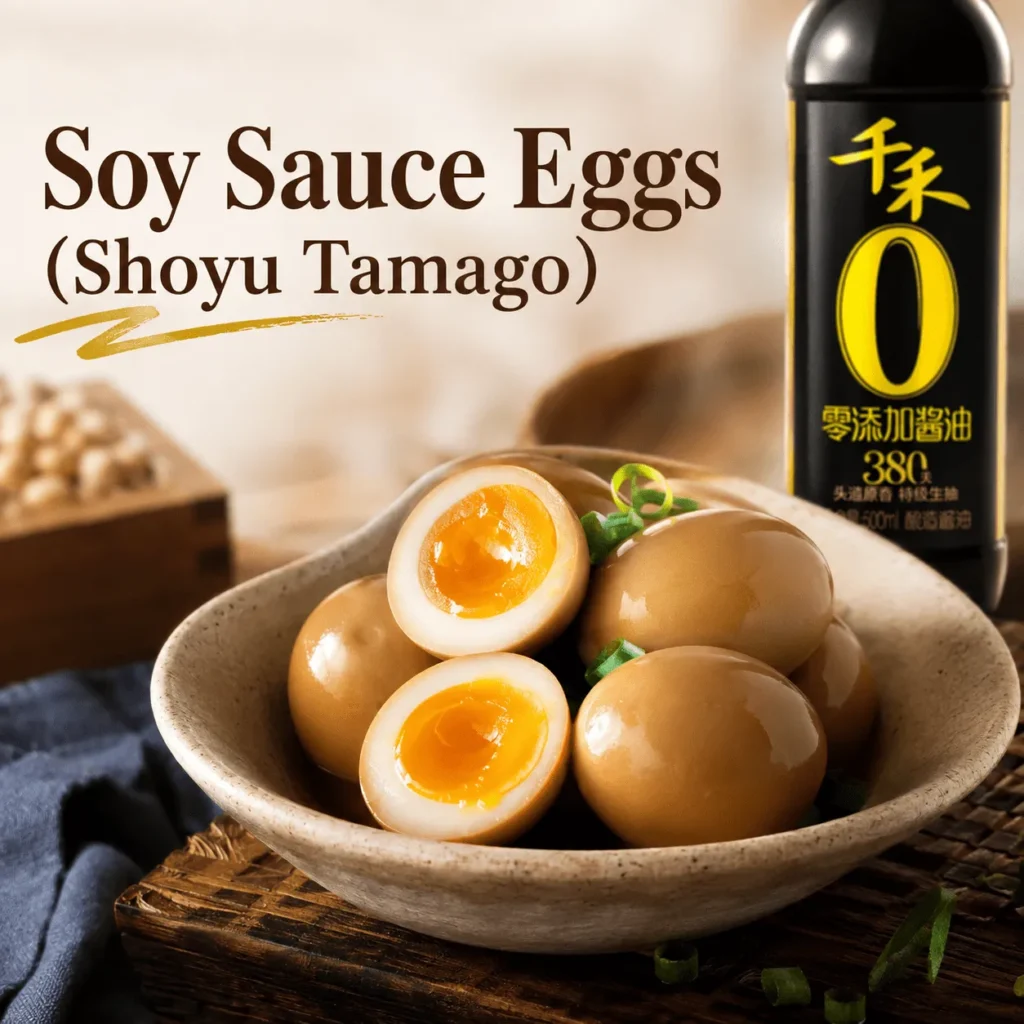
Soy sauce eggs are cooked eggs marinated in a chilled mixture of soy sauce, water, ginger, and a little sweetness until the outside turns amber and the yolk becomes creamy and savory. They are easy to make ahead, lovely over rice or noodles, and even better when you give the marinade a few hours to work. The key is simple: cook the eggs to the texture you like, cool them quickly, and keep the marinade in the refrigerator.
What are soy sauce eggs?
Often called shoyu tamago, soy sauce eggs are a Japanese-style marinated egg that turns an ordinary boiled egg into a small, deeply savory treat. The whites take on color first. Over time, the yolk picks up a gentle saltiness and the scent of whatever you put in the marinade: ginger, garlic, scallion, chili, citrus peel, or a little toasted sesame oil.
They are delicious as a ramen topping, but you do not need a bowl of noodles to enjoy them. Put one over warm rice, tuck it into a lunch box, slice it into a salad, or serve it beside roasted vegetables and a simple soup.
Ingredients for 6 soy sauce eggs
- 6 large eggs
- 1/2 cup soy sauce
- 1/2 cup water
- 1 to 2 teaspoons sugar, honey, or mirin, to taste
- 2 thin slices fresh ginger
- 1 scallion, lightly crushed
- Optional: a small clove of garlic, a strip of orange peel, or a little chili
Use a soy sauce you enjoy tasting on its own. A general-purpose brewed soy sauce makes a balanced marinade. If you use a darker or thicker sauce, dilute it a little more so the egg stays savory rather than overwhelmingly salty.
How to make soy sauce eggs
- Make the marinade. Stir the soy sauce, water, sweetener, ginger, and scallion in a clean container with a lid. Taste it. It should be savory and a little rounded, not painfully salty.
- Cook the eggs. Lower the eggs gently into simmering water. For a jammy center, many cooks use roughly 6 to 7 minutes; for a firmer yolk, cook longer. Timing changes with egg size, starting temperature, and your preferred texture.
- Cool and peel. Move the eggs to cool water, then peel carefully once they are comfortable to handle.
- Marinate cold. Add the peeled eggs to the chilled marinade. Make sure they are mostly submerged; a small piece of clean paper towel laid on top can help keep the exposed surface from staying pale.
- Wait, then taste. Marinate for at least 2 hours. Four to 8 hours gives a deeper color and flavor. For a very intense egg, leave them overnight in the refrigerator.
How long should soy sauce eggs marinate?
Two hours gives you a light soy aroma and a delicate amber edge. Around 6 hours brings a more balanced savory center. Overnight makes the white darker and more intensely seasoned. There is no need to chase the darkest possible egg: a shorter marinade often lets the yolk taste creamier and more egg-forward.
If you like a gentler flavor, add more water to the marinade or remove the eggs sooner. If you like heat, add sliced chili or a spoonful of chili crisp just before serving rather than making the whole batch too spicy.
Three easy ways to serve them
Over warm rice
Place a halved egg over hot rice with scallions, toasted sesame seeds, and a few drops of the marinade. Add quick cucumber pickles or steamed greens for a full, relaxed meal.
With ramen or noodle soup
Slice the egg just before serving and set it on top of the noodles. The yolk enriches the broth while the soy-scented white brings a little extra depth. This is also a good reason to explore Asian cooking essentials when you are building a pantry for soups and noodle bowls.
In a quick snack plate
Serve soy sauce eggs with cold noodles, sliced avocado, blanched greens, or toast. A squeeze of lime, a little chili oil, or a crisp cucumber salad keeps the rich yolk feeling bright.
Small changes that make the recipe your own
- For a more fragrant marinade: add ginger, garlic, star anise, or a small piece of citrus peel.
- For a softer salty edge: use more water and a touch more mirin or sugar.
- For a deeper, roastier flavor: use a little dark soy sauce alongside regular soy sauce, but do not let it dominate the mix.
- For a sesame finish: add toasted sesame oil only when serving; a few drops go a long way.
Not every dark soy sauce works the same way in a marinade. If you want to understand its color-first role, see our dark soy sauce guide. For this recipe, a balanced soy sauce is usually the easier starting point.
Food-safety note
Keep soy sauce eggs refrigerated during marinating and storage. Do not leave cooked eggs out at room temperature for an extended time. The USDA advises refrigerating hard-cooked eggs within two hours of cooking and using them within one week; follow any stricter local food-safety guidance that applies where you live. For the best texture, make a small batch and enjoy it while the yolks are still creamy.
Soy sauce egg questions, answered
Can I make soy sauce eggs with hard-boiled eggs?
Yes. A firmer yolk will still absorb the marinade beautifully. Jammy eggs are popular because their creamy centers contrast nicely with the salty-sweet white, but the recipe works with the texture you prefer.
Can I reuse the marinade?
For a home batch, it is safer and simpler to make fresh marinade for the next batch. It takes only a minute to stir together, and fresh aromatics taste brighter.
What soy sauce should I use?
Choose a balanced soy sauce you like on rice or noodles. A regular brewed sauce is a flexible choice; use dark soy sauce only as a small supporting note if you want more color. You can browse Qianhe soy sauce for a general introduction to the category.
A small batch worth making again
Soy sauce eggs are one of the easiest ways to turn a few eggs into something that feels special. Start with a simple cold marinade, give the eggs enough time to soak up flavor, and serve them where a little salty, silky richness will make the meal better. Once you make a batch, you may find yourself planning the next bowl of rice around it.
Food-safety reference: USDA Food Safety and Inspection Service: Shell Eggs from Farm to Table.