When procurement compares caramel color suppliers, the lowest quoted price is not necessarily the lowest manufacturing cost. The useful comparison is the amount your plant spends to produce one accepted batch at the required shade, under the actual formula and process.
Quick answer: Caramel color cost-in-use is the approved cost of obtaining the required finished-product result. It starts with the dosage confirmed by R&D and adds delivered material cost, documented loss, handling, QC, changeover and evidence-based deviation exposure.
A commercial ranking should remain provisional until R&D and QA confirm that the candidates can meet the same color, sensory, stability, process and regulatory requirements. Comparing prices before answering “Can we use it, and how much do we need?” produces a ranking without a controlled technical basis.
Why Price per Kilogram Can Mislead
A quotation answers what one kilogram costs. It does not show what a released batch costs. Different grades can require different approved additions and create different transfer, preparation, inspection or cleaning work.
| Illustrative 1,000 kg Batch | Delivered Price | Approved Addition | Material Cost per Batch |
|---|
| Candidate A | USD 1.20/kg | 35 kg | USD 42.00 |
| Candidate B | USD 1.40/kg | 28 kg | USD 39.20 |
Candidate B has the higher unit price but the lower material cost per finished batch. Handling, documented loss and QC may change the ranking again. The numbers above are calculation examples, not dosage recommendations.
The procurement question should therefore be: Which technically accepted candidate produces the required result at the lowest controlled total cost?
Define the Comparison Boundary First
Only candidates capable of delivering the same finished-product result should enter the same worksheet. A low-priced material that misses the shade, causes sediment or changes the sensory profile is not a lower-cost alternative; it is not technically comparable.
Use the same finished-product target
Set an agreed visual standard or controlled instrumental range, then include sensory, stability and process acceptance. Where CIELAB values are used, record the target and tolerance under the same measurement conditions.
Use the same formula and process window
Control ingredient order, pH, salt or alcohol conditions, heat treatment, holding time, filling and evaluation timing. The candidate should be tested through the real conditions that can affect color development and stability.
Use the same regulatory and customer boundary
Confirm destination-market requirements, customer specifications and product documentation. E150c and E150d identify caramel color classes by manufacturing reactants; the class name alone does not prove that a grade is suitable for a particular soy sauce, beverage or seasoning.
For broader application criteria, review Qianhe’s
guide to choosing the right caramel color. Final selection still requires market review and application testing.
Build a Controlled Cost Worksheet
Define every input before entering numbers. Each line needs a definition, unit, time basis, evidence source, owner and approval status. Leave missing data visible rather than filling the gap with another supplier’s figure, a brochure claim or an unapproved assumption.
| Input | Evidence Source | Decision Use | Owner |
|---|
| Approved addition per batch | Signed formula and application trial | Material requirement | R&D / Production |
| Comparable color performance | Current specification or controlled test | Trial screening only | R&D / QA |
| Documented process loss | Reconciled trial or production record | Adjusted requirement | Operations / Finance |
| Delivered cost basis | Quote, freight, duty and Incoterm | Material and logistics cost | Procurement |
| Handling and conversion | Time study or approved standard cost | Internal processing cost | Operations / Finance |
| QC and qualification | Approved sampling, test and change plan | Routine and one-time cost | QA / Finance |
| Deviation or rework exposure | Controlled history or approved scenario | Sensitivity analysis | QA / Finance |
Keep mass, volume, currency, batch size and review period consistent. If a supplier quotes per liter but production doses by kilogram, use documented density for the selected grade at a stated condition—not an approximate value borrowed from another product.
Separate recurring production cost from one-time qualification cost. Trials, stability work and first-change approval should remain visible without making the first batch look like the permanent steady-state cost.
Use Color Intensity to Plan Trials, Not Approve a Substitution
A strength ratio can help R&D choose an initial laboratory set point only when the method, wavelength, dilution, solids basis, sample preparation, cell path length and reporting units are comparable.
Screening addition = reference approved addition × reference strength ÷ candidate strength
This is not an approved replacement ratio. Hue, matrix interactions, pH, salt, alcohol, heat processing and storage can produce different finished-product results even when two headline values appear similar.
Method check: JECFA and EU specifications define caramel color intensity using the absorbance of a 0.1% (w/v) solution of caramel color solids in water, measured in a 1 cm cell at 610 nm. Record the method with the value; do not compare a number without its basis.
The candidate must still pass the actual formula, process and packaging sequence. If it misses the predefined color, sensory or stability result, the screening calculation does not make it commercially equivalent.
Calculate Cost-in-Use per Finished Batch
Start with approved material cost
Material cost per batch = delivered cost per kg × approved addition in kg
Use only the dosage approved for the specific formula, process, batch size and release criteria. State whether it is a target, operating range or measured average.
Adjust only for documented loss
Adjusted requirement = approved addition ÷ (1 − documented loss fraction)
Define the loss boundary consistently. It may include measurable container residue, transfer hold-up, spillage or purge. If evidence is limited, show a clearly labeled sensitivity range instead of entering an arbitrary “safety” percentage as actual cost.
Add only the costs that change with the candidate
Total cost-in-use = material + delivery/storage + handling/conversion + QC/changeover + approved loss or rework exposure
- Delivered material: ingredient price, freight, duty, insurance, unloading and receiving terms.
- Plant handling: pumping, powder charging, pre-dissolution, screening, line clearance and cleaning.
- Quality work: incoming tests, finished-product tests, change monitoring and qualification amortization.
- Risk scenarios: only approved probability and impact data—not assumed savings from a supplier presentation.
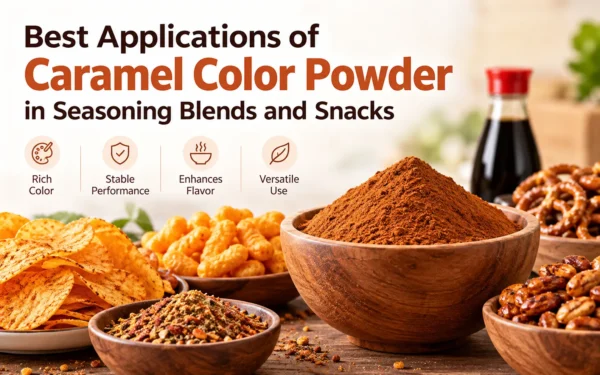
Liquid and powder may create different handling, residue, dust-control and preparation requirements. Review the verified
caramel color liquid and
caramel color powder information, then calculate the operating differences in your own plant.
Use Three Gates Before Recommending a Supplier
Gate 1: Technically acceptableThe candidate passes predefined formula, color, sensory, process and stability criteria in controlled trials.
Gate 2: Commercially comparableThe worksheet uses approved dosage and consistent delivered-cost, loss, handling and QC definitions.
Gate 3: Approved to implementSpecifications, COA basis, change control, training, release plan, retain samples and customer actions are complete.
The lowest worksheet result cannot rescue a failed trial. Likewise, a technically acceptable candidate should not be called “lower cost” while critical freight, loss or qualification inputs remain unknown.
Present the Decision and Review Actual Results
Show candidates in columns and controlled inputs in rows. Keep the source revision, date, unit, owner and status beside every value. Decision-makers should receive four distinct views:
- Validated base case: approved addition and confirmed recurring cost.
- Low and high cases: reasonable ranges for dosage, loss, exchange rate or another sensitive driver.
- Unknown-input case: critical gaps remain visible and commercial ranking stays on hold.
- Qualification view: trials, testing, changeover and approval work remain separate from steady-state cost.
State which variable can change the ranking. A small shift in approved dosage may matter more than a unit-price discount; in another plant, freight, residue, preparation time or cleaning may be the sensitive line. Sensitivity analysis should tell the team what evidence to collect next.
Replace assumptions after implementation
At the agreed review point, update the model with actual receiving cost, addition, issued and returned quantity, residue, handling time, QC activity and deviation records. Keep the original model and approval trail so the team can explain why the decision changed—or remained valid.
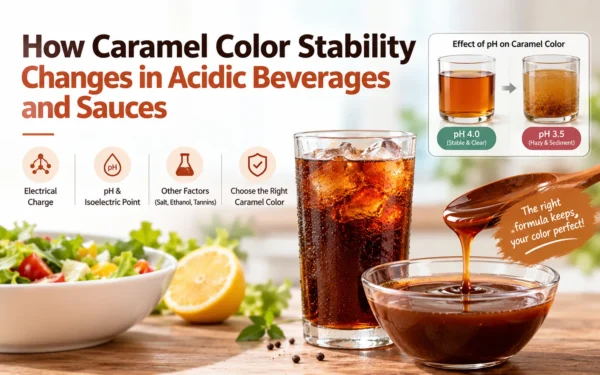
Buyers working on acidic drinks can review Qianhe’s beverage caramel color application page. Sauce and high-salt projects can start with the caramel color for seasonings page. Both routes still require product-specific testing.
Frequently Asked Questions (FAQ)
No. Approved dosage, delivered cost, plant loss, handling, QC and changeover can reverse the price-only ranking. Compare total cost per accepted finished batch.
Only as a laboratory screening start point when methods and reporting bases are comparable. Final dosage must be approved in the real formula and process.
No. The class identifies the manufacturing-reactant system. Suitability also depends on market requirements, customer specifications, formula interactions and application trials.
Keep the value visibly unknown and collect reconciled trial data. If an early view is required, use a documented sensitivity range and label it as a scenario—not actual cost.
Share the food or beverage matrix, target shade, pH and relevant salt or alcohol conditions, heat process, batch size, current format, destination market and expected purchase volume.
Conclusion: Compare the Cost of an Accepted Finished Batch
Caramel color procurement should not end with the smallest number on a quotation. A defensible decision identifies the technically accepted candidates, approved cost basis, unresolved sensitivities, implementation controls and review date.
The final question is simple: Under the required market, formula, process and release conditions, which candidate can repeatedly deliver an accepted finished batch at the most controlled total cost?
Technical references:
FAO/JECFA Caramel Colours specifications and
EU Regulation No 231/2012. This article is a procurement and technical-communication guide, not a universal formulation, dosage or regulatory approval.