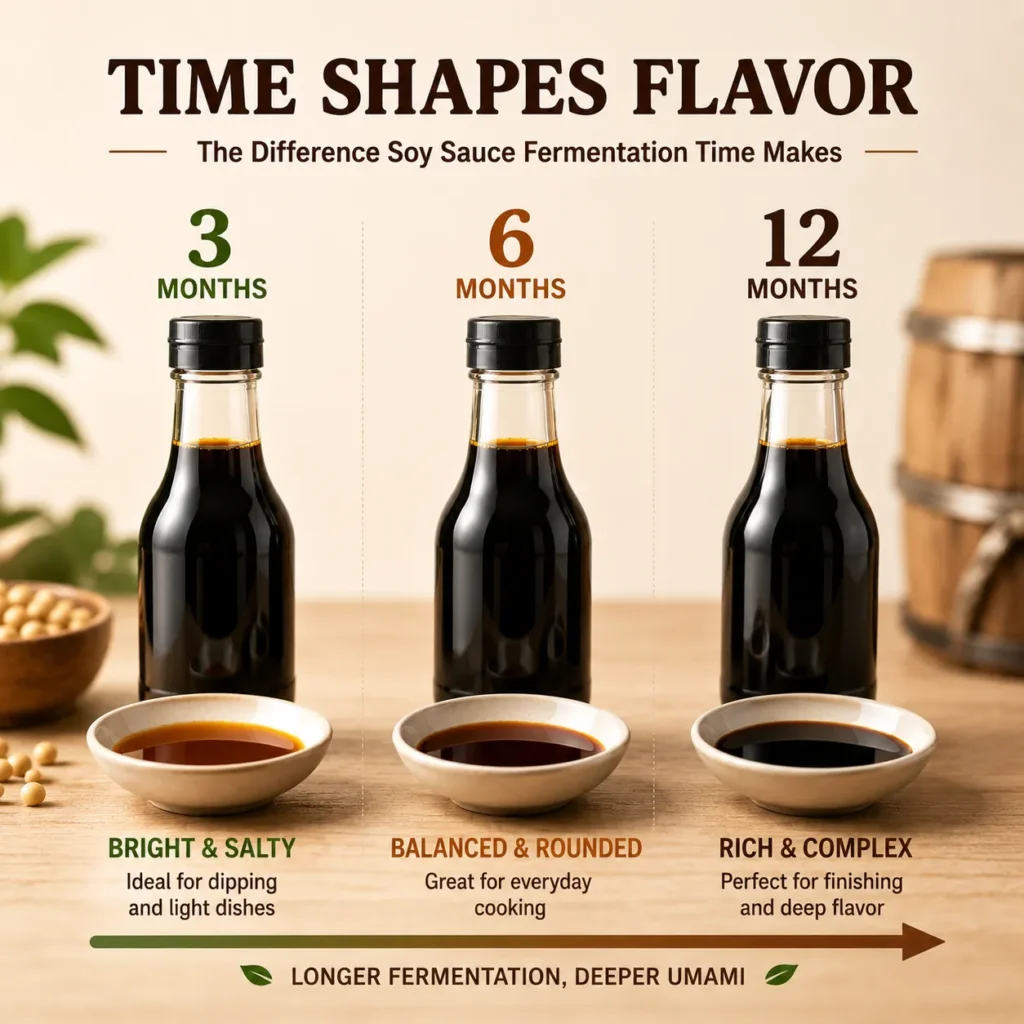
Any nicely bottled soy sauce has a tale to tell that is invisible to the naked eye. Simply put, the elements such as soybeans, wheat, water, and salt are affected in a fascinating way by the time. To some extent, the length of the fermentation time is the most important aspect of the whole process. It could last for 3 months, 6 months, or even 12 months. This time is what truly shapes the final taste, smell, and color of the product. The aging process changes the flavor from sharp and salty to deep and rich umami. This proves the real philosophy of soy sauce aging to be.
The flavor differences between 3, 6, and 12-month soy sauce are not magic. They come from exact scientific changes. To understand how time shapes flavor, we need to know about the microbes at work.
The First Transformation
The journey starts with koji. This is a starter culture. It comes from roasted wheat and steamed soybeans mixed with a special type of mold. This special type is called Aspergillus oryzae. Over the course of a few days, the mold grows out of control. It starts to release enzymes that are very strong.These enzymes are very much like small keys as they have the ability to open up the full potential of food ingredients. They break down complex proteins in soybeans into smaller units called amino acids, which create umami. Enzymes catalyze the reaction of glycogen and starch in wheat to produce monomeric sugars. These sugars will provide sweetness during later steps. They also play a role in the formation of the aroma.Moromi
As the koji reaches the right stage of fermentation, it undergoes a process of blending with salt and water which results in the formation of moromi mash. In this process, new microbes come to play. They are the lactic acid bacteria and yeast. This is where the real flavor symphony begins.Lactic acid bacteria make organic acids. These give soy sauce a nice tangy taste. They also help preserve it. Yeast consumes simple sugars that the koji made. It produces a small amount of alcohol. It also makes hundreds of aromatic molecules called esters. These esters are the ones that create the rich and fragrant smell of well-aged soy sauce.The Evolution of Metabolites
The moromi ferments for months. During this time, the chemical makeup inside the tank keeps changing. Recent studies prove that clear Changes in metabolite profiles happen as fermentation time increases. These “metabolites” are the compounds we taste and smell.In the early months, the flavor is sharp. Salt dominates. As time passes, key amino acids like glutamic acid rise steadily. Glutamic acid creates umami. Yeast eats the sugars. The sharp, raw notes become milder. New, complex aromatic compounds form. This creates flavor that is deeper and more integrated. It becomes very savory. This scientific change is how time shapes flavor in soy sauce.
The philosophy of soy sauce aging becomes clear when you taste it. The flavor differences between 3, 6, and 12 months are distinct. Here is a practical guide to what you can expect at each stage.
The 3-Month Mark
Three-month fermented soy sauce is still in its young stages. Its taste is sharp and direct. The most prominent characteristic is saltiness. It’s excellent when you want a straightforward, salty kick. Color or complex aroma does not take this type of soy sauce very much. It is for simple dipping sauce or light vegetable stir-fry.At the Half-Year Mark
Six-month fermented soy sauce has achieved a great milestone. The flavors have had the opportunity to evolve and intertwine. The initial strong saltiness has dulled. In place of that, it’s also got some umami and aroma of the spices. This is a valid model for high-quality, multifunctional soy sauce. It is a good fit for marinades, stir-fries, and general seasoning.The One-Year Summit
The soy sauce after a 12-month fermentation process has acquired a distinctive multiplicity. The hue is mostly dark with deep shades. The consistency is slightly thicker. The fragrance is intense with a malty note. There are moments when it even resembles the taste of sherry or caramel. The taste is a significant factor here. The seasoning is filled with umami. Saltiness has a more supportive role. This sauce is just for finishing. It is an excellent choice for giving the last touch to a dish. It is also outstanding in the use of richer and darker braises.