Are you a seafood restaurant owner or a chef? Surely, you are accustomed to going through a rigorous process of searching for fish or shellfish that are fresh and of top quality. Besides the top quality of the raw materials, you will also need to prepare meals that will be likeable. Have you thought of the last touch? The soy sauce that you put on the table or add to your dishes is the one that could be ruining your hard work. If you use normal, all-purpose soy sauce instead of a good quality one, it will decrease the quality of your overall seafood dish. This article will provide reasons why a seafood restaurant needs a specialized soy sauce.
Most kitchens use one multi-purpose soy sauce for everything. This may seem easy but it is a big mistake for seafood menus. The first step to understand why seafood restaurants need their own special soy sauces is to find out the defects of generic products.
Drowning Gentle Fish in Bitter Salt
Most kinds of standard soy sauces are designed for general cooking like stir-fries and marinades. These usually contain lots of salt and strong fermented tastes. These are intended to be used with strong ingredients and high cooking temperatures.When this extreme saltiness is combined with tender fluke, sweet scallops, or buttery tuna, the soy sauce doesn’t do much good for the food. It takes the lead completely. The delicate ocean flavors are lost totally. It’s like shouting over a whisper. Your customers taste salt first and seafood second, if at all.The Wrong Kind of Umami
Umami is a kind of savory “fifth taste.” It is important in good soy sauce. But not all umami is the same. The umami in standard soy sauce is almost often broad, earthy, and powerfully intense. This is from the heavy fermentation process.This profile can fight with the clean, bright, oceanic umami in fresh seafood. Instead of working together, you get flavor conflict. The right sauce should work with seafood to create a deeper, more satisfying taste. A well-made sauce complements the natural oils in fattier fish. It creates balance instead of discord.Introducing Displeasing Flavors and Scents
To cut costs and speed up production, some generic soy sauces utilize chemical additives or shortcuts in the brewing process. This can lead to a bitter aftertaste or an overwhelmingly strong, almost “musty” smell.When these unwanted notes are mixed with the clean flavor of high-quality seafood, the whole profile turns out to be muddy and confusing. You risk making your premium fish taste less fresh than it really is.
So what makes a specialized soy sauce the right choice? The secret is in a formula and brewing process designed for one purpose: to make seafood taste even better. This is the main reason why seafood restaurants need specialized soy sauce to truly stand out.
As experts clarify, the dissimilarity between seafood soy sauce and typical soy sauce is that the seafood version provides more layered and mellow umami. This is just what you need for delicate proteins.
The Brewing Process Matters
The best soy sauces are always brewed naturally. This is especially true for seafood uses. The method used to produce the sauce directly affects the final taste.The traditional method, as exemplified by our exceptional High-Salt Dilute Authenticity Brew™, uses a long, patient fermentation process that may extend for months. This process naturally cultivates complex and clean amino acids. They are the chief essential ingredients of umami. This method is devoid of the aggressive, bitter notes which are typically present in rapidly made or chemically processed soy sauces. This patient craftsmanship is the key to achieving that “enhancing, not overpowering” quality, which defines a superior seafood soy sauce.
Investing in a better soy sauce is not just about improving the flavor. It is also an effective business strategy with an unambiguous ROI. For any restaurant proprietor whose outlook for profit and brand reputation in 2026 is great, it is a minor change to introduce with far-reaching results.
Safeguarding Your Major Asset: The Seafood
In a seafood restaurant, the main expenditure on food is the seafood itself. You have to spend extra money to successfully acquire your finest quality fish. Serving it with an incorrect, cheap condiment is akin to putting budget tires on a Ferrari. This, in turn, hurts the performance of your main investment. A specialized soy sauce guards the quality of the expensive protein you serve. It ensures your clients taste the value for the money you spent.Creating a Superior Customer Experience
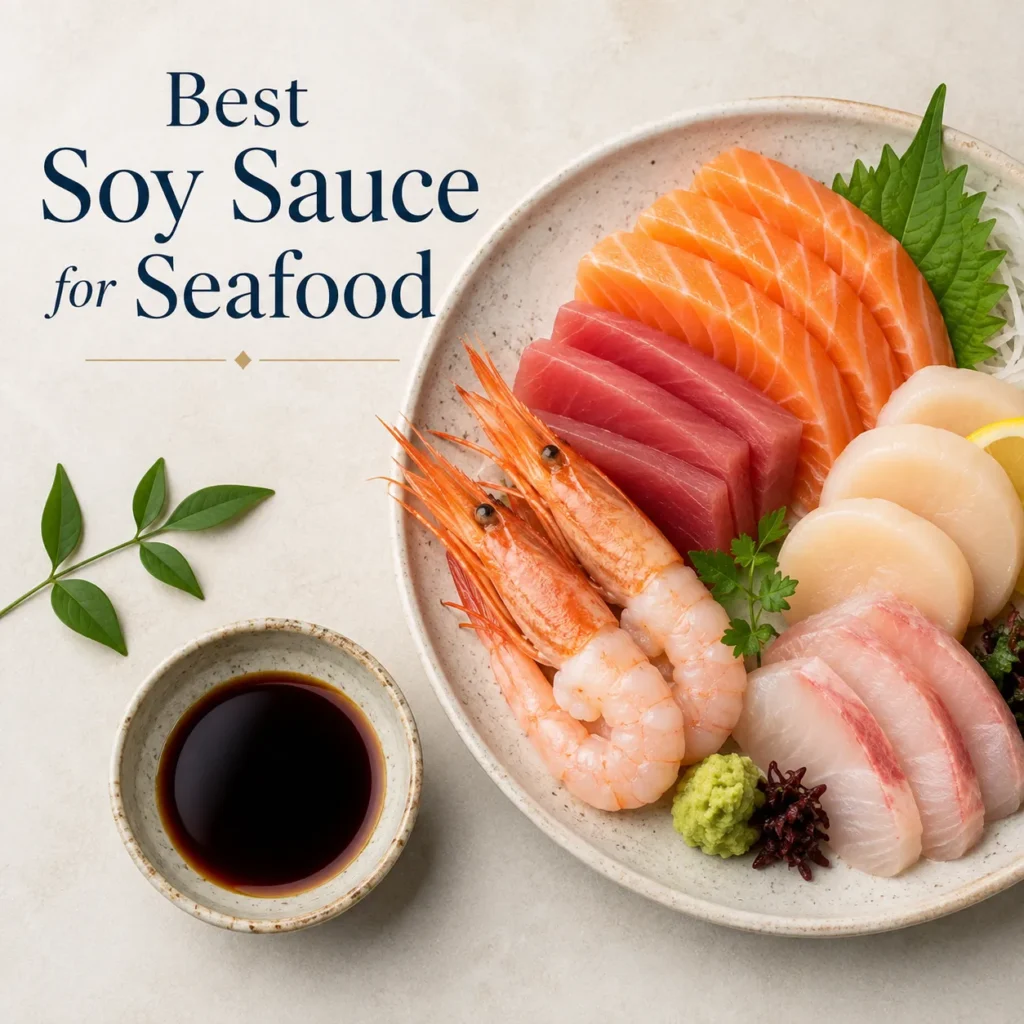
Think from the perspective of the eater. Just picture your client enjoying a slice of wonderful bluefin tuna otoro. With a standard, bitter soy sauce, their first and last taste is salt. The gentle, melting fat and clean flavor of the tuna are not realized.Next, let’s visualize that same bite with the right sashimi soy sauce. At first, they taste the clean, oceanic flavor of the tuna. This is followed by a complementary savory-sweet note that cleans the palate. It makes them want another bite right away. These are the memorable moments that create repeat customers and generate positive reviews.Constructing Your Brand and Justifying Premium Pricing
In today’s competitive market, attention to detail is of utmost importance. When a diner notices that you have given thought to every element on the plate, down to the specific kind of soy sauce, it sends a strong message. This message shows expertise, thoughtfulness, and a commitment to quality.This perception of quality transforms a good restaurant into a great one. It allows you to confidently charge premium prices for your dishes. It creates a powerful brand identity that sets you apart from competitors who cut corners. It shows your expertise not only in cooking seafood but also in presenting it perfectly.
Making the transition is easy as long as you know what to look for. This practical guidance will help you choose and use the right product to elevate your dishes.
To circle back to our main point: why seafood restaurants need specialized soy sauce is simple. A regular soy sauce will cover the taste, while a specialized one will enhance the flavor. This choice is a minor consideration, but it can have a tremendous effect on your dish, your customer’s experience, and your restaurant’s reputation. Don’t let the final touch on the plate be the one that lets your culinary masterpiece down.