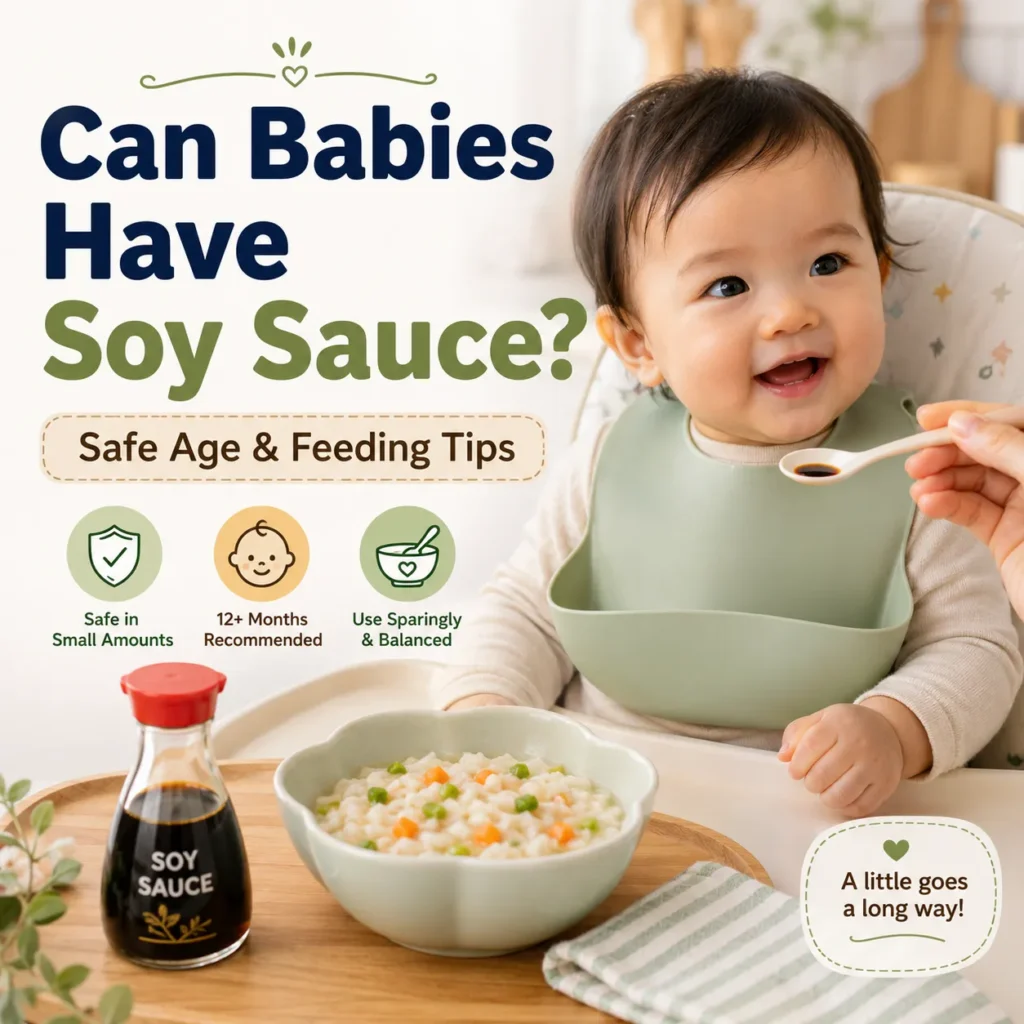
You are introducing new solid foods to your baby. While looking at your plate, you ask yourself if soy sauce is appropriate for your baby? What about the safety of babies to eat soy sauce? This is one of the questions frequently asked by parents.In brief, it can be summed up like this: babies who are aged 6 months and older can have a small amount of food containing soy sauce. However, the majority of pediatricians recommend waiting until after 12 months to directly give it. Even then, you should use absolute minimal amounts. The two main concerns are excess salt and the chance of allergies. This article will provide you with the right age, safety measures, and how to choose a soy sauce that suits your family.
When Can Babies Start Eating Soy Sauce? Age Guidelines and Safety Tips actually depends on two main issues: salt and allergies. They are not the arbitrary regulations to follow but are rather results of the baby’s development process.
The Salt Dilemma: A Bitter Problem for the Little Ones
Baby kidneys are still maturing. They are not capable of filtering huge amounts of salt efficiently yet. This is why we have to be extra cautious.Medical professionals advise that infants below one year of age should consume less than 400mg of salt daily. This is nearly 1g of salt. A single teaspoon of soy sauce usually contains over 300mg of sodium. Even a small amount of soy sauce may exceed a baby’s daily limit.If the little one eats more salt then their taste buds get used to saltier foods. Thus, their food preference is affected later.
When is the Suitable Age for Babies to have Soy Sauce? The Age-Guidelines and Safety Tips given below change depending on your baby’s level of growth.
Toddlers (2+ Years): Moving Toward Balance
When your child has grown into a toddler, the kid can tolerate a little more salt. However, you need to be still careful. The ultimate aim is to maintain a healthy, low-salt diet.These are just a few examples of how soy sauce can be used as a small ingredient in marinades or sauces for the whole family. If you plan on using it as a dipping sauce, remember to dilute it quite a bit. Simply mix one part soy sauce with either three or four parts of water or no-salt broth.Whenever possible, opt for low-salt versions. It is essential to consider the total salt consumed by your child during the day from different foods.
Once you choose to give soy sauce a try, you will find a variety of brands at the store. Being able to differentiate them is the key to making the best and healthiest choice for your family.
Natural Brewing vs. Chemical Making: What’s Different?
There are two primary soybean sauce production methods. Chemical soybean sauce is a quick and inexpensive run. It utilizes acid which is responsible for the breakdown of the soybeans. This procedure may manufacture abrasive and completely bland flavors. Sometimes, it can contain additives such as corn syrup and synthetic colors.Traditionally, soy sauce is made using patience and fermentation. Fermentation can be a process that takes several months. As craftsmen of this art, we are sure that a real flavor takes time. Quality techniques, for instance, the High-Salt Dilute Authenticity Brew™, primarily focus on naturally producing complex, deep umami flavor. It follows that you need less of it to achieve a wonderful flavor. It is really helpful for cooking for the little ones.
It is entirely possible to grasp the boundaries, but it is a different ball game to apply them in a hectic kitchen. Here are some actual tips to do meals exchange safely.
The “Set Aside” Method
This is the simplest and most secure method for infants who are less than a year old. Before you add soy sauce or other high-salt seasonings to a dish, take out a small portion for your baby.For example, cook the vegetables and protein first when making fried noodles. Take out a baby-sized portion of the cooked items. Then add soy sauce to the pan to finish the dish for everyone else. Your baby gets the same food, just without the added salt.The “Watering Down” Technique for Toddlers
Pure soy sauce should never be provided as a dip for toddlers. The flavor and salt are too potent.Instead, toddler-friendly dipping sauce would be the best choice. Combine a teeny tiny amount of soy sauce, no-salt broth, or even applesauce with equal parts of water to balance the taste. An ideal starting point would be a 1:4 ratio (1 part soy sauce with 4 parts liquid).