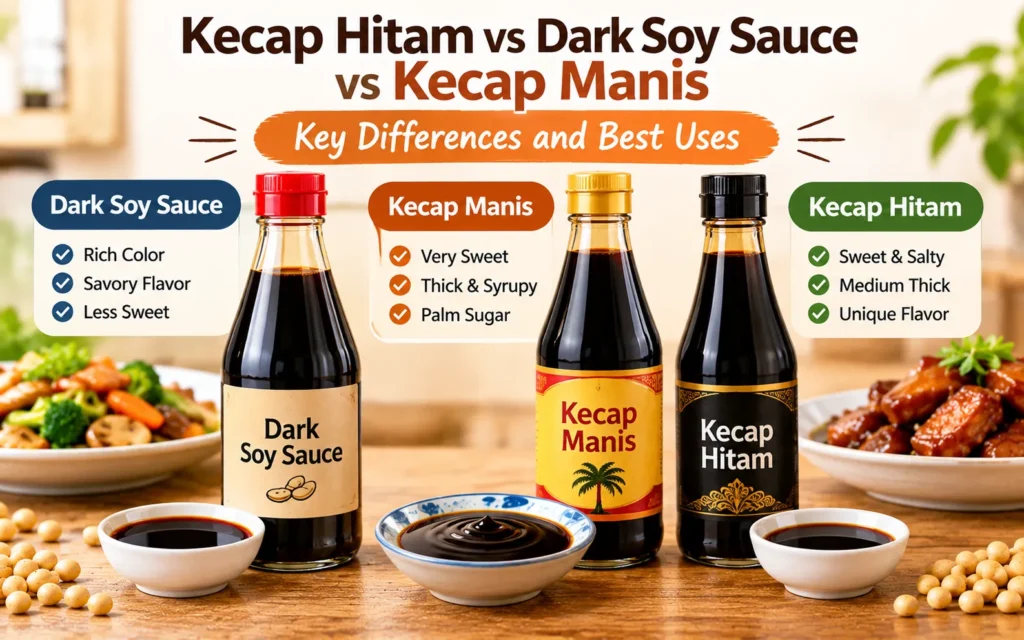
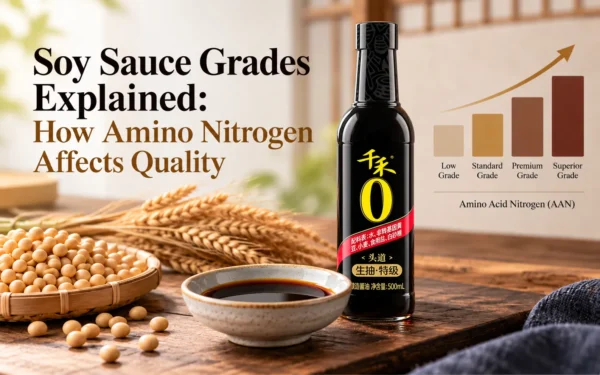
Buying sauces can be a demanding one. You notice the jars showing the labels “Dark Soy Sauce,” “Kecap Manis,” and “Kecap Hitam.” All of them are dark and thick in appearance. Could they be all the same? They aren’t, indeed. This is the guide where you’ll learn the main differences between the three different sauce types, which are the kecap hitam, dark soy sauce and kecap manis. We are a well-established traditional sauce producer with over 30 years of experience. We are going to give you the details on the specific qualities of each sauce along with directives on their practical uses.
Sauces Deconstructed: All About Them, A Close Look
The best way to know the difference between kecap hitam, dark soy sauce, and kecap manis is actually to consider them one by one. Their distinct flavors originate from the different raw materials they use and the processes they undergo to be made.
Chinese Dark Soy Sauce: The Color Expert
Dark soy sauce is one of the essential condiments in Chinese cuisine. It is loved not only for its taste but also for being able to give food an appealing deep brown color.
- Taste: Compared to light soy sauce, it is less salty. The taste is very strong but has a bit of sweetness.
- Base Ingredients: It’s done mostly with soybeans, wheat, salt, and water. Usually, caramel color or molasses is added to create its dark color.
- Look and Feel: The dark soy sauce is thicker than the light version but it still pours out easily. It’s almost like a very dark brown liquid that is hard to see through.
- Manufacturing Process: This special character results from the extended aging process. Over 30 years of experience in sauce production characterize us. We learned that the long fermentation process leads to the unique flavor and dark soy sauce color.
A naturally brewed, low-sodium variant is the best choice for recipes that require that particular color and clean, savory taste. Our Professional Quality Chinese Low Sodium Dark Soy Sauce|Qianhe is made with the “Zero-Additive Heritage Fermentation鈩? process. This process provides the rich color without artificial additives or too much salt.
Indonesian Kecap Manis: The Sweet Soy Sauce
Kecap manis is the most significant part of many Indonesian meals. The name literally means “sweet sauce.”
- Flavor: The taste resembled a very sweet experience with a strong taste of molasses. There is also a hint of the underlying soy sauce flavor that is present in this product which is faintly salty.
- Main Ingredients: The main element in this is soy sauce, but there is also a substantial amount of palm sugar added. This is what gives it its unique flavor and consistency.
- Texture & Look: The sauce appears very dense and sticky. It looks like blackstrap molasses or a thick syrup.
The viscous texture and distinctly sweet flavor are the reasons that it is unlike any other soy sauce. This fact is emphasized in the guide from the pros on Black Soy Sauce and Kecap Manis.
The “Kecap Hitam” Mystery: What It Really Means
The “Kecap Hitam” phrase can create bewilderments. This means “black sauce.” However, which sauce is referred to depends on the specific geographical location.
- The Confusion: In Malaysia and Singapore, “Kecap Hitam” usually means a sauce that is less sweet than Indonesian Kecap Manis. But it’s still thicker and sweeter than Chinese dark soy sauce.
- Flavor: A proper mix of sweet and salty. It’s not as sticky as kecap manis. But it provides color and a distinct taste of sweetness.
- Key Difference: Consider it a transitional product. It is included in dishes that require dark color and some sweetness but where kecap manis would be overly sweet.
From Bean to Bottle: The Process of Making Define the Sauce
What sets apart these sauces is not only the ingredients they are composed of. The way they are manufactured leads to the particular attributes they have. Being a licensed manufacturer, we prioritize the control of the process, which is the key to the quality of the products.
The Purpose of Aging and Sweeteners
The pathway of the soybean to the sauce dictates the eventual flavor, color, and texture.
- Dark Soy Sauce: The highlight is long fermentation. Our revolutionary “Zero-Additive Heritage Fermentation鈩? process employs the time-honored method of brewing. This old-fashioned process builds rich color and multifaceted flavor from the soybeans, which is quite different from merely adding color to immature sauce.
- Kecap Manis: The starting point is a finished soy sauce. This, in turn, is mixed and cooked with an abundance of palm sugar before it is transformed into a thick syrupy condiment in the second cooking stage where sugar is the main flavor.
This profound knowledge of brewing and blending is our hallmark that we’ve mastered during the past thirty years. Hence, we are able to continuously supply high-quality sauces for private label and foodservice partners all over the world.
| Feature | Chinese Dark Soy Sauce | Indonesian Kecap Manis | Malaysian Kecap Hitam |
|---|
| Main Flavor | Savory & Salty | Very Sweet | Balanced Sweet-Salty |
| Sweetness Level | Low | Very High | Medium |
| Saltiness Level | Medium | Low | Medium-High |
| Thickness | Flows easily | Very Thick & Syrupy | Somewhat Thick |
| Main Use | Coloring & Depth | Flavoring & Glazing | All-in-one coloring/flavoring |
| Common Cuisine | Chinese | Indonesian | Malaysian/Singaporean |
In the Kitchen: Best Uses and Swaps
Being aware of the significant differences is a great advantage as it enables you to choose the correct sauce for the specific task. When you use the right one, your dishes will be more palatable and authentic.
Choosing the Proper Sauce for Your Dish
Below are some traditional examples of the ways to use each sauce:
- Dark Soy Sauce is for: Those needing a rich, appetizing color but no too much sweetness. Red-braised pork, soy sauce chicken, and beef noodle soups are its suitable dishes.
- Kecap Manis is for: Sweet and savory flavor, which is the signature of Indonesian classics like Nasi Goreng (fried rice) and Mie Goreng (fried noodles); also it is a must as a dipping sauce for Satay or a glaze for grilled chicken.
- Kecap Hitam for: Malaysians are crazy about Char Kway Teow and Hokkien Mee. Claypot chicken rice and braised dishes also use it to achieve a blend of salty, sweet, and dark color.
Our knowledge of making sauces for worldwide foodservice partners teaches us that Kecap Manis develops a lovely caramel color under the influence of hot air. This is due to the cane sugar being plentiful. This creates an optimal char. On the other hand, high-quality dark soy sauce is less active in the reaction, and so it gives the color more gently. It is less prone to burning in high-heat stir-fries.
A Practical Guide to Swaps
What would you do if you are out of the exact sauce? Although not a full substitute, some swaps can be made in a hurry.
- Kecap Manis Swap: This is the most common swap. Dark soy sauce mixed with a sweetener is the way to go for a similar taste. Basically, it would be like a reverse Kecap Manis.
- Substitute 1/4 cup of Kecap Manis by carefully heating 1/4 cup of dark soy sauce and adding 3 to 4 tablespoons of brown sugar or molasses.
- Heat the mixture on low until all the sugar is completely dissolved and the sauce becomes a little bit thicker.
- After you let it cool completely, you can use it. The sauce will be thicker when it is cooled.
- Dark Soy Sauce Swap: Imitating the color is tough. If you want to change the taste, use regular soy sauce with a slight amount of molasses or dark brown sugar. This brings in added richness and color.
Keep in mind that even though substitutes are great, the outcome will never be precisely the same. The specialists, who have been into cooking for long, highlight that there are numerous kinds of soy sauces. Each of them has its special tasks to perform in Asian-style cooking.
FAQ: Your Questions on Dark & Sweet Soy Sauces Answered
Here are the FAQs we get from both home chefs and professional cooks with detailed replies.
Is Thai black soy sauce the same as Chinese dark soy sauce?
No, they are different. Thai black soy sauce, which is usually on the sweeter side, is more similar to Kecap Manis and has a unique flavor itself. It is always recommended that you check the label for “sweet” (喔抚喔侧笝, waan) or “salty” (喙€喔勦箛喔? kem) to know the exact item you are buying.
Can I use regular soy sauce instead of any of these?
You can use it for the salty part, but you will lose the specific features for each of the above. If you replace dark soy sauce with it, you won鈥檛 get the dark color. If you sustitute it with kecap manis, you will miss the crucial sweetness and the syrupy texture that many dishes are based on.
Do these sauces need to be refrigerated?
Absolutely. As a quality-conscious manufacturer, we advise keeping all soy sauces in the refrigerator once they are opened. This is even more essential for sauces that contain a lot of sugar, such as Kecap Manis because they maintain optimal flavor and retard spoilage.
How do I choose a high-quality dark soy sauce?
In order to find the sauces that you are looking for, it is best to search for labels that are marked with “naturally brewed” or “traditionally brewed” and that contain only a few and simple basic ingredients. Almost all the premium sauces, like the one with the highest Level 0 Clean Label Certification in China, do not have added artificial flavor enhancers and preservatives. Instead, it is the master of fermentation that gives this sauce the fantastic taste and the deep color.
How are kecap manis and tianmianjiang different?
Although they are both thick and sweet, they are not the same. Kecap Manis is a soy-based, syrupy liquid. Meanwhile, the tianmianjiang (sweet bean sauce) is a thick paste that is made using fermented wheat flour and soybeans. It has an earthly and savory flavor, which is quite different from the sugary molasses taste of the kecap manis. These are just a few of the many alternatives to sweet, light or dark soy that have very different culinary roles.