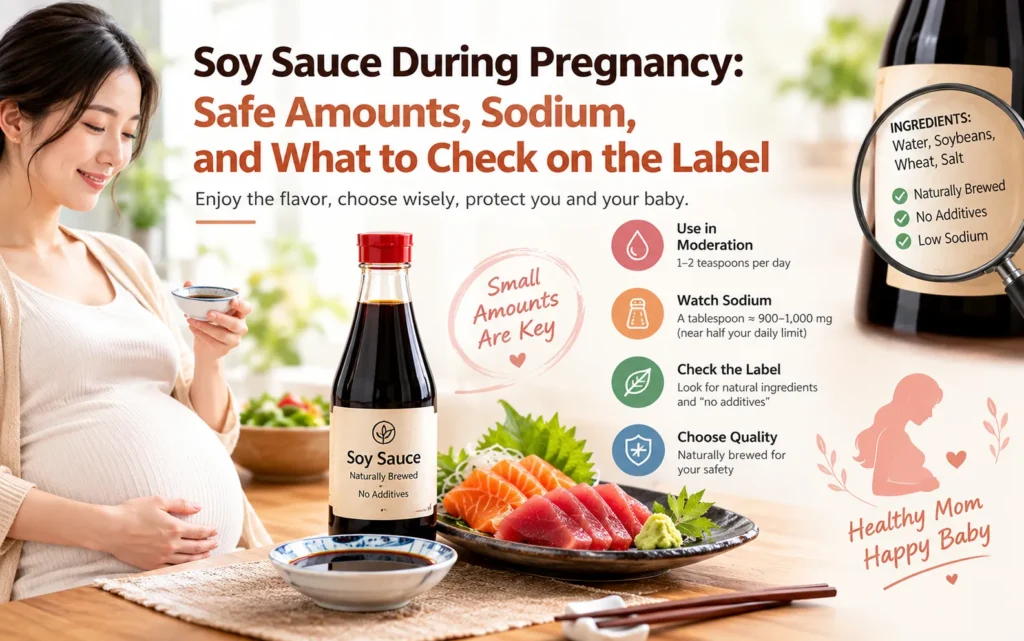
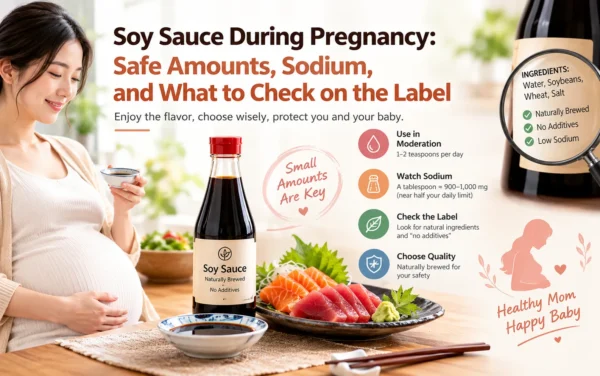
You can eat soy sauce even if you are pregnant. However, it is advisable to use it only in small amounts. The prime factors that you must consider are the sodium content, the quality of the ingredients, and the manufacturing process of the soy sauce. Based on recent health debates, soy sauce during pregnancy is generally safe in regular food amounts. This article will inform you on all the necessary details. You are capable of making the right, healthy decisions for both you and your child. We will discuss the amounts considered safe, sodium contents, and the elements to look for on the label.
Managing Sodium: How Much Soy Sauce is Safe During Pregnancy?
The major concern with soy sauce during pregnancy is its high sodium content. Intake of more than normal sodium can lead to high blood pressure and water retention. Noting these two changes during pregnancy is very important.
Health experts recommend that pregnant women should consume a maximum of 2,300 milligrams (mg) of sodium every day. But as always, it is recommendable to consult your doctor for specific health advice.
A single tablespoonful of regular soy sauce may have between 900 and 1,000 mg of sodium, which is huge compared to the daily limit.
Therefore, you must use it sparingly. Many sources say that a daily intake of about 1-2 teaspoons is often considered advisable. This amount lets you add flavor without eating too much sodium.
A great choice is low-sodium soy sauce. These products may contain up to 50% less sodium than the regular ones. The label will be clear with “Low Sodium” or “Reduced Sodium.”
Beyond Sodium: What Else to Watch for in Soy Sauce
Sodium is a primary focus, but there are also other factors that one needs to be aware of when picking soy sauce in pregnancy.
Allergens
Soy sauce typically has two common allergens: soy and wheat. If you are allergic to either, you should check the label very thoroughly. For individuals with gluten or wheat problems, tamari is a similar product that is usually free of wheat.
Additives and Contaminants
The production process of your soy sauce dictates its purity to a large extent. A considerable number of soy sauces that are widely available on the market are manufactured very quickly with the help of chemical processes.
These kinds often have additives to mimic the color and flavor of a traditionally brewed sauce. Be careful of artificial colors like caramel color. Also watch for preservatives like sodium benzoate and flavor enhancers like MSG on the ingredient list. Chemically produced sauces can also have residues from the production process that are best avoided during pregnancy.
Decoding the Label: A Manufacturer’s Guide to Choosing a Truly Safe Soy Sauce
Having brewed condiments for more than three decades, we have concluded that not all soy sauces are created equal, and the primary factor lies in their manufacturing process. Understanding this difference is the key to choosing the safest and best product for you and your baby.
The Critical Difference: Naturally Brewed vs. Chemically Produced
The way soy sauce is made directly affects its flavor, quality, and safety. There are two main methods: traditional, natural brewing and modern, chemical production.
| Feature | Naturally Brewed (e.g., Zero-Additive Heritage Fermentation™) | Chemically Produced (Acid-Hydrolyzed) |
|---|
| Ingredients | Simple: Soybeans, wheat, salt, water. | Soy protein, hydrochloric acid, additives. |
| Process | Natural fermentation with koji mold. | Rapid breakdown of soy protein using acid. |
| Time | Months to a year or more. | A few hours to a few days. |
| Flavor Profile | Complex, rich, and savory (umami). | Harsh, one-dimensional, and very salty. |
| Potential Concerns | None, if no additives are used. | Potential for 3-MCPD, requires additives for color and flavor. |
A substance called 3-MCPD is a chemical contaminant that can form during high-heat, acid-based food processing. While it’s regulated, it’s better to select products made in a way that avoids its formation. This is especially significant for expectant mothers.
Why a “Zero-Additive” Approach is the Gold Standard for Pregnancy
A truly good soy sauce gets its dark color and deep flavor from the long, slow, and natural fermentation process. It doesn’t rely on fake additives.
This is the idea behind our Zero-Additive Heritage Fermentation™ method. It is a promise for purity and safety that leads to a product you can trust.
For a pregnant woman, this means peace of mind. By picking a zero-additive soy sauce, you won’t need to worry about artificial preservatives, colors, or flavor enhancers. Our pledge to this standard has been confirmed by our China’s first Level 0 Clean Label Certification. This is the highest accolade awarded for products that are free of additives.
Your 5-Point Checklist for Reading a Soy Sauce Label
Follow this easy checklist to gain confidence at the supermarket:
- Check the Ingredient List: Look for a short list: water, soybeans, wheat, and salt. Be careful of long lists with chemical-sounding names.
- Look for “Naturally Brewed” or “Traditionally Fermented”: These phrases indicate a higher-quality, safer method.
- Scan for “No Additives” or “No Preservatives”: This is a strong indicator of purity and a company’s promise of natural quality.
- Review the Sodium Content: If you are managing your sodium intake, choose a bottle that clearly mentions “Low Sodium.”
- Verify Certifications: Look for trusted quality marks. Certifications like HACCP, BSCI, and HALAL show that a manufacturer is adhering to stringent safety, social, and dietary standards.
Practical Tips for Enjoying Soy Sauce Safely and Deliciously
You can easily include soy sauce in your pregnancy diet with just a few simple changes.
Use it as a finishing touch. Drizzle a small amount on cooked vegetables or add it to a stir-fry right before serving. This will help preserve its flavor and help you use less.
Measure your portions. Use a measuring spoon rather than pouring directly from the bottle. This simple habit helps you keep track of your sodium intake.
Make your own sauces. Combining a bit of high-quality soy sauce with fresh ingredients like minced garlic, grated ginger, and a touch of honey can create a tasty, lower-sodium sauce for marinades or dressings.
When dining out, be aware that restaurant sauces are often very high in sodium and may be made of inferior ingredients. Request sauce on the side so that you can control how much you use.
For those seeking a reliable, traditionally brewed option, exploring an authentic, zero-additive soy sauce is a great start. Qianhe offers authentic Chinese soy sauces crafted for purity and flavor, providing a trustworthy choice for foodservice partners and home cooks.
Conclusion: Making a Confident Choice
Enjoying soy sauce during pregnancy is safe if you have the right information. The most important thing is to make the right decisions for the health of you and your baby.
Remember the three-point guideline: use small amounts to keep sodium low, and most importantly, choose a high-quality, naturally brewed product by reading the label. This ensures you get all the flavor with no unwanted substances.
Frequently Asked Questions (FAQ)
Can soy sauce cause the baby’s skin to become darker?
No, this is a widely circulated myth that has no scientific backing. A baby’s skin color is determined by genetics from its parents, not by the foods the mother eats during pregnancy.
Is tamari or coconut aminos a better choice during pregnancy?
Tamari is a great gluten-free alternative to soy sauce but often has a similar sodium level, so you need to watch the amounts you use. Coconut aminos is a soy-free alternative and naturally lower in sodium; however, it has a sweeter taste. The best choice will be based on your dietary needs. For any of these sauces, the rule of checking for additives applies.
What about the small amount of alcohol in naturally brewed soy sauce?
Naturally brewed soy sauce contains a negligible amount of alcohol, typically less than 2%, which is a natural byproduct of the fermentation process. This amount is very minimal, similar to what you might find in ripe fruit juice or bread. When used in small, condiment-sized quantities, it is considered safe during pregnancy.
Are there any benefits to eating high-quality soy sauce during pregnancy?
While it is mainly used for flavor, traditionally fermented soy sauce has some antioxidants. Its main benefit is making healthy foods like lean proteins and vegetables more enjoyable, which can help you maintain a balanced and nutritious diet. The real advantage comes from selecting a genuine, natural product that contains no harmful additives.
Is it safe to eat soy sauce from a restaurant or takeout while pregnant?
It’s generally safe, but it’s better to be cautious. Soy sauce must be consumed in moderation during pregnancy as its high sodium content could lead to water retention or high blood pressure. Sauces served in restaurants are often very high in sodium and may have MSG. If possible, ask for the sauce on the side to control your portion. A small amount will likely not cause any problems.