Foresight in storage maintenance is the way to go. Understanding why you need to store it the right way is key. Caramel color powder is not just a simple ingredient. It is complex and can change without proper handling. These changes hurt how it works in your final product.
The Main Enemy: Moisture and Water-Loving Powder
Caramel color powder is really a water lover. The scientific term for this is “hygroscopic.” This means it attracts moisture from the air. When the powder absorbs water, it starts to form clumps or lumps. This makes it difficult to measure the powder accurately and it does not mix well. When high moisture content is present, the powder may become contaminated, though this is rare.How Heat and Light Hurt Color
Heat and light are energy. When the caramel color powder becomes too hot or is exposed to sunlight, the energy causes complex chemical reactions to occur more rapidly in the powder. This energy leads to the chemical reactions to color fade or change. The nice brown color that you expect may be replaced by a different one month from now. Weird taste can also be the result of these changes.Temperature Control: Cool and Steady Wins
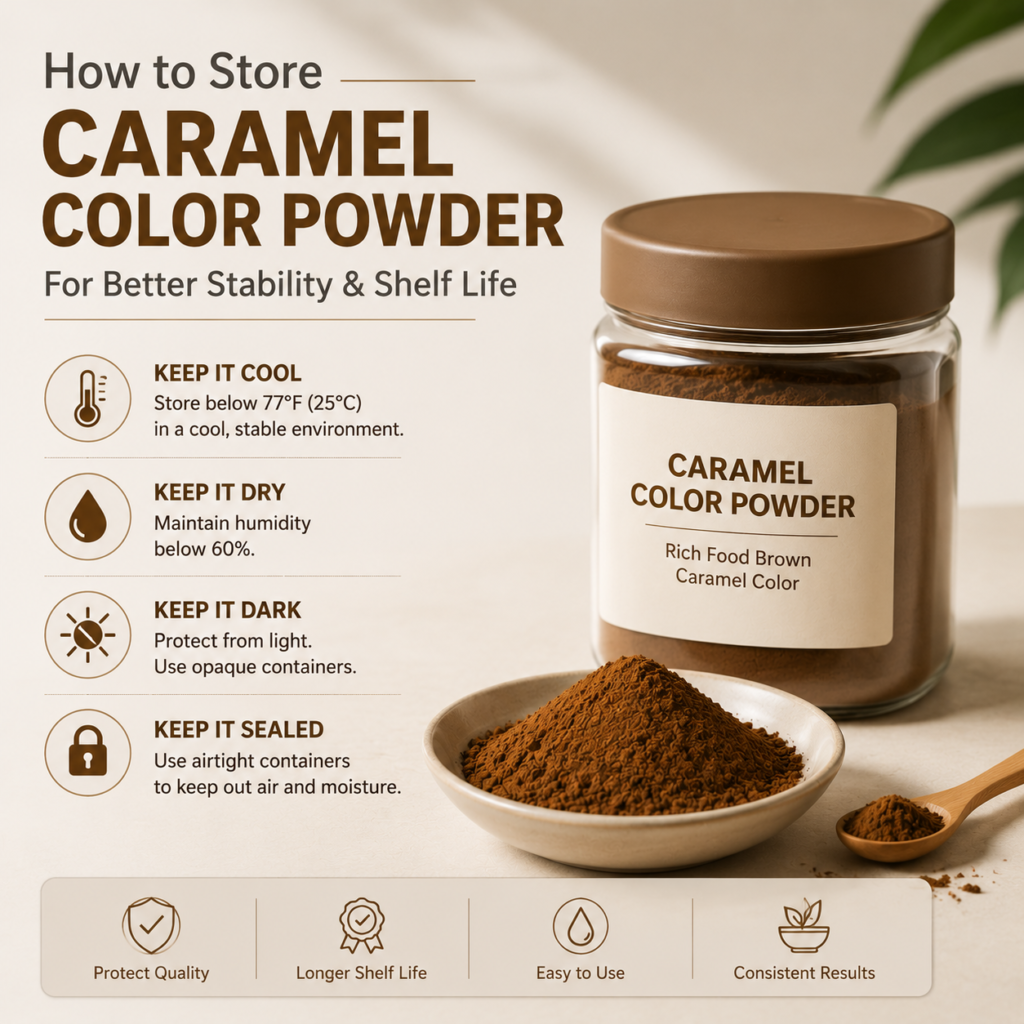
In order to safely store caramel color powder, make sure to find a cool and dry place. Ideally, the powder should be stored at a temperature below 77°F (25°C). It’s also essential to keep the temperature stable, just as it is to keep it cool. Do not keep the powder in places where the temperature fluctuates a lot. Areas where there are no proper heating and cooling facilities like a shed or parts of the building are the worst choice. These variations can create water drops in the container that is just as bad as high humidity.Humidity Management: Maintain Dryness
As caramel powder is fond of moisture, the main aim is to keep the humidity under control. It is best if the humidity is below 60% in your storage area. This means that you should keep the powder away from the steam or water sources. Avoid using dishwashers, sinks, or boiling pots. If you reside in a very humid area, put a food-safe moisture absorber pack inside your storage container. This trick works great.Light Resistance: Hide in the Dark
Direct light, especially sunlight, is harmful to color. UV rays are capable of decomposing the molecules responsible for the color of caramel. Containers that cannot be seen through are a must. Food-grade plastic drums or metal cans are the best options. If using clear containers for smaller amounts is a must, you can keep them only inside a closed and dark pantry or cabinet.Selecting Containers: The Effectiveness of a Sturdy Seal
The right type of container is your basic protection. For products that are not yet opened, the original package is usually the best. It was designed for that purpose so as to protect the powder. Once opened, the powder is best moved to a container with a well-sealed latch. Search for metal or plastic food containers that have gaskets made of rubber in the lid. This is a built-in tight seal which keeps air and moisture out. Basic zip bags aren’t good for longevity in storing. They permit tiny amounts of air to come in with time.
Mainstream storage protocols apply for a majority of individuals. Nevertheless, a small number of workplaces have exceptional burdens to contend with. We provide you with the best suggestions on how to overcome those hardships and truly make your ingredient last longer.
Measures for Very Wet Areas
Strict discipline is essential when working in a humid environment. Establishing a certain area is the best approach. Arrange a small room where the temperature and humidity can be controlled. Install a dehumidifier in the space. The main container is then transferred to this dry area when powder is needed for production. You will be bringing out only the required amount for a single batch. Then, the main container will be sealed tightly before it goes out of the controlled space. This prevents the exposure of the main supply to the air from a humid plant at all.Big Containers vs. Daily-Use Containers
Every time the big 50-pound drum of caramel color is opened and closed, it is exposed to air and humidity. A smarter option is to divide the big supply. Instead of storing the entire large amount in one single container, break it into several smaller ones and keep a few for when they are needed only. This way, you only expose a small amount of powder to room conditions. The main stock remains perfectly sealed and protected.
You could do your utmost best but occasionally problems can arise. Here’s how to spot and solve common issues with how to store caramel color powder.
Problem: My Powder is Caked and Lumpy. Is it Ruined?
If you encounter lumps, then it is obvious that moisture got to it. But it doesn’t necessarily mean that the product is lost. If there have been no bad smells or visible signs of mold, the product is likely still good. You can sift the powder through a fine screen to break up the lumps before weighing and using it. If the powder formed a hard cake, you can break it up. But know that this makes accurate measuring much harder. Most importantly, use this as a warning to improve your storage methods right away.
The trick to ensuring your caramel color powder is good is pretty simple. Adhere to the four main guidelines—keep it cool, dry, dark, and in a sealed container. This way, the ingredient is isolated from its greatest foes. This not only is a very simple action but also has a great effect on you being consistent and dependable in every batch you make in 2026 and after.