The process of transporting premium soy sauce requires thorough prearrangements. Unlike a simple shelf-stable product, this is a highly technical product. It has a rich palette of flavors and a good color but it can be easily damaged. The shipping process can get so bad that it can change the taste, the look, and forever ruin the health of your product.
Transporting soy sauce is much more than just moving boxes. It is a very sophisticated product that is in a sensitive balance. The temperature change will damage it.If the temperature is too high or too low, the taste and color may change. The damage is irreversible.
The first thing is to get a grasp of why a cold chain for soy sauce is needed. The issues are not just limited to regular damage. It’s about the product’s integrity.
Keeping the Delicate Flavor
Soy sauce is a rich flavor that features various taste sensory modalities. This includes umami, sweetness, and saltiness. High temperatures can actually destroy the very compounds that are responsible for those flavors. This is the reason why the soy sauce can taste dull or weird. The balance is well taken care of by a steady cool temperature.Stopping Color and Smell Changes
Heat is also the major contributor to the acceleration of browning reactions. This results in the soy sauce being darker than its original shade. Additionally, a burnt smell may also be noticeable. Keeping the right temperature is the best recipe for maintaining the original color and smell.Reducing Germ and Chemical Risks
Soy sauce is highly saline, which is very effective in preserving it. But, if the temperature is inappropriate, some yeast or mold can still prosper. The problem is even greater for the low-salt version. A proper cold chain is an essential solution to the safety issue.
To master the methods for maintaining soy sauce quality during cold chain transport, you must make yourself familiar with its characteristics. Soy sauce is not comparable to fresh vegetables or frozen foods. It carries its own set of requirements.
Finding the Best Temperature Range
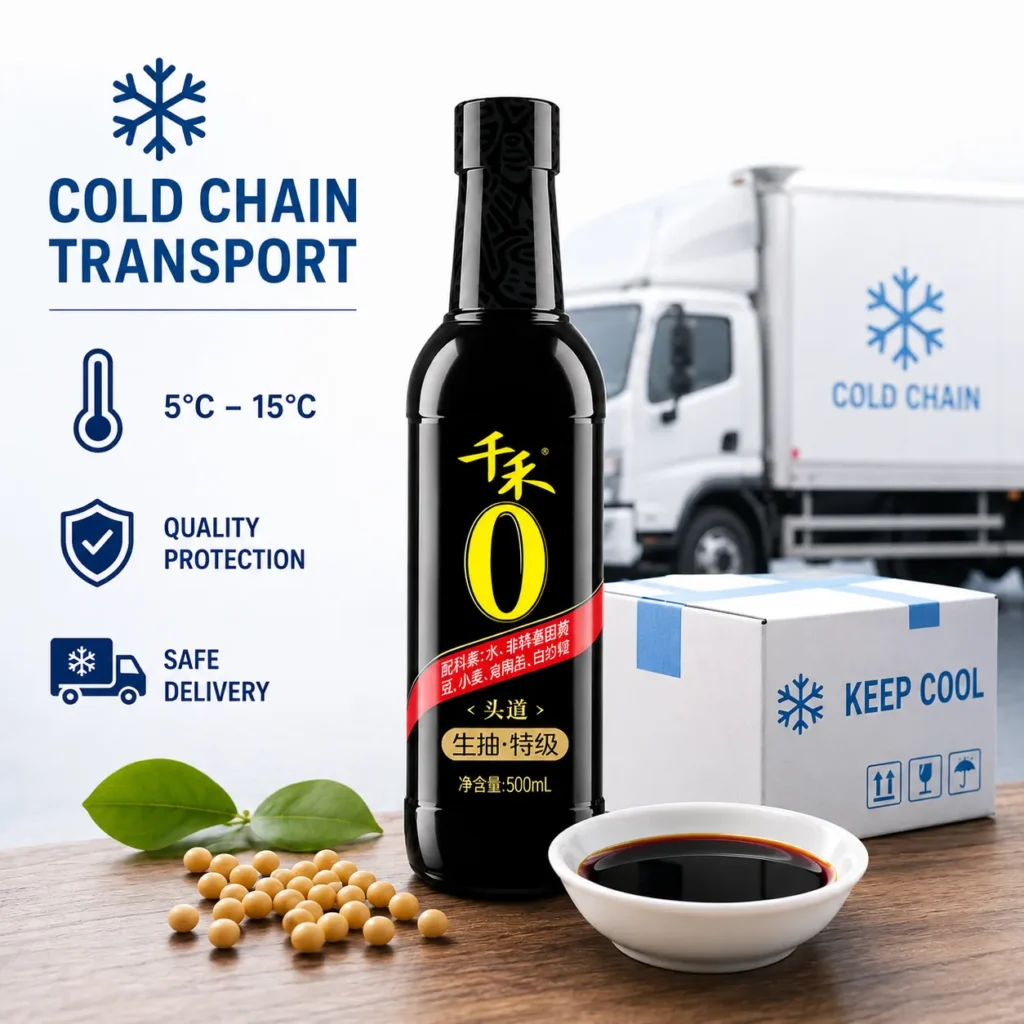
The finest shipping temperature for soy sauce is cool, not frozen. Generally, the most useful temperature range is 5°C to 15°C (41°F to 59°F).The main objective is to take the necessary steps to slow down all chemical reactions. Therefore, the original flavor and color remain intact. You want to do this while not causing any injury from freezing. If a certain amount of salt is present in the solution, it will freeze only at a temperature below 0°C, but very cold temperatures are still a risk factor.The Dangers of Freezing: Salt Crystals and Separation
The process of freezing soy sauce sees the water freezing ahead of time. This leaves a high mix of salt and other parts.During the process of thawing, salt crystals can form. This is one of the most serious quality issues. The parts of the soy sauce can also separate. This can also result in the change in the feeling and appearance of the product.The Impact of Bumps and Shaking
Transportation bumps and shakes are factors. Along with the temperature changes, they can also cause the quality to decrease faster. They can also spoil the bottles, caps, or seals. This results in leaks and contamination.