What is Sashimi Soy Sauce?
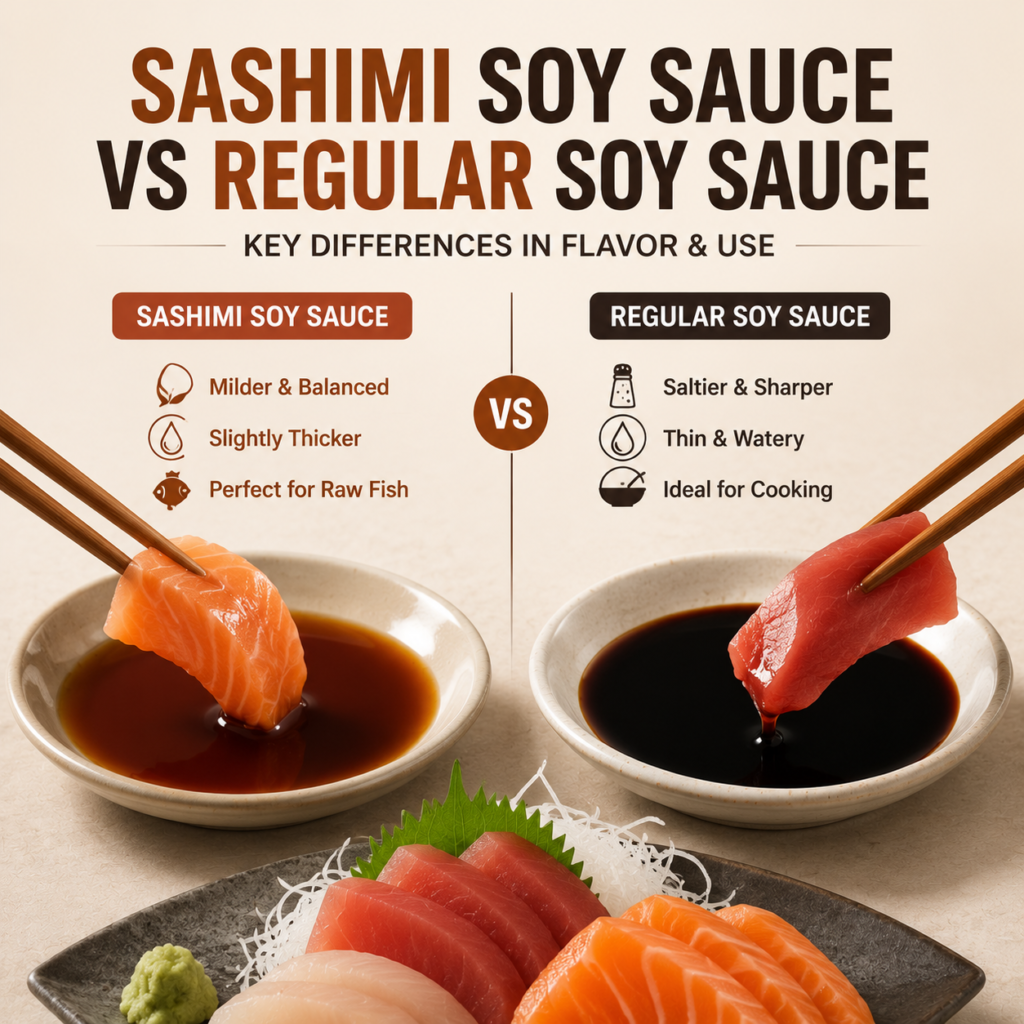
Sashimi soy sauce, or sashimi shoyu, is made with one goal. It complements raw fish. It is not meant to be the star of the show. Instead, it acts as a partner to the delicate taste and texture of high-quality seafood.Its flavor profile is much gentler. The lower saltiness prevents it from “cooking” the surface of the fish. It won’t hide the fish’s natural flavor either.To achieve this balance, it often includes added ingredients like dashi for enhanced umami. Dashi is a broth made from kelp or bonito flakes. Many also contain mirin, a sweet rice wine. This adds a touch of sweetness.This sauce has a slightly thicker and glossier texture. This allows it to cling to the fish perfectly. You get a consistent flavor in every bite without a watery mess. It leaves a clean taste that does not linger.What is Regular Soy Sauce?
When people say “regular” soy sauce in a Japanese context, they usually mean koikuchi shoyu. This is the dark, all-purpose soy sauce found in most kitchens. It is a true workhorse for daily cooking.Koikuchi has a strong, salty flavor and a sharp umami kick. Its thin texture makes it great for marinades, glazes, and stir-fries. It is designed to stand up to heat and blend with other strong ingredients.It’s also helpful to understand the differences between Japanese, Chinese, and Korean soy sauces. For example, Chinese light soy sauce is even saltier. It’s used primarily for seasoning during cooking, not for dipping. Knowing this provides a clearer picture of why using the right sauce matters.
Understanding the flavor and texture differences between sashimi soy sauce and regular soy sauce is one thing. Knowing why they matter is another. The science is simple but has a huge impact on your meal.
The Problem with High Salinity
The high salt content in regular soy sauce creates two problems for sashimi. First, it simply overwhelms the delicate flavors of the fish. You taste salt, not the sweet, buttery notes of fresh tuna or salmon.Second, the salt chemically alters the fish’s texture. Through a process called osmosis, the high concentration of salt pulls moisture out of the fish’s cells. This makes the surface of the fish firm and dense, ruining its prized soft and tender texture.Balanced Umami and Sweetness
Sashimi soy sauce is designed for harmony. The subtle sweetness from mirin and the complex umami from dashi work together with the fish. They lift up the natural sweetness and savory notes of the seafood.This creates a layered and enjoyable flavor experience. It is not a one-note blast of salt. The goal is to make the fish taste more like itself, not to cover it up.Texture and Adhesion
The slightly thicker body of sashimi soy sauce is also intentional. This texture allows it to gently coat a piece of fish, delivering the perfect amount of seasoning without dripping everywhere. A thin, regular soy sauce will run off the fish or soak into your sushi rice too quickly, making it soggy and salty. The better adhesion of sashimi shoyu ensures a clean, elegant bite every time.
Reading about the sashimi soy sauce vs regular soy sauce differences is helpful. But the best way to understand is to experience it yourself. Follow these simple steps to conduct a professional-style tasting at home.
Step 1: The Setup
To truly feel the difference, you need to taste it. Get a piece of high-quality, fatty fish like tuna (maguro) or salmon (sake). You will also need your regular all-purpose soy sauce and a quality sashimi soy sauce.Step 2: The Regular Soy Sauce Test
First, pour a small amount of regular soy sauce into a dish. Dip just a corner of the fish into it. Pay close attention to the first sensation in your mouth. You will likely notice a sharp, immediate hit of salt.Ask yourself: Does it overpower the fish’s natural flavor? Can you still taste the subtle notes of the seafood? Observe the texture. Does the part you dipped feel a bit firmer than the rest?Step 3: The Sashimi Soy Sauce Test
Now, cleanse your palate with a sip of water or a piece of pickled ginger. Try the same test with the sashimi soy sauce. Notice how the flavor is more rounded and less aggressive.You should be able to taste the fish first. A complementary wave of savory umami and a hint of sweetness should follow. The sauce itself should feel smoother and coat the fish more elegantly.Step 4: The Conclusion
The difference is clear. One sauce dominates, while the other complements. This simple test reveals the entire philosophy behind using a dedicated soy sauce for sashimi. It is all about respect for the ingredient.