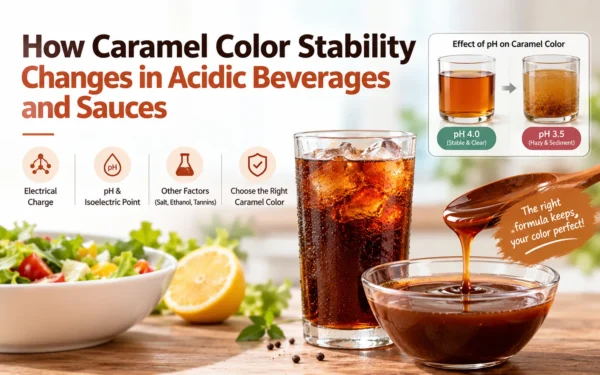
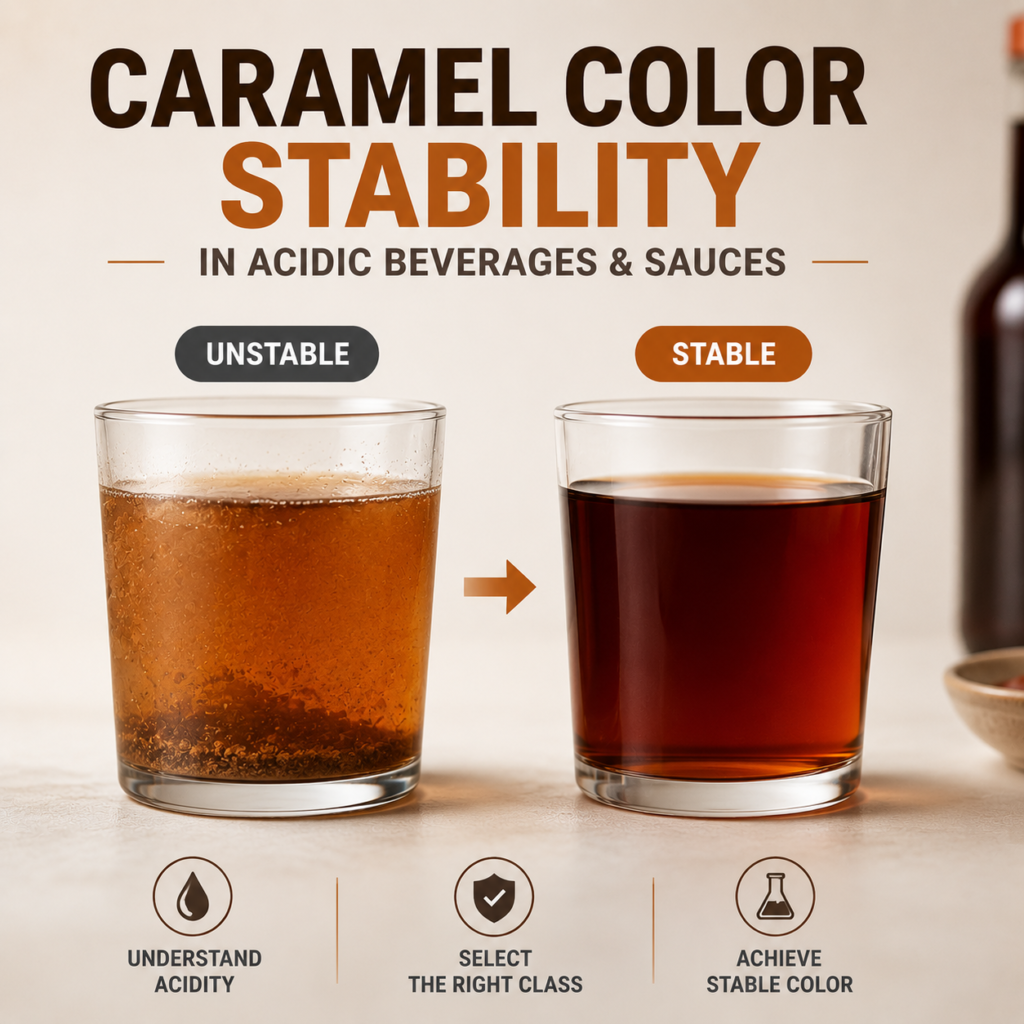
When you are a product creator, it is very possible for you to undergo the circumstances that are experienced by the majority of the product developers. You mix all the right shades of colors and get an exact approximation of the drink’s or sauce’s color you are after. Gradually, you feel something is wrong, after some time, you discover the problem. You see a cloudy haze, a nasty ring of sediment, or a faded color that is totally the opposite of what you created. This issue arises frequently but it is very bothersome. The crucial point to avoiding it is to apprehend the alterations that caramel color stability undergoes in acidic beverages and sauces.
We will study caramel color’s stability in acidic beverages and sauces through the lens of science.
The acidity variation across different systems has a direct impact on the dissolution stability and coloration efficacy of caramel pigments.
Implement a theoretical approach with this easy, four-step process. This will make sure the color is stable on your next project.
Step 2: Make Your Preliminary Selection
With the help of your answers from Step 1 and the caramel class table above, you can formally make an initial choice. For example: “The pH of my cola is 2.8 and it does not have salt and alcohol, so I will start testing the Class IV caramel.” Or, “My vinegar with clean ingredients is 3.5 pH, thus I am going to get a Class I caramel that is acid-stable.”