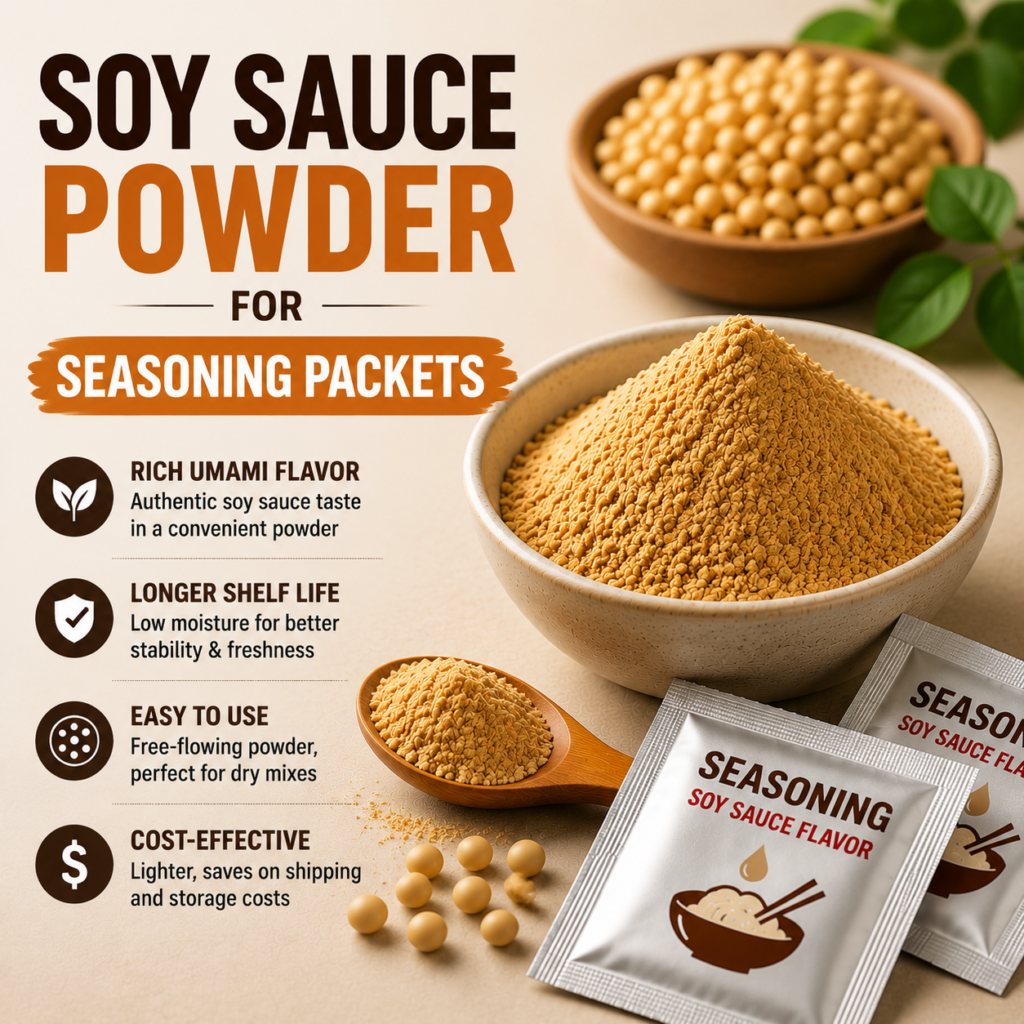
Food producers are hitting the hard problem of innovating their products at low costs. Working with dry seasonings, liquid soy sauce frequently causes problems. It supplies additional water to your mix. This leads to clumping and faster spoilage of the products. The heavy weight of the liquid soy sauce in addition to its bulkiness means higher costs of shipping and storage. Soy sauce powder means no problem.
From Liquid to Powder: The Change Process
The primary method used in the production of soy sauce powder is the spray-drying method. During this procedure, the liquid soy sauce is sprayed as tiny drops into a stream of hot air. The water particles exit the liquid almost immediately. Following this process, only fine powders that have the same taste and odor as the original are left.These advanced preparation methods like spray-drying are the most essential recipes for retaining the real taste of fermented soy sauce. Accordingly, a handy powder comes as a result. It can be used in many food production sectors, particularly as seasoning packets.
Food developers and purchasing managers need clear business benefits. The decision to convert from liquid to powder form is wise. The advantages of soy sauce powder concerning cost, and stability are huge while the production speed is an additional plus.These advantages make it a smart choice for any company. It is instrumental in enriching savory product lines. Understanding the benefits of soy sauce powder for seasoning packets is the first step in better production.
Powder vs. Liquid Soy Sauce
With the comparison of soy sauce powder to the liquid soy sauce right in front of us, it becomes evident why the powder is so advantageous. The powder form deals with many shipping and quality control issues that arise with the use of liquid ingredients in dry processes.
The fact that a seasoning product in powder form can last up to 30-50% longer compared to liquid types is a terrific advantage for storage and waste management.Also, soy sauce powder performs different tasks within a blend. It can make the roasting smell stronger and mask off-notes. This turns out to be very valuable in the process of elaborating complex flavor profiles for snacks and meals.
The uses for soy sauce powder go way beyond just one or two products. Its ability to be used in many different ways makes it a must-have across the food sector.From instant meals to savory snacks, this powder not only adds a quick and easy way to add rich umami flavor but it is also utilized in popcorn, chips, and other snack food toppings.
Not all soy sauce powders are the same. The right choice is a key factor contributing to the success of your product. If you are a buyer or an R&D specialist, you must have the knowledge of what to look for in a spec sheet. Besides, you should be aware of what your suppliers should be asked.
After you’ve made your choice for the right soy sauce powder, go ahead and apply it correctly in your product formulas. A few little tips from the food technologist’s perspective can help you get the best outcomes.Careful blending and handling are the keys to consistently producing your final product with the right flavor and texture.
For the food industry, in-demand ingredients need to be cost-effective, stable and versatile.Soy sauce powder for seasoning packets is the best choice that perfectly meets all the mentioned criteria.The conversion from liquid to powder is no longer just a simple exchange. Rather, this is a significant improvement that leads to enhanced productivity, reduced costs, and increased product quality, as well as streamlining the whole operation. It also creates new opportunities for the production of convenient and delicious food that the discerning consumers of today prefer. Soy sauce powder is an important ingredient that the makers of any food needing to innovate or optimize their savory products find essential for the future.