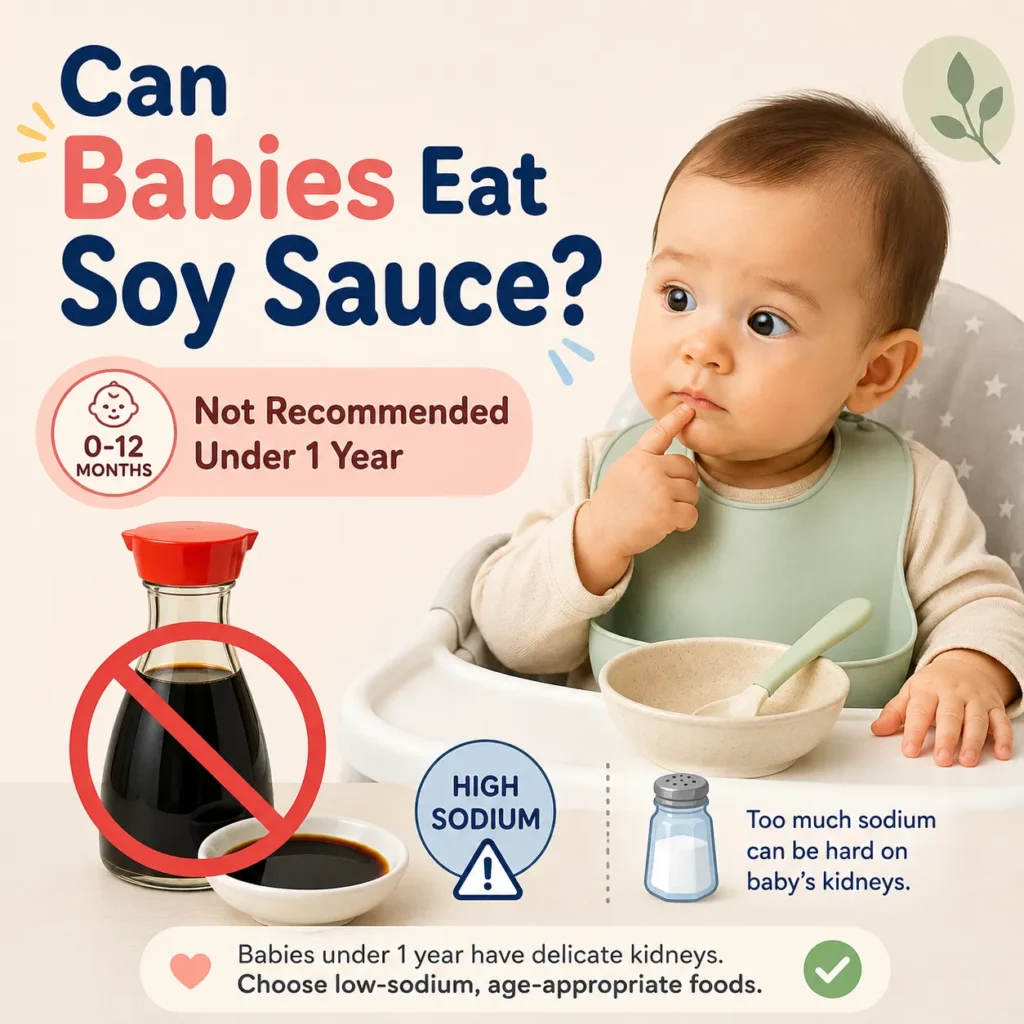
You need to understand why soy sauce isn’t right for babies. It’s not just about one ingredient. It’s about how that ingredient affects a baby’s growing systems. The main problem is sodium.
Understanding Sodium and Your Baby’s Developing Kidneys
A baby’s kidneys are still growing. They are not good at filtering and removing extra salt from the body like adult kidneys are.According to the latest infants’ health guidelines, babies under 12 months should consume less than 400 milligrams (mg) of sodium per day. A mere teaspoon of regular soy sauce can contain 300mg of sodium or even more. Thus, this one tiny spoonful can virtually meet or even go over their entire daily limit. Excessive sodium intake can overload their kidneys. It can also cause dehydration.Beyond Sodium: Other Additives to Watch For
In addition to salt, many packaged soy sauces contain extra ingredients that are not suitable for people in general. This is even more apparent in babies. These may be flavor enhancers like MSG, artificial caramel coloring, and chemical preservatives. A clear and simple ingredient list is preferable for the entire family.
When your kid is old enough and you opt to use soy sauce, it is essential to know how to read the label. Not all soy sauces are the same. This guide will help you choose healthier options for your whole family, not only your baby.
The Quality Difference: Brewed vs. Chemically Produced
A traditionally brewed soy sauce is made with just a few raw materials: water, soybeans, wheat, and salt. The flavor develops over months through natural fermentation. Experts in real brewing know that the gold standard is a process that uses this time-honored method, like the “High-Salt Dilute Authenticity Brew™” technique. This focuses on creating deep, natural flavor with no need for chemical shortcuts or additives.Chemically produced soy sauce, on the other hand, is made quickly. It relies on hydrolyzed soy protein and uses additives such as corn syrup and caramel color to mimic the taste and look of the real product.
So, when can babies eat soy sauce? The answer depends on their age. Here is a practical roadmap for introducing soy sauce safely as your child grows.
6-12 Months: A Firm “No” (with an exception)
Don’t give soy sauce directly to a baby under one. Their sodium needs are very low. They get all they need from breast milk or formula.The only exception? If you’re cooking a family meal with a very small amount of soy sauce, set aside your baby’s portion before adding the sauce. This is a critical step. According to guidance from infant feeding experts at Solid Starts, this lets your baby enjoy the same textures and base foods as the family. They won’t get the added sodium.12-24 Months: The “Taste, Not a Meal” Phase
Toddlers’ kidneys are more mature after they turn one. You can use a very small amount of soy sauce for seasoning.When we say “tiny,” we mean only a few drops added to a large pot of soup or a family-sized stir-fry. Do not add it directly to your toddler’s plate or use it as a dipping sauce. Always choose a high-quality, naturally brewed, lower-sodium version.24+ Months: Using Soy Sauce Mindfully
With time, toddlers can take a bit more sodium. However, the most important rule is still being careful. Continue to control their total daily sodium intake from all foods, including bread, cheese, and processed snacks. A small quantity of soy sauce sometimes in an otherwise well-balanced diet is acceptable.
As parents, we all want our babies to enjoy their food and become adventurous eaters. Instead of reaching for the soy sauce, here are some great ways we’ve found to boost flavor safely.