Many people only learn the difference between light and dark soy sauce. But the real signs of quality go much deeper. To truly understand how to choose a superior light soy sauce, you need to know what happens before it gets in the bottle. It’s the difference between a quick shortcut and a patient, time-honored craft.
“First Draw” vs. Subsequent Extractions
Think of soy sauce like olive oil. “First Draw” (sometimes called “Premium” or “First Press”) is the very first liquid drawn from the fermented mash. It is the most potent, aromatic, and flavorful. It’s like “extra virgin” olive oil.After the first draw, more salt water may be added to the same mash. This creates later, lower-quality extractions. While these are still soy sauce, they lack the depth and character of the first draw. For the best flavor, always look for a bottle that shows it is a first-draw product.
Now that you know what defines quality, here is a simple process you can use at the grocery store. Learning how to choose superior light soy sauce becomes easy with this checklist.
Step 1: Scrutinize the Ingredients List
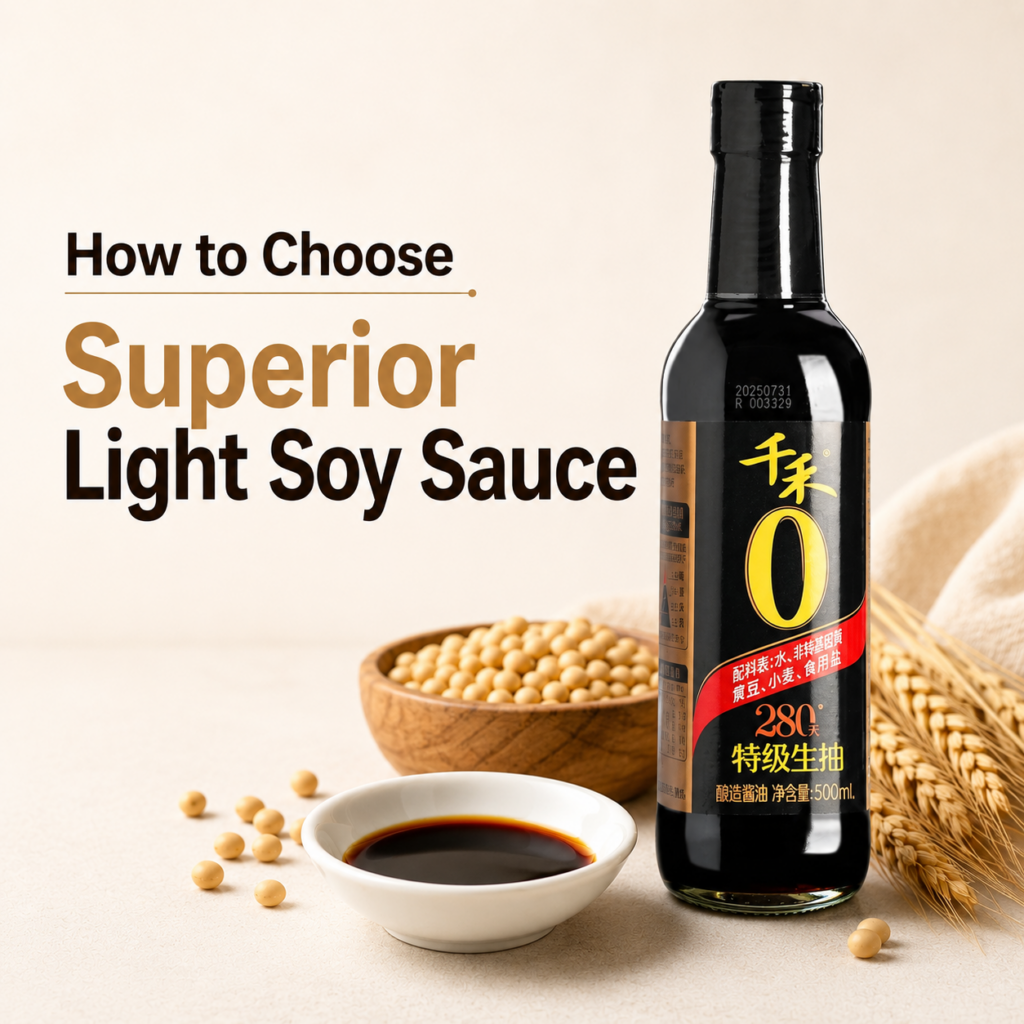
The best soy sauces have the simplest ingredients. A quick look at the label can tell you almost everything you need to know.Step 2: Confirm the Brewing Method
Next, look for words on the label that confirm how it was made. You want to see phrases like “Naturally Brewed,” “Traditionally Fermented,” or a mention of fermentation time, such as “brewed for 180 days.” If the bottle doesn’t mention its brewing process, it’s often a sign that it was chemically produced.Step 3: Check the Quality Grade
Find the nutrition panel or product description. Look for the Amino Acid Nitrogen content. This is your proof of quality. For the most flavorful soy sauce for dipping and finishing dishes, always aim for “Special Grade” (≥ 0.8g/100ml). “First Grade” is also a very good choice for general cooking.Step 4: Perform the “Shake Test”
Finally, use your eyes. This simple test can reveal a lot. Give the bottle a good shake.High-quality, naturally brewed soy sauce will make rich, reddish-brown foam. The bubbles will be fine and dense. They will linger for a moment before slowly disappearing. Chemically produced sauce will create large, soapy bubbles that vanish almost instantly.
The right choice can depend on your specific needs. Both home cooks and professional chefs benefit from quality. But their priorities can differ.
For the Home Cook: Prioritizing Peak Flavor and Versatility
For the home cook, a single bottle of premium light soy sauce can elevate countless everyday meals. A “Special Grade,” first-draw soy sauce is worth the small extra cost. Its clean, potent umami is perfect for dipping dumplings. It makes vibrant salad dressings and finishes stir-fry perfectly.In a home kitchen, one high-quality bottle is more practical than having multiple lower-grade options. It simplifies your pantry while upgrading your cooking.For the Restaurant Owner & Chef: Balancing Quality, Consistency, and Cost
In a professional kitchen, consistency is just as important as quality. Chefs need a reliable product that delivers the same flavor for every service. This ensures menu items are repeatable.A common strategy is to use different grades for different purposes. A dependable “First Grade” (≥ 0.7g/100ml) soy sauce is excellent for general cooking, marinades, and braises. A “Special Grade” (≥ 0.8g/100ml) product can be reserved for signature dipping sauces or as a finishing drizzle where its superior flavor can truly shine.