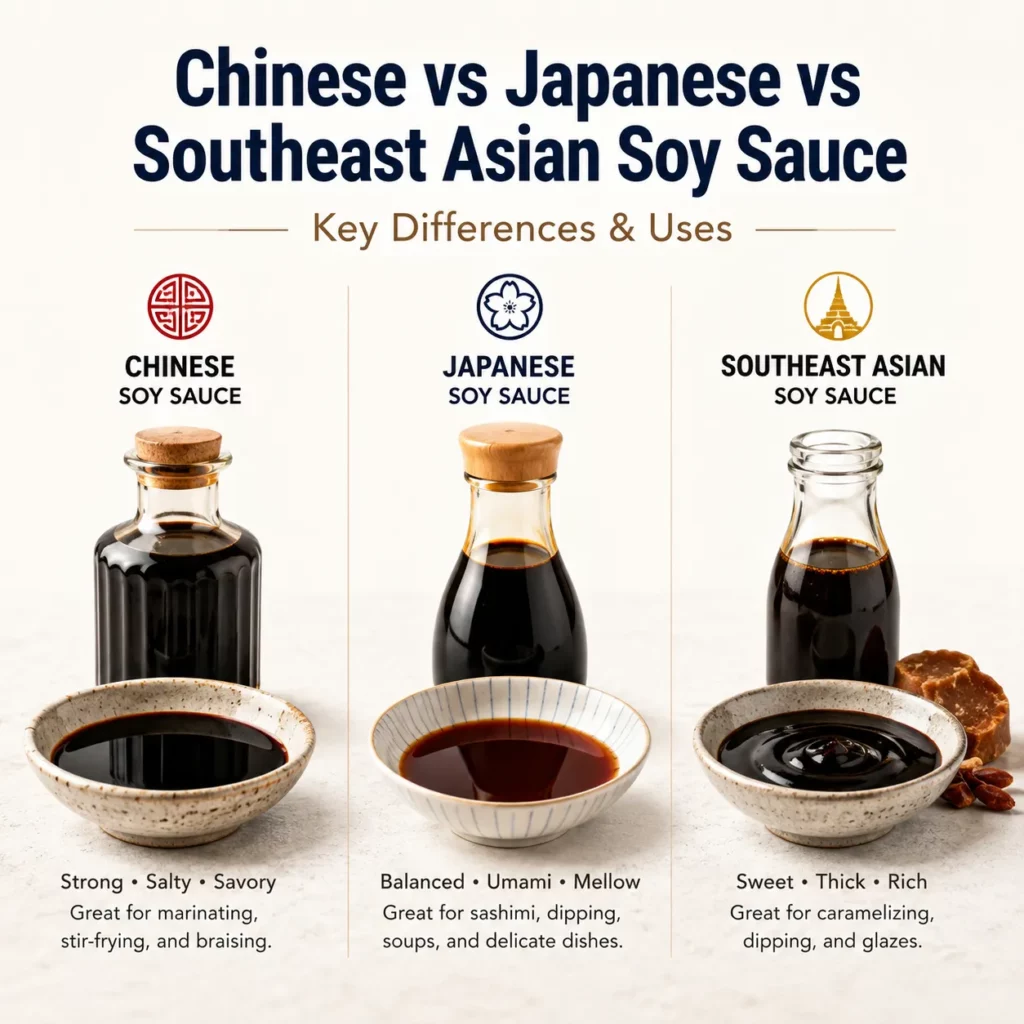
Need a quick answer? This table shows the main differences between Chinese vs Japanese vs Southeast Asian soy sauce. Think of it as your cheat sheet.
Chinese soy sauce came first. All other soy sauces started from this one. Its job is to add a strong salty taste from fermented soybeans. You need to know about two main types to cook Chinese food well. When people compare Chinese vs Japanese vs Southeast Asian soy sauce, they often start here.
Dark Soy Sauce (老抽, Lǎo Chōu): For Color and Richness
Dark soy sauce ages longer than light soy sauce. It often has molasses or caramel color added. This makes it thicker, darker, and a little sweet.It’s less salty than light soy sauce. Its main job is to make dishes look deep brown. You need it for recipes like red-braised pork belly, fried rice, and “drunken” chicken. Use it for color, not for the main salt flavor.Koikuchi (濃口): The All-Purpose Standard
Koikuchi means “dark mouth.” It’s the most common soy sauce in Japan and around the world. It makes up over 80% of Japanese production.It looks dark but tastes balanced between salty, sweet, and savory. Use it for almost everything. Dip sushi in it. Add it to ramen broth. Use it in marinades. If a Japanese recipe just says “soy sauce,” they mean koikuchi.Usukuchi (淡口): Lighter Color, Saltier Taste
Don’t let the name trick you. Usukuchi means “light color,” not “light flavor.” It’s actually 10% saltier than koikuchi.Chefs in Japan’s Kansai region like it for dishes where they need flavor without dark color. It’s perfect for clear soups, seasoning delicate fish, and dressing vegetables. It keeps their natural colors bright.Tamari (たまり): The Gluten-Free Friendly Option
Tamari is the Japanese soy sauce most like traditional Chinese soy sauce. It uses very little or no wheat.This makes it darker and richer with powerful umami flavor. Since it’s mostly soybeans, many tamari brands are gluten-free. This makes it great for people who can’t eat gluten but still want deep, real soy sauce flavor.