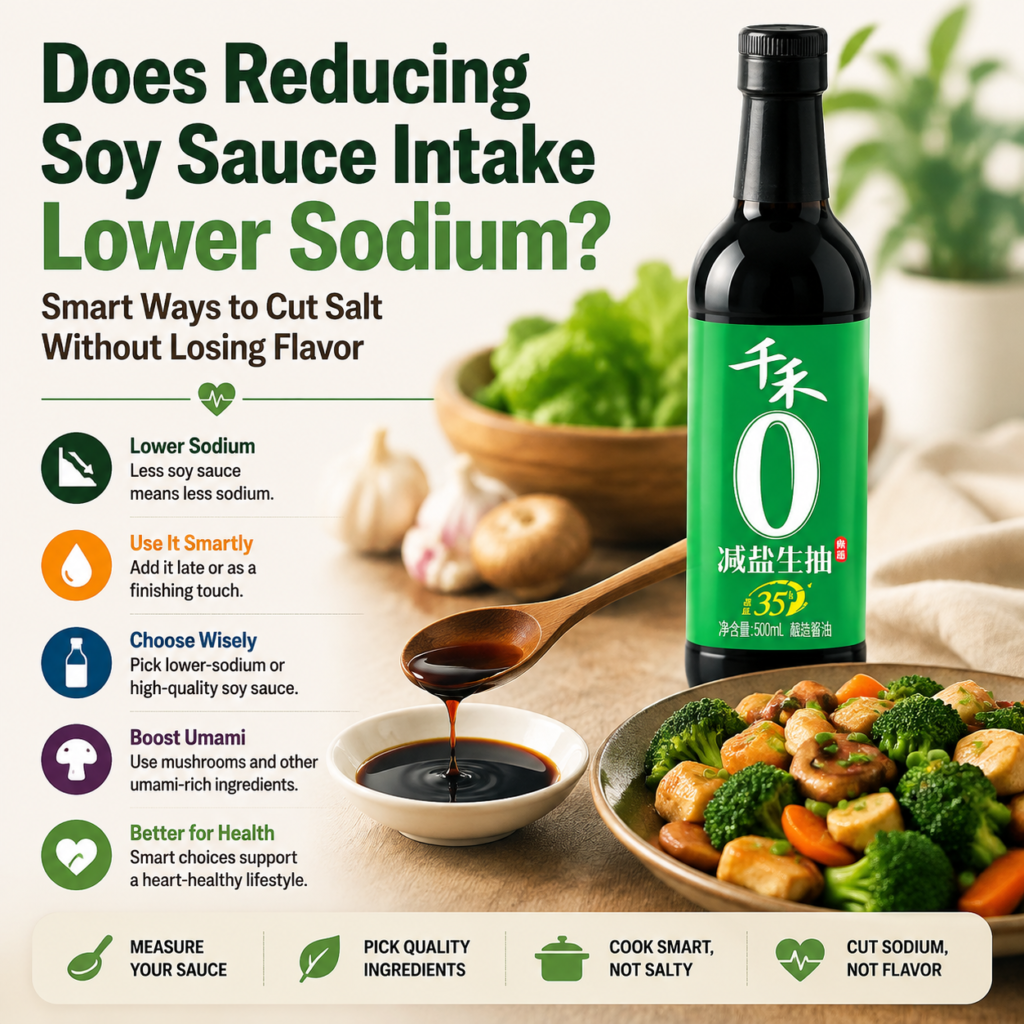
If you happen to ponder, “Does the reduction of soy sauce intake promote a decline in sodium consumption?” the answer is a categorical yes. Soy sauce is a powerhouse of sodium. Less usage of it would, therefore, decrease your daily intake significantly. But just stopping isn’t the only choice. It’s not even the best method a cool cook can use.The actual secret is mastering the sodium-management skills without the need to lose flavor. It’s a matter of sustaining the genuine, enriched taste that is often referred to as umami. The umami component is the secret to the magnificent taste of the food. The Stroke Foundation informs that a single tablespoon of normal soy sauce has the most of your daily salt limit.In this path, you would get the practical skills for smart sodium cutting. You will have a chance to discover the right kind of bottle. Additionally, you will know how to cook it better.
To prevent sodium disorders, you should first understand sodium’s presence in soy sauce. The main compound in soy sauce is salt. Salt is essential for real soy sauce making. Its long brew process relies on salt as a natural preservative. Salt also acts as a guide for the microorganisms to produce the complex flavor found in soy sauce. Without salt, brewing would not work.So how much sodium are we discussing here? It is intense, but you have to interpret it with a sense of context. Let’s catch a quick overview of typical amounts of sodium in everyday kitchen food.
It’s obvious that, compared to table salt, soy sauce is a sodium-rich product. For this reason, it is a highly possible seasoning item. But then, in a single tablespoon, you could get as much as 43% of the daily limit; thus, it is a good idea to be cautious. Those wanting to cut down on their sodium intake should be careful about its use.
Talk about soy sauce and sodium is often the subject of conversation but it is just one part of the real thing: umami. Considered the “fifth taste” umami is a palatable and earthy flavor that enlivens food. It is found in mushrooms, aged cheeses, and properly fermented soy sauce.The distinctive flavor of umami lies in the brewing secrets. Traditional fermentation is a long process that usually takes several months to finish. It is the process of splitting proteins in soybeans and wheat into various little pieces called flavor compounds. In this case, quality is the most important factor. There are even more advanced methods such as the High-Salt Dilute Authenticity Brew™ process, which are specifically designed to ensure maximum flavor development. The outcome is a sauce that has a strong, good smell as well as being complex.What does this imply for your sodium intake? A soy sauce fully loaded with umami hits you with a strong taste even when you use a small amount of it. You don’t have to pour a lot to get that pleasing taste. A watery, artificially produced soy sauce usually gets its taste from salt. Therefore, you need to use more of it and will consume more sodium. Purchasing quality goods instantly converts into delicious food. This is a natural way to manage salt.
When you look at lowering sodium from soy sauce, it may seem like there’s only one solution. Still, trying to back off the pressure does not always succeed. Instead of mainly concentrating on the way to achieve this let’s search for a more intelligent route. Take control without sacrificing taste.
Reduced-sodium soy sauce appears to be an ideal solution. But it merits the consideration of a closer view. On one side, they are extremely powerful tools. If the only goal you have is to decrease the sodium levels, they will definitely do the job.The real question is, how do they taste? The flavor of a reduced-sodium soy sauce is purely a question of how it’s made. Some low-quality brands may simply dilute their regular product with water. They add other flavors to balance it out. This results in a thin, less satisfying taste, and you may end up using more, which partly defeats the purpose.The best reduced-sodium brands are those that the manufacturers start off with a strong, authentic, traditionally brewed base. After fermentation finishes, some salt is taken out using the particular techniques they employ. This technique is beneficial in the sense that it keeps more of the original flavor and the umami fullness. As scientific studies on soy sauce reformulation have demonstrated, using other umami-rich compounds like yeast extracts can make reduced-salt versions considerably more acceptable to consumers.In the end, the choice is yours. A top-notch, full-flavored regular soy sauce utilized only on a very small scale can be much more tasty and satisfying than a bigger dose of a bland, reduced-sodium version.