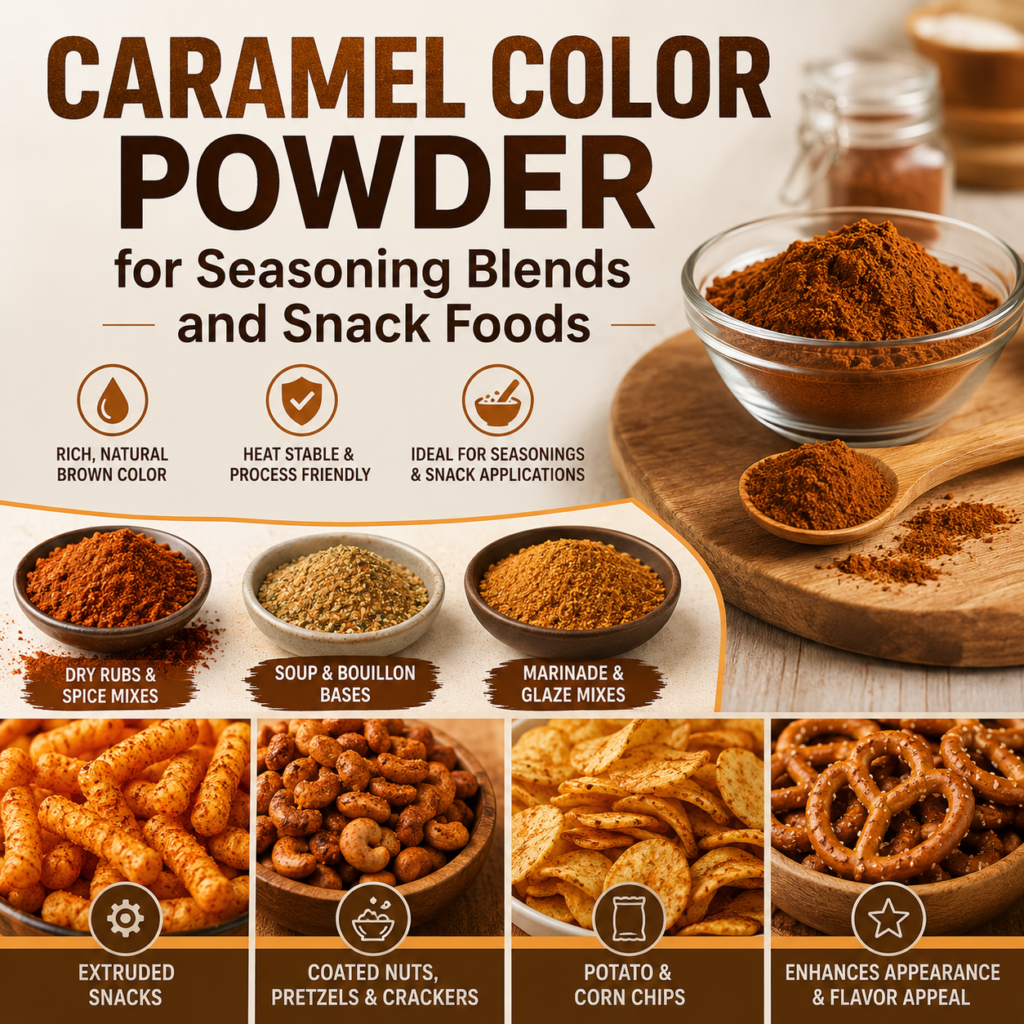
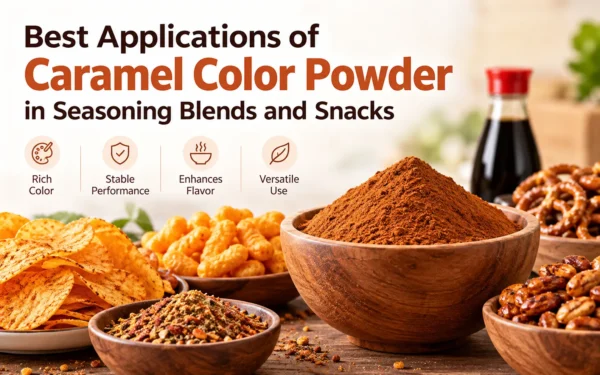
Caramel color powder is the best choice for product developers. Its most important function is to provide a smooth and attractive look. This ensures every bag of chips looks the same and every batch of seasoning looks exactly as envisioned. But it does much more than that.Here are the most important reasons why it’s so prevalent in contemporary food production:
In seasonings, color is associated with flavor. The right color can suggest smokiness, a rich roast, or a savory broth. Caramel color powder is key for creating these visual suggestions in dry-mix formats. Observing the top applications of caramel color powder in seasoning blends really shows its worth.
Dry Rubs and Spice Mixes
The look is what counts the most for barbecue rubs and spice mixes. Caramel color powder is essential as it gives a deep, “roasted” or “grilled” appearance to meat, even before cooking. This visual promise of flavor tempts consumers to purchase the product.As a fine powder, it mixes evenly with other dry ingredients like salt, paprika, and garlic powder. This prevents spotting and makes sure the mix has the same color throughout.Marinade and Glaze Mixes
In dry marinade and glaze mixes, caramel color powder gives a strong color base that comes to life when mixed with liquid. It dissolves easily, creating a deep brown liquid that coats food well.When the food is cooked, the caramel color enhances natural browning, creating a more appealing look. It makes grilled chicken, baked ribs, or glazed vegetables look perfectly cooked.Bouillon and Soup Base Powders
Caramel color powder is key for giving a hearty, savory brown color to broths, gravies, and soups. When people add water to a bouillon cube or soup base, they expect to see rich, flavorful color develop. Caramel powder does this reliably.It is also very stable in high-salt environments, which is of utmost relevance for these products. This stability is a clear mark of a quality caramel color.
The snack aisle is a battleground for customer attention. Color plays a huge role in making a product stand out and look appetizing. Caramel color powder performs a lot in this category, used in everything from extruded puffs to potato chip seasonings.
Extruded Snacks (Puffs, Curls, and Pellets)
Extruded snacks like cheese puffs and corn curls go through high temperatures and pressure. Caramel color powder is very stable under these conditions. It can be mixed into the dough before the extrusion phase, creating a base color for the snack.It can also be an important part of the topical seasoning that is applied later. Its durability is a great asset. As observed in a thorough study on food caramels, caramel color does not get destroyed under extrusion temperatures. This provides the assurance that the color of the final product is stable and as per the original design.Coated Snacks (Nuts, Pretzels, and Crackers)
For snacks such as seasoned nuts, pretzels, and crackers, the coating is key. Caramel color powder is used in seasoning dustings or slurries that are applied to the snack’s surface.It helps create a nice, even coating. With flavors like honey mustard, smoky BBQ, or teriyaki, the caramel powder provides the authentic savory appearance people associate with those tastes, making the snack more engaging and supporting the flavor profile.Potato and Corn Chips
The use of caramel color powder is seen at its best on chips with topical seasonings. When making a “smoky BBQ” or “mesquite grill” flavor, the seasoning needs to look right. Caramel color provides the deep, reddish-brown tones that visually signal a smoky, savory experience to the customer.This link between color and flavor makes the whole sensory experience better. The right color boosts the way the flavor is received and gives more pleasure. This is one of the best applications of caramel color powder in seasoning blends and snacks for creating a premium product.
While caramel color is mainly used for making things look good, it is significantly more than a mere dye. It performs several technical functions that can be employed to solve formulation difficulties and improve your final product. Understanding these jobs will help you use this ingredient to its full potential.