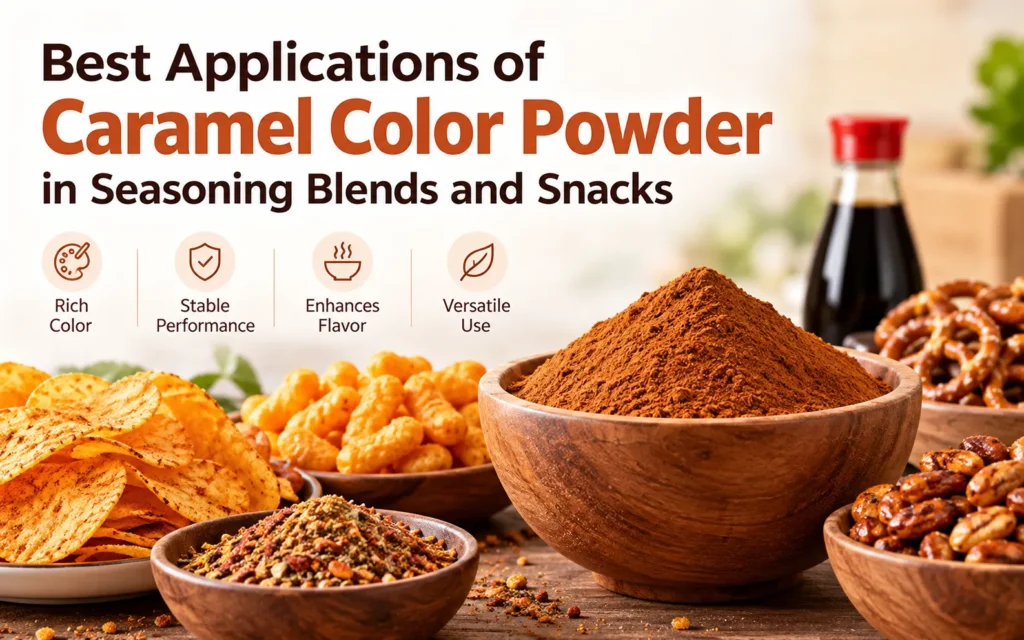
In 2026, food developers are on a quest to create products that stand out. From the first look to the last bite, every detail matters. In the highly competitive world of snacks and seasonings, how food looks is crucial. It’s not just an extra bonus; it’s a main part of the dining experience.
Caramel color powder is the answer to achieving this. It’s the easy way to get rich, solid brown colors. These colors suggest to people that the food is savory, roasted, and delicious. This guide shows the best uses of caramel color powder in seasoning blends and snacks and offers practical tips for your next project.
More Than Just Color: Why Caramel Powder Works So Well
Caramel color powder is the best choice for product developers. Its most important function is to provide a smooth and attractive look. This ensures every bag of chips looks the same and every batch of seasoning looks exactly as envisioned. But it does much more than that.
Here are the most important reasons why it’s so prevalent in contemporary food production:
- Uniformity of appearance: It provides a uniform look even if there are different natural color shades in spices or flours. So your end product will always look perfect.
- Added to savor: It adds complex and subtle notes that can enhance savory flavors, bringing the taste of the dish to a higher level.
- Fair Price: A small amount of powder makes a big visual change, allowing you to reach your desired color in a smart way.
- Perseverance: It remains stable under food processing changes such as very high heat or high salt concentration. These properties make it trustworthy.
Top Uses of Caramel Color Powder in Seasoning Blends
In seasonings, color is associated with flavor. The right color can suggest smokiness, a rich roast, or a savory broth. Caramel color powder is key for creating these visual suggestions in dry-mix formats. Observing the top applications of caramel color powder in seasoning blends really shows its worth.
Dry Rubs and Spice Mixes
The look is what counts the most for barbecue rubs and spice mixes. Caramel color powder is essential as it gives a deep, “roasted” or “grilled” appearance to meat, even before cooking. This visual promise of flavor tempts consumers to purchase the product.
As a fine powder, it mixes evenly with other dry ingredients like salt, paprika, and garlic powder. This prevents spotting and makes sure the mix has the same color throughout.
Marinade and Glaze Mixes
In dry marinade and glaze mixes, caramel color powder gives a strong color base that comes to life when mixed with liquid. It dissolves easily, creating a deep brown liquid that coats food well.
When the food is cooked, the caramel color enhances natural browning, creating a more appealing look. It makes grilled chicken, baked ribs, or glazed vegetables look perfectly cooked.
Bouillon and Soup Base Powders
Caramel color powder is key for giving a hearty, savory brown color to broths, gravies, and soups. When people add water to a bouillon cube or soup base, they expect to see rich, flavorful color develop. Caramel powder does this reliably.
It is also very stable in high-salt environments, which is of utmost relevance for these products. This stability is a clear mark of a quality caramel color, similar to the principles we use in our High-Salt Dilute Authenticity Brew™ process.
Best Uses of Caramel Color Powder in Snack Foods
The snack aisle is a battleground for customer attention. Color plays a huge role in making a product stand out and look appetizing. Caramel color powder performs a lot in this category, used in everything from extruded puffs to potato chip seasonings.
Extruded Snacks (Puffs, Curls, and Pellets)
Extruded snacks like cheese puffs and corn curls go through high temperatures and pressure. Caramel color powder is very stable under these conditions. It can be mixed into the dough before the extrusion phase, creating a base color for the snack.
It can also be an important part of the topical seasoning that is applied later. Its durability is a great asset. As observed in a thorough study on food caramels, caramel color does not get destroyed under extrusion temperatures. This provides the assurance that the color of the final product is stable and as per the original design.
Coated Snacks (Nuts, Pretzels, and Crackers)
For snacks such as seasoned nuts, pretzels, and crackers, the coating is key. Caramel color powder is used in seasoning dustings or slurries that are applied to the snack’s surface.
It helps create a nice, even coating. With flavors like honey mustard, smoky BBQ, or teriyaki, the caramel powder provides the authentic savory appearance people associate with those tastes, making the snack more engaging and supporting the flavor profile.
Potato and Corn Chips
The use of caramel color powder is seen at its best on chips with topical seasonings. When making a “smoky BBQ” or “mesquite grill” flavor, the seasoning needs to look right. Caramel color provides the deep, reddish-brown tones that visually signal a smoky, savory experience to the customer.
This link between color and flavor makes the whole sensory experience better. The right color boosts the way the flavor is received and gives more pleasure. This is one of the best applications of caramel color powder in seasoning blends and snacks for creating a premium product.
A Practical Guide: Matching Caramel Color Powder to Your Use
Not all caramel colors are equal. They are available in a wide array of colors, including light golden-brown, deep reddish-brown, and even black. Choosing the right one is essential for success.
According to the food developers we have assisted, the most frequent problem has been selecting the right color and strength to achieve the desired results. A color that works for a BBQ rub might be too dark for a cheese-flavored cracker seasoning. To make this easy, we have made a guide based on common uses.
Table: Selecting the Right Caramel Color Powder
| Application | Desired Profile | Recommended Caramel Color Characteristics |
|---|
| BBQ Seasoning Rub | Dark, “char-grilled” brown | High color intensity, dark brown hue |
| Cheese-flavored Snack Coating | Warm, golden-brown enhancement | Low-to-medium color intensity, yellowish-brown hue |
| Teriyaki Marinade Mix | Rich, reddish-brown | Medium-to-high color intensity, red undertones |
| Savory Granola/Snack Mix | Toasted, light brown | Low color intensity, golden-brown hue |
To achieve consistent results, start by pre-blending the caramel color powder with a major dry ingredient such as salt or flour. Sifting can further reduce clumping and prevent localized color hotspots.
For developers who want a dependable and adaptable solution that works well in numerous applications, a high-quality product like Qianhe’s Rich Food Brown Caramel Color Powder offers great dispersibility and a stable color profile.
Beyond Brown: The Technical Jobs of Caramel Color
While caramel color is mainly used for making things look good, it is significantly more than a mere dye. It performs several technical functions that can be employed to solve formulation difficulties and improve your final product. Understanding these jobs will help you use this ingredient to its full potential.
Here are its major technical duties:
- Flavor Addition & Masking: Caramel color has a slightly bitter, burnt-sugar taste that can help round out the savory flavors of a BBQ rub or a soup base. It can also hide unwanted off-notes from other ingredients, such as vitamins or plant proteins.
- Making the Maillard Reaction Better: The Maillard reaction is the chemical process that causes food to brown during cooking. Caramel color visually supports this effect, ensuring a product looks consistently “cooked” even if cooking times or oven temperatures vary.
- Emulsion and Suspension Stability: Some forms of caramel color are naturally charged. In liquid systems such as marinades or slurries, this charge can aid in keeping other small particles suspended, which can improve the stability and consistency of the liquid.
To achieve this stability, caramel colors are produced in four classes: Class I, II, III, and IV. The powdered forms used in seasonings are usually from Class III or IV. These classes are made to be stable and provide strong color in salty or slightly acidic foods.
Common Questions
Is caramel color powder the same as caramel flavor?
No. While it can add subtle notes, its main purpose is color. Caramel color has a mildly bitter, burnt-sugar taste. Caramel flavor is made to provide a sweet, buttery, and creamy profile like candy.
Will caramel color powder affect the texture of my seasoning blend?
When used at typical low levels (usually less than 1% of the formula), it has almost no impact on texture. It is a very fine, free-flowing powder designed to blend easily with other dry ingredients.
Is caramel color powder stable in a high-salt or acidic seasoning?
Yes, most caramel color powders used in seasonings are Class III or IV. These are specifically made to be stable in high-salt and acidic conditions. This makes them perfect for marinades, rubs, and other preserved foods.
How do I prevent clumping when adding caramel color powder to my mix?
The best method is to pre-blend it. Mix the caramel color powder with a larger-particle ingredient in your recipe, such as salt or sugar. This separates the fine particles and helps them distribute evenly in the main batch.
Can caramel color be used in clean-label products?
This depends on your brand’s definition of “clean label.” Caramel color is a globally approved food colorant made from heated carbohydrates. Class I (E150a) is often seen as the “cleanest” option because it is a plain caramel. Always check the specific rules and consumer views for your target market.