Soy sauce is an important taste enhancer in food processing. The surprising thing is that you get to make a choice between two kinds. One is the well-known traditional liquid soy sauce, the other is the new-fashioned soy sauce powder. As of the year 2026, both varieties remain in demand in the food industry. The decision of which one to choose relies on what you intend to prepare. Water is the main differentiating factor. One contains it, the other one lacks it. This article will serve your purpose of contrasting liquid soy sauce and spray-dried soy sauce powder. You will gain knowledge of which one is just right for your cooking requirements.
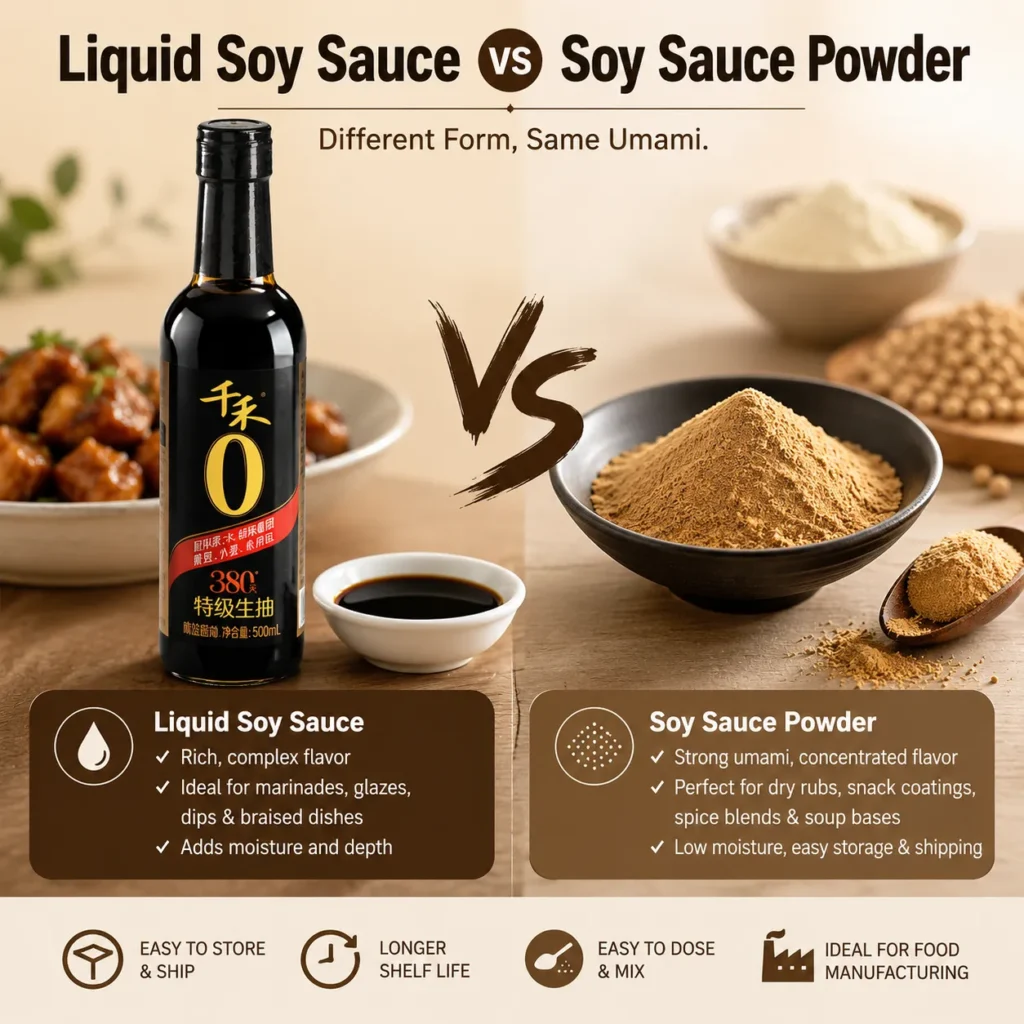
Liquid Soy Sauce vs. Soy Sauce Powder
To make a good choice, you need to know how each product is made. The way they’re made explains why they work differently.
How Liquid Soy Sauce Works
Liquid soy sauce is made the old way. It comes from fermenting soybeans, wheat, salt, and water for months. This natural process creates a complex, savory flavor with many subtle tastes.Different types, like light and dark soy sauce, have unique colors and flavors. The liquid form is key to how it works. It carries flavor deep into meats. It also adds moisture to sauces and soups.How Soy Sauce Powder is Made
Soy sauce powder is a product of modern food science. It is made by spray-drying. Liquid soy sauce is mixed with a helper ingredient like maltodextrin. Then it is sprayed into the hot air as tiny drops.The water is eliminated very quickly. What is left is a fine dry powder. This is a complex process. Many preparation methods for soy sauce powder have been made to improve it. The main idea is to preserve the original taste. However, this process can result in about 70-85% of the original flavor strength. Consequently, you should be a little flexible in your cooking.
This comparison of the applications of liquid soy sauce and spray-dried soy sauce powder shows where each one is better. The best option depends on what you are trying to do.
Case 1: Making Dry Rubs and Spice Mixes
Your goal is to make a dry seasoning that flows well and lasts a long time.Liquid soy sauce cannot be an option here. Its moisture would make other ingredients stick together. This causes them to go bad.The soy sauce powder is ideally made for this task. It gives a deep, savory umami flavor without any water. From experience, the powder coats meat evenly. When you cook it, it helps make a tasty, toasted crust. This is not possible with liquid in a dry rub.Winner: Soy Sauce Powder is the only choice that works.Case 2: Preparing Liquid Marinades and Glazes
Your intention is to soften the meat and infuse it with flavor.Liquid soy sauce would simply be the best option here. Its water and salt work in unison to break down muscle fibers. They carry flavor deep into the meat. This is why people have used this method for a long time.You can utilize soy sauce powder by combining it with water. However, the original fermented liquid most of the time has more layered and fragrant substances. These are not so fully present in the powder mix. For traditional marinades, the liquid state is better.
Winner: Liquid Soy Sauce is superior for classic marinades. Powder is effective if you want to save on space or transport.Case 3: Seasoning Snack Foods (Chips, Popcorn, Nuts)
Your mission is to dust a snack with the correct amount of flavoring without letting it lose its crunchiness.Here is where soy sauce powder comes into play. It provides a strong savory taste while keeping snacks crispy. Its low moisture content is the decisive factor for texture and shelf life. This is the case for products like potato chips, seasoned nuts, and crackers.It has become a versatile flavorant in everything from beef jerky to popcorn. It gives room to extra flavor mixtures that were not possible with liquid spice.Winner: Soy Sauce Powder wins by a large margin.Case 4: Making Soup Bases and Instant Noodles
You need to make a flavor base that will dissolve in water easily.Both forms will do. However, soy sauce powder outweighs the liquid on account of large-scale production. It is significantly lighter than the liquid one. Hence, it leads to reduced shipping costs. It also has a longer shelf life and allows for exact quantities in single-serving packages.These advantages have played a critical role in the growth of The global soy sauce powder market. This is particularly the case in instant and convenience foods.Winner: Soy Sauce Powder is favored for dry mixes and large-scale usage.
Selecting between liquid and powder is not just a matter of taste; it’s a business choice. It is more than just the flavor. Here’s a checklist for food manufacturers and developers in 2026.