Choosing a reliable soy sauce powder supplier is essential for food manufacturers and businesses that aim to maintain consistent flavor and quality in their products. With the rising popularity of soy sauce powder due to its convenience, long shelf life of typically 12 to 18 months, and ease of transportation, knowing the key quality standards that a professional supplier must meet is critical. This article breaks down the five major quality aspects that any reputable soy sauce powder supplier should adhere to, helping buyers make well-informed decisions.
1. Ingredient Quality Standards for Soy Sauce Powder Suppliers
High-quality ingredients are the backbone of any premium soy sauce powder. A professional soy sauce powder supplier places great emphasis on sourcing the best raw materials, as these directly affect the final product’s taste, aroma, and safety. Commonly, suppliers select:
- Non-GMO soybeanswith a protein content of at least 40%. This high protein level ensures a rich and complex umami flavor develops properly during the fermentation process, contributing significantly to the final product’s taste profile.
- Food-grade wheatthat is free from contaminants and contains moisture levels below 12%, serving as a key fermenting substrate without risking microbial contamination.
- Salt with over 99% purity, typically refined sodium chloride, which helps maintain product stability and controls fermentation, ensuring the powder has a consistent flavor profile and extends shelf life.
In addition to selecting premium raw materials, top suppliers carry out rigorous testing to verify moisture levels, microbial safety, and overall ingredient integrity before production begins.
2. Manufacturing Process Control by Soy Sauce Powder Suppliers

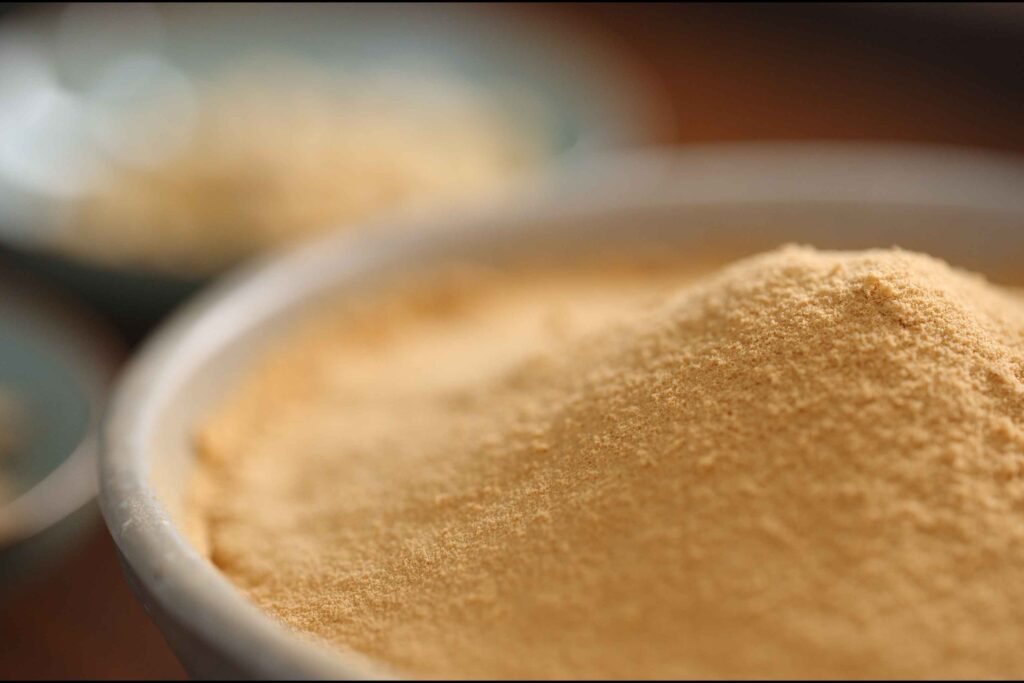
Converting liquid soy sauce into powder form requires precision and advanced drying processes. Many suppliers rely on technologies that use carefully controlled heat levels to retain the original flavor and aroma of the soy sauce while removing moisture efficiently.
Key process elements include:
- Advanced drying methods that preserve essential amino acids and volatile flavor compounds by balancing heat intensity and drying time.
- Compliance with Good Manufacturing Practices (GMP)to minimize contamination risks in every production stage, including maintaining cleanroom environments with controlled air quality (ISO Class 7 or better).
- Continuous monitoring of moisture content in the powder, ideally kept between 3-5%. Maintaining this range is critical for preventing caking, microbial growth, and extending shelf stability without compromising solubility.
- Maintaining particle size distribution primarily between 80 and 120 mesh (approx. 125–180 microns) for excellent solubility and uniform mixing in food applications.
Such stringent manufacturing controls help ensure the powder maintains its characteristic taste and aroma for up to 12 to 18 months under proper storage conditions.
3. Quality Assurance Certifications for Soy Sauce Powder Suppliers
Holding recognized certifications reflects a supplier’s ability to meet international standards in food safety and quality management. Professional soy sauce powder suppliers often demonstrate compliance through systems that encompass hazard analysis, critical control points, and rigorous process monitoring.
In addition, certifications such as HACCP and food safety management programs recognized globally give assurance that the supplier adheres to strict production and handling standards. These programs also ensure traceability and accountability across all stages of production and distribution.
These certifications require continuous audits and compliance efforts, which strengthen the credibility and trustworthiness of the supplier.
4. Packaging and Logistics Standards from Soy Sauce Powder Suppliers

Packaging quality directly influences soy sauce powder’s shelf life and user experience. A professional soy sauce powder supplier invests in high-barrier packaging materials and optimized logistics to preserve the powder’s freshness and prevent degradation.
They typically use multi-layer barrier films with oxygen transmission rates (OTR) below 5 cc/m²/day to protect the product against oxidation. Additionally, moisture absorbers or vacuum-sealed bags are employed to keep relative humidity low, usually under 5%, which helps maintain product stability.
Packaging options are flexible, ranging from 25 kg bulk bags designed for industrial users to smaller 100 g sachets aimed at retail consumers. Moreover, strict temperature control during transportation is maintained, with storage temperatures kept consistently between 10°C and 25°C. These measures prevent flavor loss, microbial growth, and caking, ensuring that the product delivered consistently meets the expected quality standards.
Conclusion
Selecting a professional soy sauce powder supplier like Qianhe requires evaluating their adherence to comprehensive quality standards. From sourcing high-grade ingredients with controlled moisture and microbial counts to employing precise manufacturing techniques involving carefully managed drying processes and particle sizes, as well as holding internationally recognized certifications and ensuring robust packaging with low oxygen and moisture permeability, each aspect plays a vital role in guaranteeing product excellence.
Businesses that prioritize these factors can trust Qianhe to deliver soy sauce powder with consistent flavor, safety, and shelf stability—ultimately enhancing their product offerings and consumer satisfaction. If you want to learn more about how Qianhe ensures top-quality soy sauce powder or discuss your sourcing needs, feel free to contact us for personalized support and detailed information.