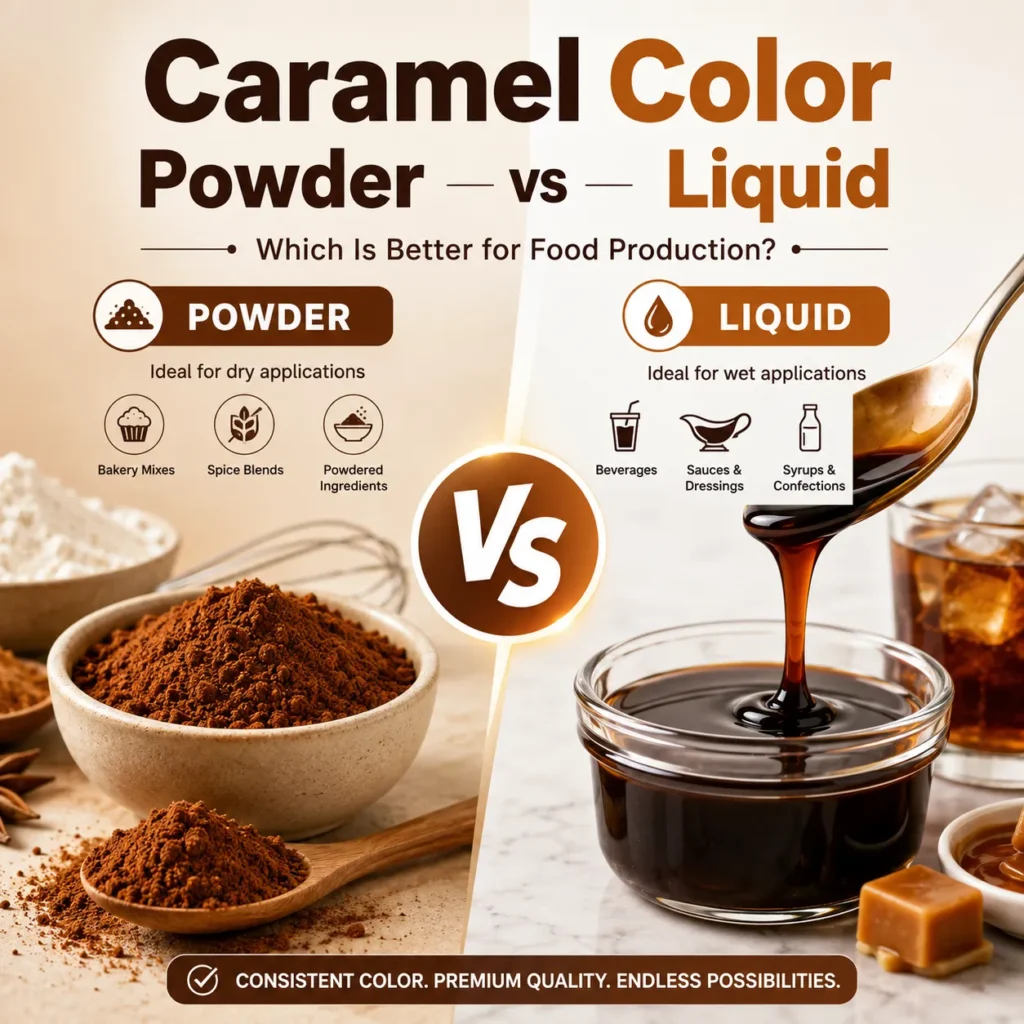
The decision to opt for caramel color powder instead of liquid caramel color boils down to one word: moisture. If you want to maintain the dryness of your product, powder is the evident choice.
Perfect Choice for Dry Mixes and Seasoning Blends
The only intelligent choice for any dry powder-wet blending is powdered caramel color. Consider cake mixes, instant soup powders, spice rubs, or powdered drink mixes. Here, the use of a liquid would cause moisture addition. This leads to clumps, bad flow, and possible spoilage.From what we observed, mixing a little liquid completely and evenly into a whole batch of dry ingredients is a weighty task. You risk creating color areas or hot spots and then a product that is not even. On the other hand, if you put a powdered colorant in a ribbon or V-blender, then there is no problem. You will have a complete even distribution of color. That’s why you should always opt for caramel color powder.Best for Baked Products and Sweets
In baking, the water content is like number play. The adding of one gram of water could have a direct effect on how the dough or batter handles and subsequently, the end product’s texture. The use of powdered caramel color means that you will add different colors without altering the formula’s hydration.This is key for items such as cookies, crackers, and even some types of bread that are meant to be crispy or come with a specific crumb structure. The color you get is the rich brown you like without the product turning soft or chewy.Strengths in Transport, Storage, and Shelf Life
Powder has a lot of advantages for the logistics and transportation industry. Moving powder as cargo is much lighter than liquid, which is more due to the water it carries. This could significantly reduce freight costs. It is also a better solution to warehouse it.Furthermore, the fact that it is a low moisture product makes it stay fresh for a longer period. Also, it makes less likely for the product to breed microbes. It offers excellent dispersibility and a stable, rich brown color profile perfect for these uses.Caramelization Concentration of Color is Most Important
Caramel color powders are packed with colors. You can easily get a brilliant, fuller color with small amounts of powder. This was particularly helpful when you are trying to hold good the weight and volume of your formula.
It is true that the use of powders has advantages; however, there are many situations when liquid caramel color is the better and more productive choice. In production, if your process is already liquid-based, it is better to use the same kind of ingredient.
A Must-Have for Alcoholic Beverages and Syrups
A liquid color is the best option for drinks like soft drinks, iced teas, beers, and coffee syrups. It is in the right state for it to be mixed in immediately and promptly.Using a liquid not only avoids the extra step of dissolving a powder but also helps in saving time in production. Moreover, it eliminates the risk of undissolved specks in the final product. This is why liquid caramel is so common in beverages and sauces.Ideal for Automated Dosing Systems
Automation in food production lines is a compulsion for large-scale food companies if they want to remain competitive and want to ensure consistency. These systems frequently employ pumps and meters to add liquid ingredients straight into the mixing tank.The integration of liquid caramel color is seamless in these automated dosing systems. Consequently, it drastically improves the productivity of labor besides enhancing the batch-to-batch consistency in high-volume manufacturing. The accurate functioning of these systems leads to every bottle of soda or jar of sauce being produced with exactly the same color.Best Choice for Sauces, Marinades, and Gravies
In sauces, marinades, and gravies, liquid caramel color is easy to add. It integrates perfectly into the liquid base of the recipe.In some cases, the thickness of the liquid caramel can be a benefit. It can contribute slightly to the overall mouthfeel and coating properties of a sauce or glaze.
Choosing to use caramel color powder instead of liquid caramel color goes beyond just dry vs. wet. Dry and wet are not the only determinants; here are some expert-level factors to consider to prevent costly mistakes.
Effect on Water Activity (aW) Level and Shelf Life
Water activity, or aW, is the percentage of water that is available free for the growth of microorganisms in any available food. It is a major element of shelf-life.Caramel powder has almost no impact on a product’s water activity. This makes it essential for intermediate-moisture foods like nutrition bars, fruit fillings, and some pet treats. Using a liquid form will increase the aW and this alone might make the food product unsafe.In contrast, liquid caramel adds water to a formula. This extra water needs to be accounted for in the total recipe. This ensures the final product’s aW is low enough to be shelf-stable.
Knowing when to choose caramel color powder or liquid is the first step. The next is knowing how to appropriately apply it.