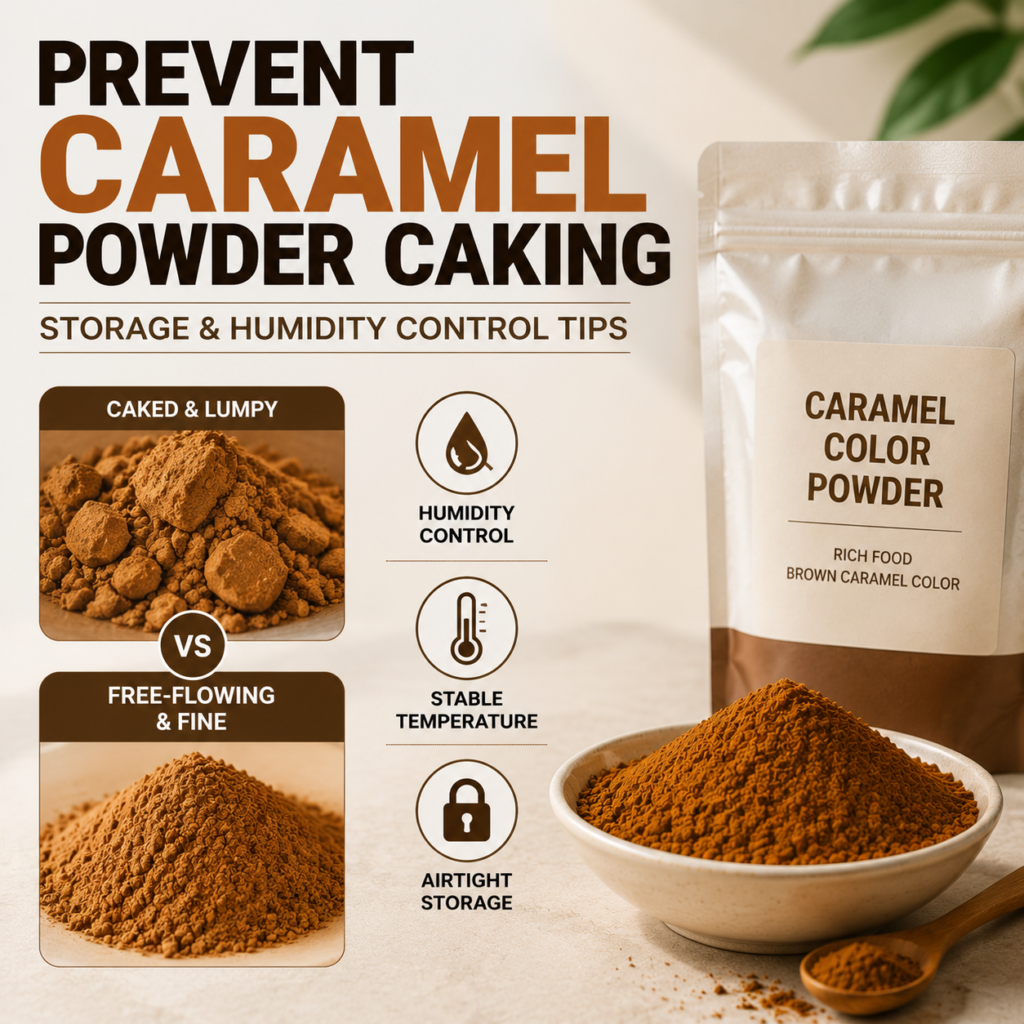
The first step to learning how to prevent caramel powder caking is to explore the reasons behind it. It’s not just a stroke of misfortune. It is a process that we can foresee and handle. When you finally understand these principles, you can fix your ingredients smartly.
The first step to preventing caking is creating the right storage area. Follow these four pillars. You will be able to extend your caramel color powder shelf life and usability significantly.
Pillar 1: Strong Humidity Control
This is the most crucial factor of all. You need to keep your caramel color powder dry. The goal is to store it in an area with a humidity level that is consistently below 60%.To achieve optimal long-term stability, it is recommended to maintain humidity levels of 40-50% relative humidity. Set aside a dedicated room for this storage area and install a dehumidifier, preferably a commercial type. Keep in mind that extra protection is needed, especially after the meal bag is opened. Try placing food-grade moisture-absorbing packets inside your airtight storage containers. These special packets will absorb any moisture that gets through.Pillar 2: Keep Temperature Cool and Steady
Excessive heat poses a threat to the stability of powders. Always store your caramel color powder in a cool location. Keep it below 25°C (77°F).The steadiness of temperature means a lot to the powder. Don’t keep powder around heat sources like ovens, compressors, or boilers. Also, keep it away from loading dock doors, walls that are not insulated, and areas with direct sunlight. Such locations often have fluctuating temperatures which favor caking substances.
Even with perfect storage, caking can happen during the minutes and hours when powder is being handled and used in production. These are the expert tips that focus on the necessary transition from storage to batching.
Even if you try your best, sometimes you might find powder that has clumped. Check the state of it and see what you can do to save what can be saved with the following methods.
For Minor Clumping
If you only find soft, minor lumps that break apart with gentle pressure, the powder is likely still usable.To measure first, you can sift through a fine-mesh sieve the required amount. This will dislodge the small clumps and return the powder to its original uniformly fine texture. Another way is to gently shake the container which is sealed. This method can sometimes break these soft clumps.For Hard Caking
If the powder has turned into hard solid blocks, saving it for use as powder becomes much more difficult. Trying to grind it can lead to equipment damages. This will result in a non-standard particle size which can impact its dissolution rate and color uniformity.As the final approach, you can attempt to crack a piece off the solid cake, then weigh it and dissolve in a known amount of extremely hot water. This then forms a concentrate that can be utilized. However, you should know this will not be the same application method and it might not suit every recipe.