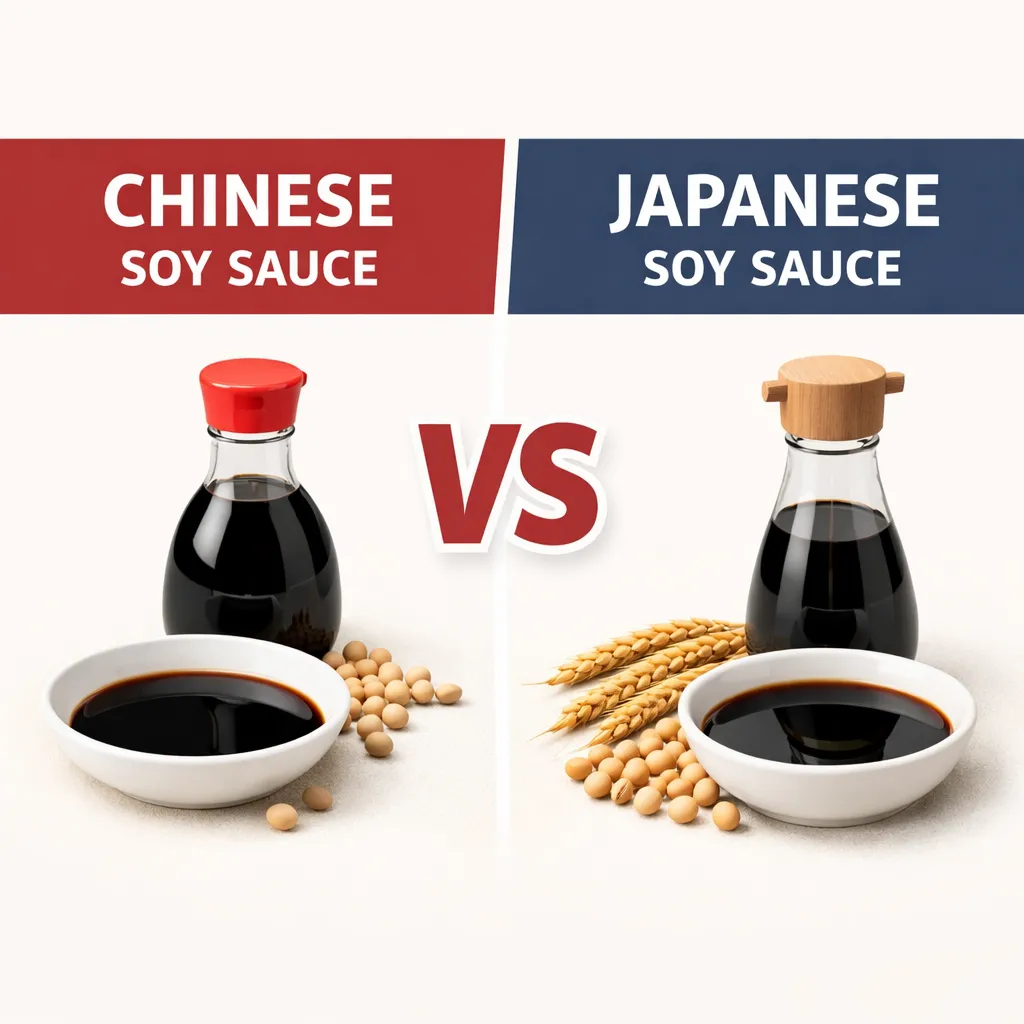
Knowing the academic aspect of things is good. But the genuine proof is to try it out in your kitchen. The following is an easy scenario-based guide for you to help you decide on a soy sauce to grab. This is the moment when your understanding of what makes Chinese and Japanese soy sauces different truly comes to fruition.
For a Fast Weekly Stir-Fry?
Go for light soy sauce from China. This has a savory power that will season the ingredients quickly. A small amount is usually enough if added at the end of cooking. You can also make it with Japanese koikuchi, but you may have to add a bit more than you would like to get the same level of saltiness. Also, it will make your dish a little bit sweeter.For a Rich, Slow-Cooked Stew?
Here you need to combine Chinese light soy sauce and Chinese dark soy sauce. The light soy sauce will provide salt and basic savory flavor. At the same time, the dark soy sauce will color the dish and give it the signature deep glossy color with a hint of malt. This classic duo is key for red-braising skills. The Japanese soy sauce cannot perform in that manner.For a Dipping Sauce for Sushi or Dumplings?
Japanese koikuchi is the standard that goes with sushi. Its balanced flavor and aromatic profile enhance the taste of the fish by not hiding it at all. For dumplings, either koikuchi or Chinese light soy sauce works very well. A popular Chinese dipping sauce such as light soy sauce, black vinegar, and a small amount of chili oil is often used.For a Clear Noodle Soup Broth?
Japanese usukuchi was literally made for this reason. It flavors the broth enough to make it good, while it does not add much salt and keeps the color light. Hence, the vegetables, noodles, and other additions can show their own colors. Light soy sauce from China is the second best option. Still, it will make the broth significantly darker.
In the end, the issue of Chinese vs Japanese soy sauce revolves not so much about which one is superior. Instead, they are totally different tools crafted for specific kitchen tasks. Getting to know what distinguishes Chinese from Japanese soy sauce is realizing which tool to fetch from your pantry. This enables you to get the absolute best result from your dish.We recommend that you hold two bottles at least to satisfy most of your cooking needs. A good-quality Chinese light soy sauce for proper, vigorous seasoning, and a Japanese all-purpose koikuchi for general use and dipping. Equipped with this knowledge, you can comfortably walk along the aisle of sauces. You can bring on the table with full respect and more delicious flavors to your kitchen in 2026.