A question I receive often is “Is soy sauce a natural source of MSG?” This, undoubtedly, is a query that comes from health-conscious consumers, chefs, and partners in restaurants, etc. The most straightforward answer is this: YES and NO.
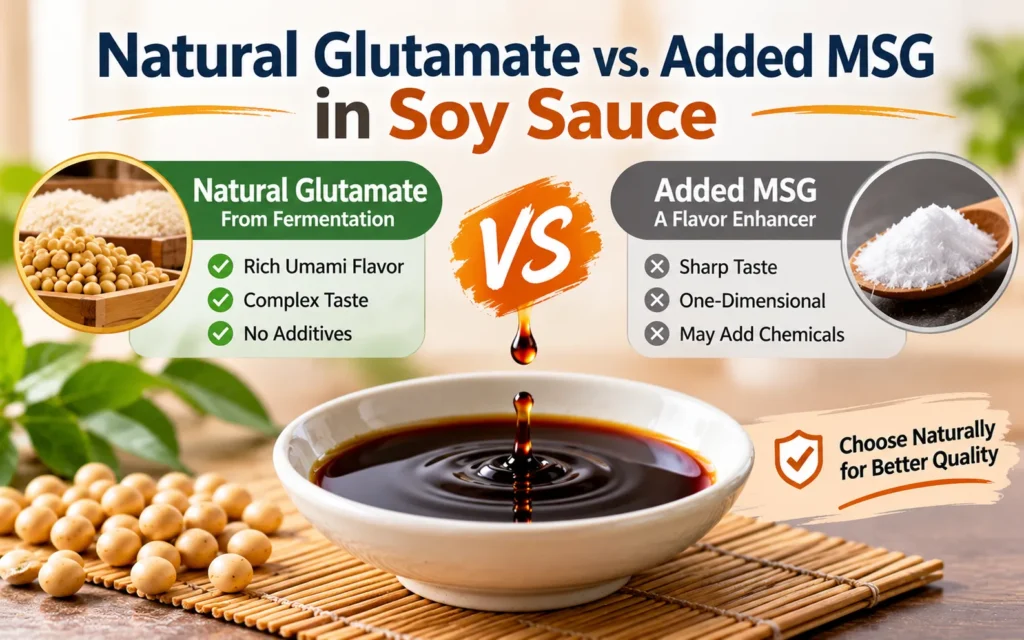
Quality soy sauces which are traditionally made are sources of natural glutamate. This comes from the fact that the soy sauce is made using fermentation and not as in the case of factory-made soy sauce, which has added MSG instead. The difference here is huge.
The natural glutamate is the one that basically creates the umami which is that deep and savory flavor you notice in many sushi and similar dishes. This is also the reason why there is a discernible taste in the shoyu that is of the real thing. If you care about flavor, quality, and clean ingredients, understanding the difference is essential. The purpose of this guide is to inform you about the process. You will not only acquire the skills but will also learn the right way of reading labels.
Understanding Umami
To talk about soy sauce, you need to explain umami first. It is the fifth main taste. Others are sweet, sour, salty, and bitter. The main thing behind this taste is glutamate.
What is Natural Glutamate?
Natural glutamate is an amino acid. These are the main parts of protein. It is prevalent in many of the foods that we usually take. When proteins in food break down, the glutamate is freed. It is a result of things like aging, cooking, or fermentation.
In real soy sauce, this happens naturally. Over months of fermentation, special cultures break down soybean proteins. A lot of the flavor compounds are generated through this slow process. Among them is natural glutamate.
Some of the natural foods that contain glutamate are:
* Tomatoes
* Old cheeses like Parmesan
* Mushrooms
* Fermented products like miso and soy sauce
What is MSG?
MSG or Monosodium Glutamate is the purified, concentrated sodium salt of glutamic acid. It is a very effective flavor producer synthesized in labs.
Companies add MSG to foods to quickly create a strong umami taste. This often makes up for low-quality ingredients or a shorter, less complex production method. While it adds a savory flavor, it lacks the depth of naturally developed umami.
Words of a Brewer on Flavor
We have spent more than 30 years in the condiment production business and we are aware that genuine taste is neither swift nor faked. The most important difference that we see between the naturally occurring glutamate and the one synthetically made is in the manufacturing process.
The “Zero-Additive Heritage Fermentation™” method that we utilize is in accordance with this principle. Non-GMO soybeans and wheat are the main ingredients that we use at the beginning. After that, we use the starter culture called koji. This is where the excitement begins.
The koji is a slow worker. It takes several months to decompose the soybean proteins and the wheat starches. We let them mature patiently in our spacious fermentation plants.
This natural process gives birth to more than just glutamate. It creates a plethora of different smell and flavor compounds. The result is soy sauce with a multifaceted and well-balanced taste. It has a rich umami flavor added with hints of subtle sweet, savory, and aromatic notes. This kind of flavor depth cannot be imitated by the addition of a single chemical like MSG.
We are known as a reliable supplier for our global partners. We offer OEM, private label, and wholesale services. We hold on to this process. Ours is a method that has been mastered through time and quality inputs. We do not take chemical shortcuts. This is the way to achieve the authentic taste found in traditionally brewed soy sauce. The products that we sell have great natural umami that enriches each and every dish.
A Practical Guide to Reading Labels
Your most potent weapon is the knowledge of what to look for on ingredient lists. It lets you see past marketing claims and understand exactly what’s in your soy sauce.
How to Spot Added MSG
The law states that “monosodium glutamate” should be labeled very clearly in the ingredient list. But instead, many companies use other products which contain high levels of processed free glutamate. They add the umami flavor without using the term “MSG.”
Learning how to spot it on labels is easy when you familiarize yourself with the alternative names. Look for these ingredients. They are often a sign of a product that is of inferior quality and has been chemically enhanced:
* Hydrolyzed Soy/Vegetable/Corn Protein
* Autolyzed Yeast or Yeast Extract
* Protein Isolate
* Textured Protein
* “Natural Flavors” (this term can sometimes hide ingredients with processed free glutamate)
Soy Sauce Labels Side By Side
It’s easy to see the difference between a label with no additives and one that has. Here is an easy and clear illustration to help you understand which one to choose for a better quality product.
| Clean Label (e.g., Qianhe Zero Additive) | With Added MSG | With “Hidden” MSG |
|---|
| Ingredients: Water, Non-GMO Soybeans, Wheat, Salt. | Ingredients: Water, Soybeans, Salt, Wheat Flour, Monosodium Glutamate, Caramel Color, Sodium Benzoate (Preservative). | Ingredients: Water, Soybeans, Salt, Sugar, Yeast Extract, Hydrolyzed Soy Protein, Disodium Inosinate, Disodium Guanylate. |
The first column shows how simple a traditional product is. The fact that it has only a few ingredients suggests that it has undergone a completely natural process. The other columns depict products that use additives for flavor, color, and preservation. For more Tips for Choosing MSG-Free Soy Sauce, always focus on a simple, recognizable ingredient list.
Choosing a Quality Soy Sauce
Now that you have learned how to identify the quality, it is a piece of cake to choose naturally brewed soy sauce with a premium quality.
To begin with, the main thing is to look for a short ingredient list that is as simple as possible. A shorter list of ingredients is a good hint that the production process is traditional. “Naturally Brewed” or “Traditionally Fermented” are the kind of terms that indicate this.
Secondly, find the evidence of quality. Certifications are a form of trust. We were awarded China’s first Level 0 Clean Label Certification, and we are aware of the significance this has. This particular standard is the highest level available. It signifies no artificial additives. Furthermore, other labels such as HACCP, BSCI, and HALAL also indicate a firm’s dedication to safe and quality standards.
Distributors, retailers, and foodservice partners require steady suppliers of genuine, zero-additive condiments. Finding the right manufacturer who has a proven track record is essential. Our Special Soy Sauce Manufacturer | Authentic Chinese Soy Sauce Wholesale range is crafted using these exact principles. We promise authentic taste with no compromise to our worldwide client base.
FAQ: Your Questions Answered
1. Is the natural glutamate in soy sauce the same as added MSG?
Chemically, the glutamate molecule is the same. But their effects on flavor are in stark contrast. In traditional soy sauce, glutamate exists together with hundreds of other natural compounds, which makes a rich and proper taste. On the contrary, added MSG is an isolated, concentrated chemical. Consequently, it creates a sharp, one-dimensional savory flavor.
2. If a label states “No Added MSG,” does it mean that there is no free glutamate at all?
Not totally. The statement only means that the company did not add pure, powdered MSG. However, the product may still include ingredients such as “yeast extract” or “hydrolyzed soy protein,” which are sources of processed free glutamate. Therefore, checking the full ingredient list is critical. It enables you to know if the soy sauce is made of these forms of MSG.
3. Does “organic” soy sauce contain MSG?
Organic soy sauce must not have any synthetic MSG added to it. But because it is a fermented product, it will always have naturally occurring glutamate. This byproduct of the fermentation of the organic soybeans is called glutamate. The point is that this glutamate is formed by nature. It’s not added as a chemical.
4. What makes traditionally brewed soy sauce taste better?
The real brewing method is what makes the product a symphony of different flavors. The long duration of fermentation brings about a complex profile. The end result is a product that is savory, slightly sweet, and aromatic. Soy sauce with added MSG often tastes too salty. It could also have a harsh and long aftertaste. The flavor is imbalanced compared to a naturally brewed product.
5. As a food business, why should I choose a soy sauce without added MSG?
In 2026, consumers are more informed than ever. Offering products with clean labels meets the growing demand for transparency and natural ingredients. Such a step not only signifies your commitment to quality but also elevates your brand. It may be possible to justify a premium price by this method. Moreover, it enhances the final taste of your dishes or products. The choice to do this is what builds trust with your clientele.