Soy sauce is one of the key flavor components in a food product, and not all types of soy sauce are the same, as you are already aware. The choice of the type of soy sauce—between concentrated, compound, and standard—can significantly change the taste profile, cost, and product branding
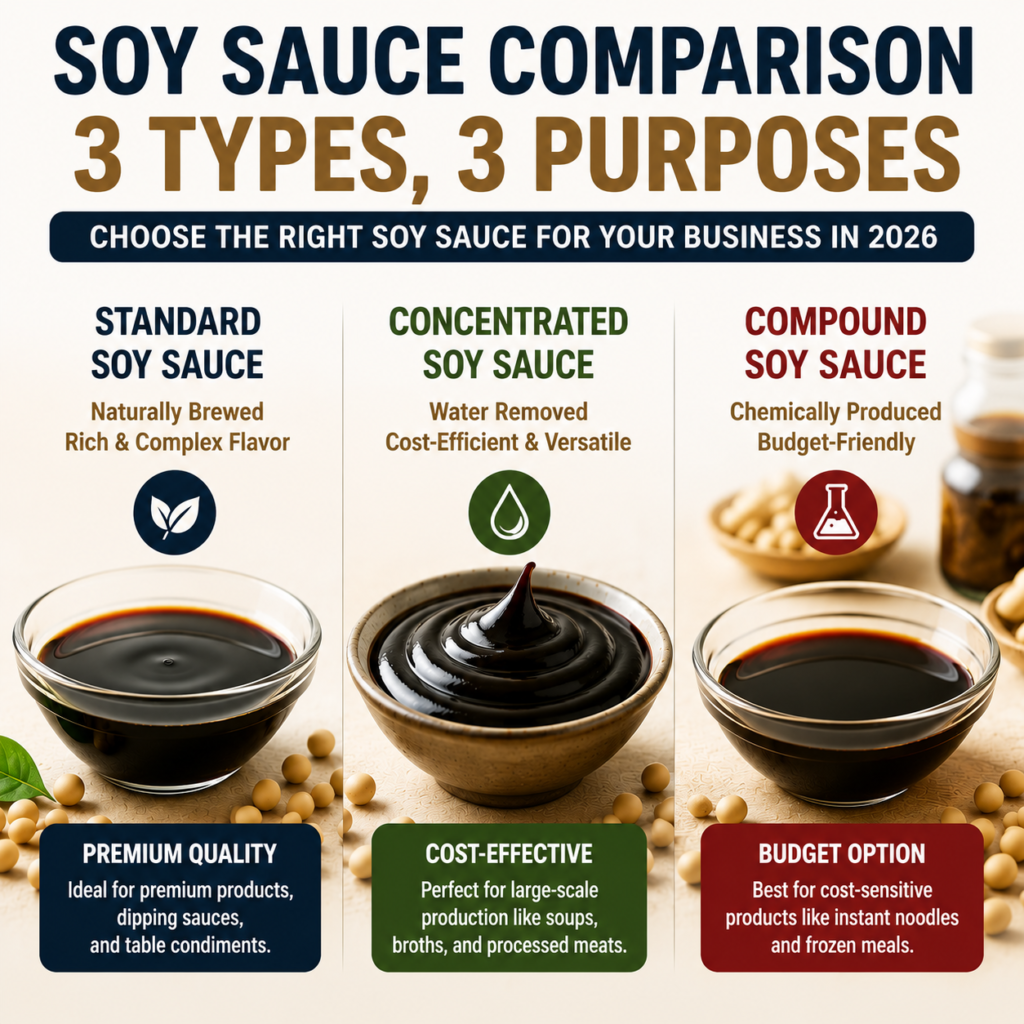
The selection of the soy sauce is a key decision. It has to taste good, be inexpensive, and suit your application. Each type is assigned a different function in the food industry. Understanding this comparison of concentrated soy sauce vs. compound soy sauce vs. standard soy sauce is crucial for product developers and buyers.To assist you in making your choice, here is a simple summary:
To make a smart decision, you must first understand what each type of soy sauce is. How they are made directly affects their flavor, cost, and how they work in a recipe.
Standard (Brewed) Soy Sauce
Standard soy sauce is the product of a natural fermentation process. It is composed of soybeans, wheat, salt, and water. This method of brewing can take up to several months. It is in the process where its deep and complex flavors are developed. An excellent example of this is the traditional “High-Salt Dilute Authenticity Brew™” method. This unique way of brewing creates a rich umami and aromatic profile that sets the gold standard for quality.Concentrated Soy Sauce
Concentrated soy sauce starts as standard soy sauce. Through a process of evaporation, the majority of water is taken out. The end product is an extremely thick and salty paste that should not be consumed directly. Concentrated soy sauce is meant for efficiency. It is cheaper to ship and store. Food makers can dilute it back to a liquid for use in their products.Compound (Blended) Soy Sauce
Compound soy sauce is made very differently. This type usually contains acid-hydrolyzed vegetable protein, a fast and low-cost chemical process. Soy proteins are broken down in a matter of hours, not months. As a [Chemical and Sensory Characteristics of Soy Sauce: A Review] explains, this method is much quicker than traditional brewing. The resulting liquid is then mostly mixed with caramel color, corn syrup, and other flavor additives. This mimics the brewed soy sauce appearance and flavor.
The main contrast among these three soy sauces is the flavor. As a food developer, you understand that the final taste of your product goes back to the quality of your raw ingredients. A detailed comparison of the flavor in concentrated soy sauce vs. compound soy sauce vs. standard soy sauce shows clear differences.
The Rich Complexity of Standard Brewed Soy Sauce
When you taste a premium quality standard brewed soy sauce, you feel a balanced wave of flavor. It starts with a rich and deep savory umami. Next to this is a light, malty sweetness and a refreshing finish. The aroma is complex and very inviting. This multidimensional experience can be attributed to the long and natural fermentation period.The Muted but Potent Flavor of Concentrated Soy Sauce
Concentrated soy sauce, when tasted in its paste form, is very intense. The main flavor is a powerful salt and umami punch. The concentration process can reduce some of the delicate, volatile aromas found in the liquid soy sauce. Its flavor is not meant to be judged on its own. It is a potent flavor base, designed to be a building block in a larger recipe. When diluted, it forms a robust foundation of brewed soy sauce flavor.The One-Dimensional Profile of Compound Soy Sauce
A compound soy sauce generally has a harsh and one-dimensional character. The first taste is mostly a dominating saltiness. Compared to a brewed sauce, it lacks depth, sweetness, and complex aroma. In some cases, it might have a slightly bitter or chemical aftertaste. To make up for this, makers often add MSG, corn syrup, or other enhancers. This results in a more balanced taste. It is no surprise that [consumer and expert rankings often place traditionally brewed sauces] much higher for their superior taste and complexity.
A common error people make when comparing soy sauces is to consider just the price per liter. A true cost analysis should include the Total Cost of Ownership (TCO), also known as “cost-in-use.” This gives you a much more accurate picture of the financial impact on your production.
Unit Price vs. Cost-in-Use
A compound soy sauce might look like a good deal. It can be 50% cheaper per liter than a standard brewed sauce. However, a concentrated soy sauce may have a 1:4 dilution ratio. This means one part concentrate makes four parts finished soy sauce. This factor can significantly decrease the final cost-in-use. Thus, it is often more economical than even the cheapest compound sauce for high-volume usage, due to savings on shipping and storage.Hidden Costs: Additional Ingredients
The initial savings from a compound soy sauce can disappear quickly. Its flat, chemical taste means you may need to add other ingredients to make it taste good. This can include expensive flavor enhancers like yeast extracts or I+G (disodium inosinate and disodium guanylate). These additional expenses could easily outweigh the low initial cost of the compound sauce.Brand Equity and Quality Perception
There is also an intangible cost. By 2026, consumers are more aware than ever about the ingredients in the food they buy. The use of lower-quality components like “hydrolyzed vegetable protein” can seriously affect your brand’s reputation for quality. The taste difference is frequently apparent in the finished product, which can result in negative evaluations and lost sales. Investing in a quality brewed base is a sure way to protect your brand equity.
Ultimately, the debate of concentrated soy sauce vs. compound soy sauce vs. standard soy sauce is a matter of strategy. Your selection is a business decision that balances flavor profile, total cost-in-use, and your brand’s position in the market. While compound sauce offers the lowest initial price, standard brewed and concentrated soy sauces provide superior flavor and quality. This can protect your brand and satisfy customers.