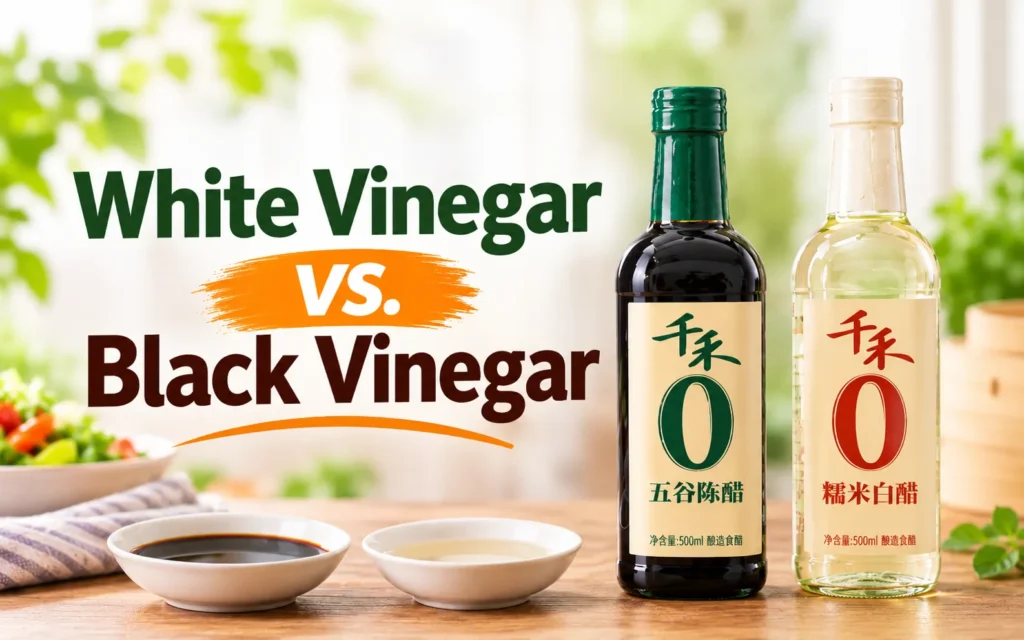
Have you ever noticed the different colors of vinegar on supermarket shelves? Some bottles contain clear, almost transparent vinegar, while others hold dark brown or nearly black vinegar. Have you ever wondered why they look so different? Is it simply the color, or does it reveal something about their ingredients, fermentation methods, and flavors?
In fact, clear white vinegar and black vinegar are two very different condiments. From the grains used in production to the fermentation and aging processes, each develops its own distinctive acidity, aroma, and flavor profile. Understanding these differences can help you choose the right vinegar for different dishes and bring out the best in your cooking.
What is white vinegar? The Clear, Crisp All-Purpose Acidifier
White vinegar is a staple in a variety of Asian dishes. With its clean and fresh taste, it is the ideal choice for creating brightness. It will never be too much for other foods.
Origins and Core Ingredients
This kind of vinegar is a product of fermented rice. Most white vinegar is made with white rice, which gives it a clear to pale yellow color. The basic ingredients promote the clean taste of the vinegar.
The Flavor and Acidity Profile
The taste of white vinegar is mild, slightly sweet, but clean. It is much gentler than Western vinegars like white vinegar. The acidity level is usually between 4% and 5%. It is mainly to contribute a sharp and clean tang to a dish. There is a good rule: pale vinegar is for acidity and black vinegar is for aroma. This helps you remember what each one does.
Seasoned vs. Unseasoned white vinegar
You need to be aware of the difference between seasoned and unseasoned white vinegar. Unseasoned white vinegar is actually just pure vinegar. Seasoned white vinegar is the one that contains sugar and salt added to it. Typically, it is applied to sushi rice. Simply check the label on the container to make sure you buy the right type for your dish.
What is black vinegar? The Aromatic, Complex Condiment
Black vinegar is different from white vinegar. It is a popular choice among fans due to its intense flavor and fragrant aroma. This condiment goes beyond merely providing acid to foods.
Diverse Origins and Richer Ingredients
Black vinegar is not at all similar to white vinegar. One of the basic ingredients is a combination of various grains. While sticky rice is the most common grain used, it is usually also combined with wheat, barley, sorghum, and millet. This mix of grains is the first step in creating the rich taste of black vinegar.
There are a few well-known types of black vinegar that come from different areas. Zhenjiang vinegar, also called Chinkiang, is the most popular among them. It has a good balance of malt flavor. Shanxi aged vinegar is another favorite one. This vinegar is characterized as being much smokier and stronger. You can learn more about different types in this guide: Let’s Talk about black vinegars.
The Deep, Malty, and Umami-Rich Flavor Profile
Black vinegar has an incredibly deep taste. It is malty, a bit sweet, smoky, and full of umami. Umami is the savory “fifth taste.” It is acidic but the sharpness is more gentle than the clear brightness of white vinegar. The rich scent is a key feature that adds another layer of flavor to dishes.
How Fermentation Defines the Final Flavor: A Manufacturer’s Perspective
The primary distinction between white vinegar and black vinegar is dictated by their respective production methods. The fermentation method is responsible for the distinct color, flavor, and aroma that each of them has.
The Science of Color and Complexity
Typically, white vinegars employ a quick liquid brewing process. This is an efficient method which allows the vinegar to retain its light color and clean, simple taste. It is made for consistency and speed.
Traditional black vinegar, on the other hand, is a lot more complicated, as it involves a solid brewing process. This means mixing grains with a starter culture called Qu. After that, they are allowed to ferment for a considerable time as a solid mass. This method and the mixture of grains produce the dark color and the malty flavor.
The Role of Aging in Developing Character
Aging is the most crucial stage to produce authentic black vinegar. After the first brewing, the vinegar is aged. This is often a process of months, if not years. The vinegar is stored in large clay pots. For our cellar-brewed vinegar, we use this traditional technique. The slower aging process allows gentle air contact. Flavors become richer and the acid is gentler. This is the same as how fine balsamic vinegar or wine gets better with time.
The Gold Standard: “Zero-Additive Heritage Fermentation”
Having spent more than 30 years in this field, we have achieved perfection in our Zero-Additive Heritage Fermentation technique. This traditional method is the purest form of our commitment to the authenticity of flavor. By carefully selecting grains, using only our natural starter culture, and giving it the time it needs, we let the vinegar develop its distinctive deep, rich taste.
This process guarantees you a clean product. We are not adding any caramel coloring, artificial flavors, or preservatives to it. Thanks to our commitment to this purity, we have been the first company in China to receive a Level 0 Clean Label Certification, which is the highest standard for no fake additives. This is the benchmark that our global OEM, private label, and wholesale partners can rely on.
White vinegar vs. black vinegar: head-to-head comparison
The table below presents a concise overview of the major distinctions between white vinegar and black vinegar.
| Feature | white vinegar | black vinegar |
|---|
| Color | Clear to pale yellow | Dark brown to inky black |
| Primary Grains | White Rice | Glutinous Rice, Wheat, Millet, Sorghum |
| Taste Profile | Mild, clean, subtly sweet, sharp acidity | Complex, malty, smoky, umami, mellow acidity |
| Aroma | Neutral, clean | Fragrant, malty, aromatic |
| Acidity Level | Approx. 4-5% (Sharp) | Approx. 5-6% (Mellow) |
| Production | Typically faster, liquid fermentation | Slower solid-state fermentation & aging |
| Primary Role | To add brightness and acidity | To add aroma, depth, and umami |
A Culinary Guide: When to Use White Vinegar vs. Black Vinegar
Knowing the difference between these vinegars is one thing. To enhance your cooking, you need to know how to use them. As producers who supply global food partners, we know exactly how chefs use these vinegars for exact results. Here is our practical guide.
Reach for white vinegar. When You Need…
…Clean Acidity & Brightness.
White vinegar is your best choice when you want to add a clean tang. It won’t change the color or flavor of your dish. Its neutral character makes it perfect for delicate uses.
- Examples: Use it for pickling vegetables like cucumbers and carrots. Make light dressings for salads. Season sushi rice. Use in sweet and sour sauces where you want bright taste and light color.
- Why it works: Its mild profile adds acid without fighting other ingredients.
Reach for black vinegar. When You Need…
…Depth, aroma, and Umami.
Black vinegar is used when you want to add deep, savory, and aromatic flavor to a dish. It is a flavor booster, not just an acid maker.
- Examples: It is essential for dumpling dipping sauces. Use in braised meats like Shanghai-style ribs. Flavor hearty soups. Use as a finishing drizzle over noodles to add fragrant smell.
- Why it works: Its rich, malty flavor adds savory depth that no other vinegar can give.
Can They Be Used Together?
Yes, absolutely. A lot of complicated sauces incorporate both vinegars. This is particularly the case in Sichuan cuisine. Blending them results in the ideal equilibrium. You get bright acidity from white vinegar and deep, scented umami from black vinegar. This kind of flavor layering exemplifies expert Chinese cooking.
Finding the Right Substitute: What to Do in a Pinch
What if you lack one of these vinegars? Using the specific ingredient is always best. However, if you find yourself in a pinch, here are some convincing alternatives.
Best substitutes for white vinegar
The primary function of white vinegar is to provide a soft kind of acidity. So, it is rather straightforward to swap.
- Best: Apple cider vinegar is a perfect pick. It is a little fruitier, so you might want to use a bit less of it. White wine vinegar is also perfectly fine.
- In a pinch: If you need to, you could use lemon or lime juice to get the required acidity. But it will impart a citrus flavor to your dish.
Best substitutes for black vinegar
This is far more complicated due to its unusual and rich flavor. You can’t find a single ingredient that could be the right substitute.
- Best DIY Blend: The best alternative is a combination of different ingredients. Use balsamic vinegar for a hint of aged sweetness and body. A very small amount of soy sauce is enough to give a touch of umami and salt.
- Other options: You might want to consider adding Worcestershire sauce, which can provide a few of the savory, tangy notes. However, it has a totally different taste. For more ideas, you can consult this list of Black Vinegar Substitutes.
Frequently Asked Questions (FAQ)
Is black vinegar the same as balsamic vinegar?
No, not at all. While they are both dark, aged vinegars, they are distinct from each other. The main ingredient in balsamic vinegar is grapes, which gives it a sweet and fruity flavor. In contrast, black vinegar is derived from grains, making it taste malty, savory, and smoky.
Can I use white vinegar for pickling?
Yes, it is possible. Using unseasoned white vinegar that has acid levels of at least 4% is the right way to make light and crispy pickles. Please note that seasoned white vinegar should not be used when making pickles, as its added sugar and lower acid will not effectively preserve food.
Is black vinegar gluten-free?
The answer is typically no. Most of the traditionally brewed black vinegars are made from a grain mixture that includes both wheat and barley. If you are allergic to gluten or have celiac disease, it is essential to check the ingredients list carefully. You can look for a product that is made with only rice or that is certified gluten-free.
How should I store my vinegars?
Both white vinegar and black vinegar are very stable. These products are best kept in a pantry or a dark, cool location. Make sure the cap is sealed tightly. There is no need for these products to be refrigerated.
What does a high-quality, traditionally brewed vinegar look like on a label?
Look for a list of simple and clear ingredients. A quality product should not have any artificial additives, caramel color, or flavor boosters. Certifications like our Level 0 Clean Label are an excellent indicator of purity. A black vinegar label might also provide information about the aging period and the particular grains used in the process.
The Final Takeaway: Two Essential Tools for Your Pantry
The discussion of white vinegar vs black vinegar is not about which one is the best. It is more about recognizing their different roles. white vinegar provides a bright, clean acidity. black vinegar, on the other hand, is characterized by its deep, aromatic umami.
The key to using them effectively is to know when to choose each one. Your cooking becomes more excellent as a result of this. Opt for vinegar varieties that are of high quality and naturally fermented. This opens the door to a vast treasure of authentic and tasty flavors for all your cooking ventures in 2026 and later.