In the world of modern food production and culinary innovation, ingredients that deliver convenience, flavor, and stability are in high demand. Two such ingredients—soy sauce powder and compound seasoning powder—often appear in similar settings, leading to the common question: are they the same?
The short answer is no. While both are dry seasoning formats used to enhance flavor, they differ in composition, usage, and functionality. Let’s explore how.
What Is Soy Sauce Powder?
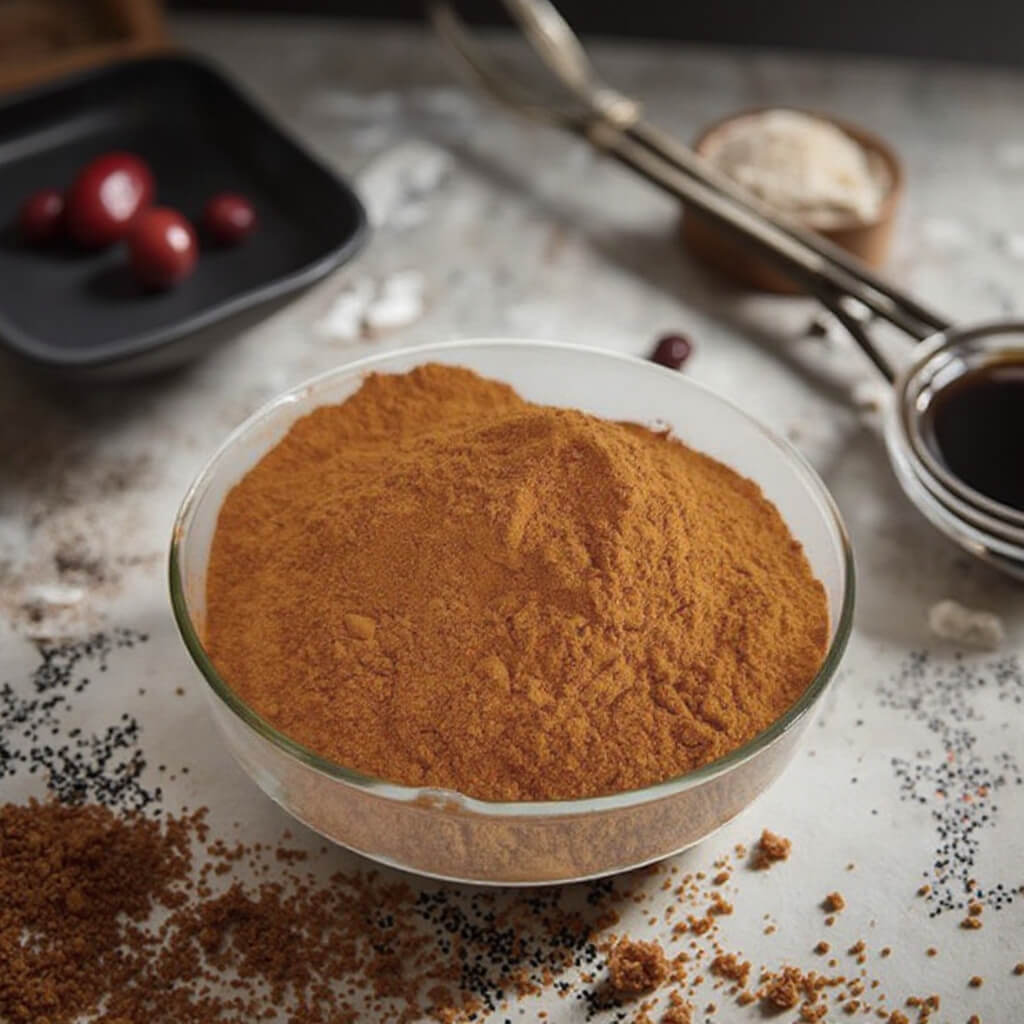
It is made by spray-drying fermented soy sauce—often brewed from non-GMO soybeans and wheat—into a fine, highly soluble powder. The result is a shelf-stable product that retains the signature umami richness of liquid soy sauce, while offering longer storage, easier transport, and flexible application.
What Is Compound Seasoning Powder?
Compound seasoning powder is a blend of multiple flavoring agents, including salt, MSG, spices, and sometimes even soy sauce powder itself. It is designed to provide a complete seasoning solution with layered flavors—savory, sweet, spicy, or umami—depending on the application.
Ingredient Comparison
| Ingredient | Soy Sauce Powder | Compound Seasoning Powder |
| Fermented soy (non-GMO, 3–6 months) | ✔Qianhe uses Heilongjiang beans | Depends on brand (often present) |
| Wheat (for fermentation enzymes) | ✔ | Depends on brand (often present) |
| salt | ✔ | ✔ |
| Maltodextrin (carrier for drying) | ✔ | ✔ Often included |
| MSG | ✘ | ✔ Frequently used |
| Spices (garlic, onion, chili, etc.) | ✘ | ✔ |
| sugar | ✘ | ✔ |
| Preservatives(e.g., benzoates) | ✘ | ✘ Depends on brand (often present) |
| Colorants (e.g., caramel E150) | ✘ | ✘ Depends on brand (often present) |
| Additive-free formula | ✔ | ✘ Often contains flavor enhancers |
Note: Mixed seasoning powders may also contain soy sauce powder as one of their ingredients.

Flavor Characteristics
Soy Sauce Powder
- Umami-rich base: Derived from natural soy fermentation, soy sauce powder delivers a deep, mellow umami flavor.
- Clean-tasting: Free from additives like MSG or artificial enhancers, it’s ideal for clean-label formulations.
- Salt-forward but balanced: Offers the salinity of liquid soy sauce without the mess, making it easy to control in dry blends.
- High solubility: With Qianhe’s advanced spray-drying, it dissolves at over 99% efficiency—no lumps, no residue.
Compound Seasoning Powder
- Multi-layered taste: Often includes spicy, sweet, savory, and aromatic elements in one package.
- Bold impact: Typically stronger and more complex in flavor than single-ingredient powders.
- Additive-enhanced: Frequently relies on MSG or hydrolyzed proteins for an intensified savory hit.
Key Applications: Where Each Works Best
1. Food Processing Industry
Soy Sauce Powder:
- Extensively used in instant noodle sachets, puffed snacks, and ready-to-eat sauces.
- Supports brands in fulfilling consumer preferences for products without GMOs or artificial additives.
- Its dry format simplifies storage and mixing in automated production lines.
Compound Seasoning Powder:
- Commonly found in frozen dumpling fillings, instant hot pot bases, and pre-seasoned meats.
- Offers a one-stop flavor solution, reducing the need to measure multiple spices in factory settings.
- Ideal for mass-market snack and convenience food manufacturers.
2. Commercial Kitchens & Food Services
Soy Sauce Powder:
- Used by chefs to create customized dry rubs or sauces with a fermented soy base.
- Preferred in kitchens looking for clean-tasting umami without chemical additives.
- Excellent for high-turnover dishes such as stir-fry sauces and dry wok blends.
Compound Seasoning Powder:
- A go-to in canteens, buffet kitchens, and chain restaurants where speed and flavor consistency matter.
- Frequently applied in seasoning fries, skewers, and soups.
- Saves prep time and ensures each batch delivers the same taste.
3. Retail & Home Cooking
Soy Sauce Powder:
- It is favored by families because of its ease of use and simple and transparent ingredients.
- Suitable for marinades, soups, or a dash of umami in salads or fried rice.
- Consumers prefer simple packaging, which allows them to see the product status directly.
Compound Seasoning Powder:
- Found in retail spice mixes for hot pot, grilled meats, or stews.
- Ideal for home cooks looking for a complete, convenient solution.
- Often marketed under themes like “Korean BBQ” or “Spicy Sichuan Blend.”
Final Thoughts
While both soy sauce powder and compound seasoning powder play important roles in the food industry, they serve different needs. Soy sauce powder is a natural, single-ingredient seasoning that delivers rich umami flavor, making it ideal for formulations that prioritize clean labels and precise ingredient control. Compound seasoning powder, on the other hand, is a pre-blended mix that offers flavor complexity and cooking convenience across a wide range of dishes.
For businesses in food manufacturing or commercial catering looking to build high-quality, traceable recipes from the ground up, Qianhe soy sauce powder is an ideal foundation. Made from non-GMO soybeans with no added preservatives, it supports cleaner labels, longer shelf life, and superior solubility. With sample testing available and formula support included, it’s a trusted choice for those aiming to balance taste, safety, and efficiency in one.