Etiquetar el E150a, o caramelo natural, debería ser muy sencillo. Sin embargo, para muchas empresas de alimentos y bebidas, supone un gran problema. Además, al introducirse en nuevos países, algo que se aplica en un lugar puede provocar el rechazo del producto en otro. Estos frecuentes malentendidos sobre el etiquetado del E150a en los mercados globales son la causa de costosos problemas, retrasos y la insatisfacción de los clientes.
El tema principal que se aborda aquí es la disparidad global en las normas y regulaciones alimentarias. El consenso sobre la etiqueta E150a para cereales varía según el país. Esto se debe a algunas razones comunes.
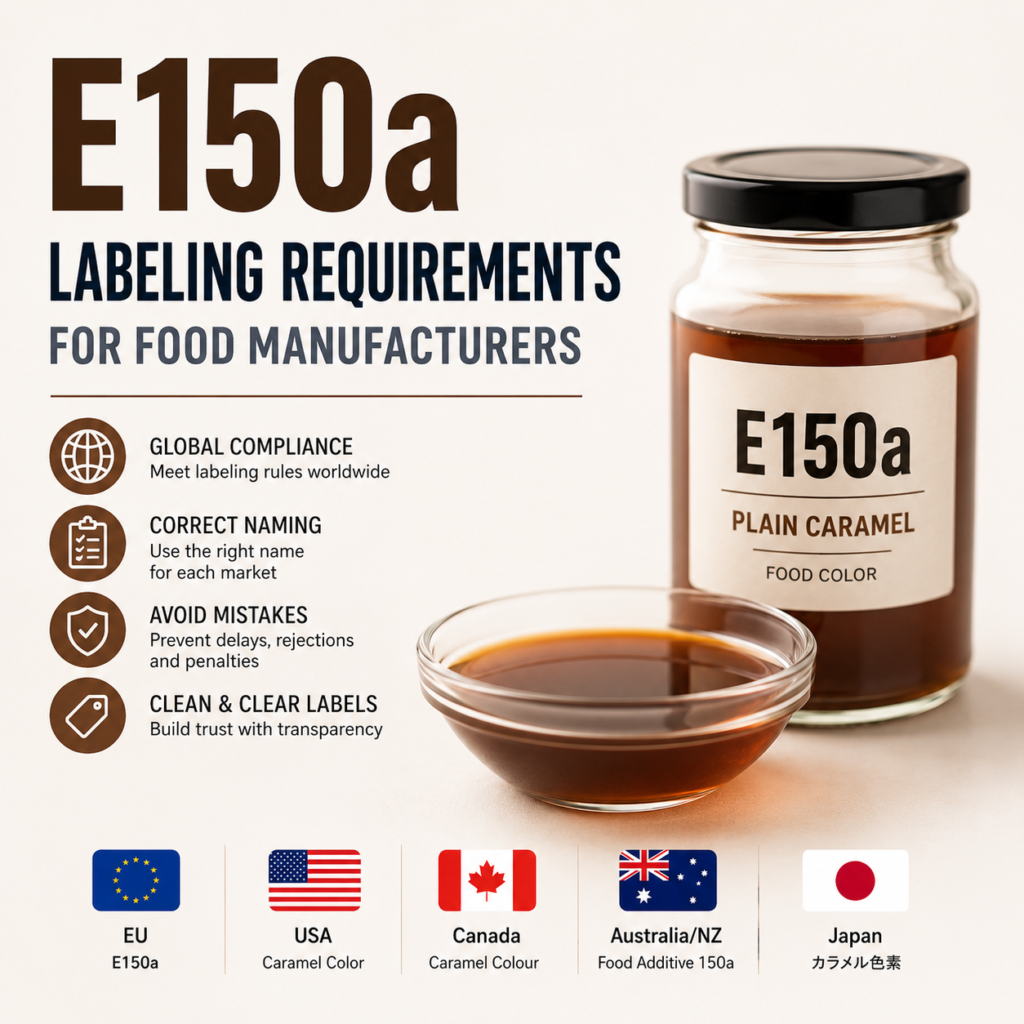
Sin duda, el nombre "correcto" puede variar según el lugar. Antes de finalizar el diseño de su empaque, siempre es recomendable consultar la normativa específica de su mercado objetivo.
Puede resultar tentador no etiquetar el E150a como "natural". Se produce calentando azúcares como el azúcar o el jarabe de maíz. Este proceso es bastante similar a la preparación casera de caramelos. Por lo tanto, el proceso de producción del E150a como colorante caramelo simple tiene un fuerte atractivo de "etiqueta limpia". Sin embargo, el término "natural" es una palabra legalmente delicada en las etiquetas de los alimentos. En muchos mercados importantes, incluyendo Estados Unidos, ninguna sustancia que haya sufrido un cambio químico puede denominarse legalmente "natural" en la lista de ingredientes. Esto se aplica incluso cuando el cambio se debe simplemente al calentamiento. Las leyes suelen ser muy estrictas y varían de un lugar a otro. Esta situación deja una importante lección para todos los fabricantes: el término "etiqueta limpia" no es sinónimo de "natural". Intentar usar la etiqueta "natural" puede acarrear problemas legales. Hay quienes podrían acusarlo de engañar a los consumidores. Una forma mucho más eficaz y clara es utilizar el vocabulario correcto y permitido. Pueden verlo como “Color caramelo (para dar color)” o simplemente “Color caramelo” en la lista de ingredientes. Esta inclusión de la sencillez del ingrediente es su mejor carta de presentación. No existen posibles litigios en este caso.
Con décadas de experiencia en el sector, hemos observado las mejores prácticas adoptadas por numerosos fabricantes de alimentos que buscan expandirse globalmente. Entre los problemas recurrentes, el etiquetado erróneo del E150a es el más frecuente. Contamos con una lista de verificación con los errores más importantes a tener en cuenta. Esto ayuda a prevenir malentendidos comunes sobre el etiquetado del E150a en los mercados globales.
En la UE: Ignorar las reglas de cantidad (QUID)
En los países de la Unión Europea, puede ser obligatorio incluir los porcentajes en la lista de ingredientes. Esto se aplica cuando se muestra un ingrediente en la parte frontal del envase. Por ejemplo, si la etiqueta destaca el "color marrón intenso", y este color se debe al E150, también deberá indicarse como "Color caramelo E150a (0.5 %)". Estas normas permiten a los fabricantes evitar confundir a los consumidores sobre la cantidad de cualquier ingrediente que incluyan en sus productos.En Norteamérica: Olvidar la información sobre alérgenos
Lo principal a tener en cuenta es que el E150a no es un alérgeno alimentario común. Sin embargo, la fuente de azúcar utilizada en su producción puede causar alergias. Si su colorante caramelo se produce a partir de trigo, está obligado a indicarlo. La Ley de Etiquetado de Alérgenos Alimentarios y Protección del Consumidor (FALCPA) de EE. UU. exige que la etiqueta indique «Colorante caramelo (contiene trigo)». Por lo tanto, conocer el origen de sus ingredientes es fundamental.