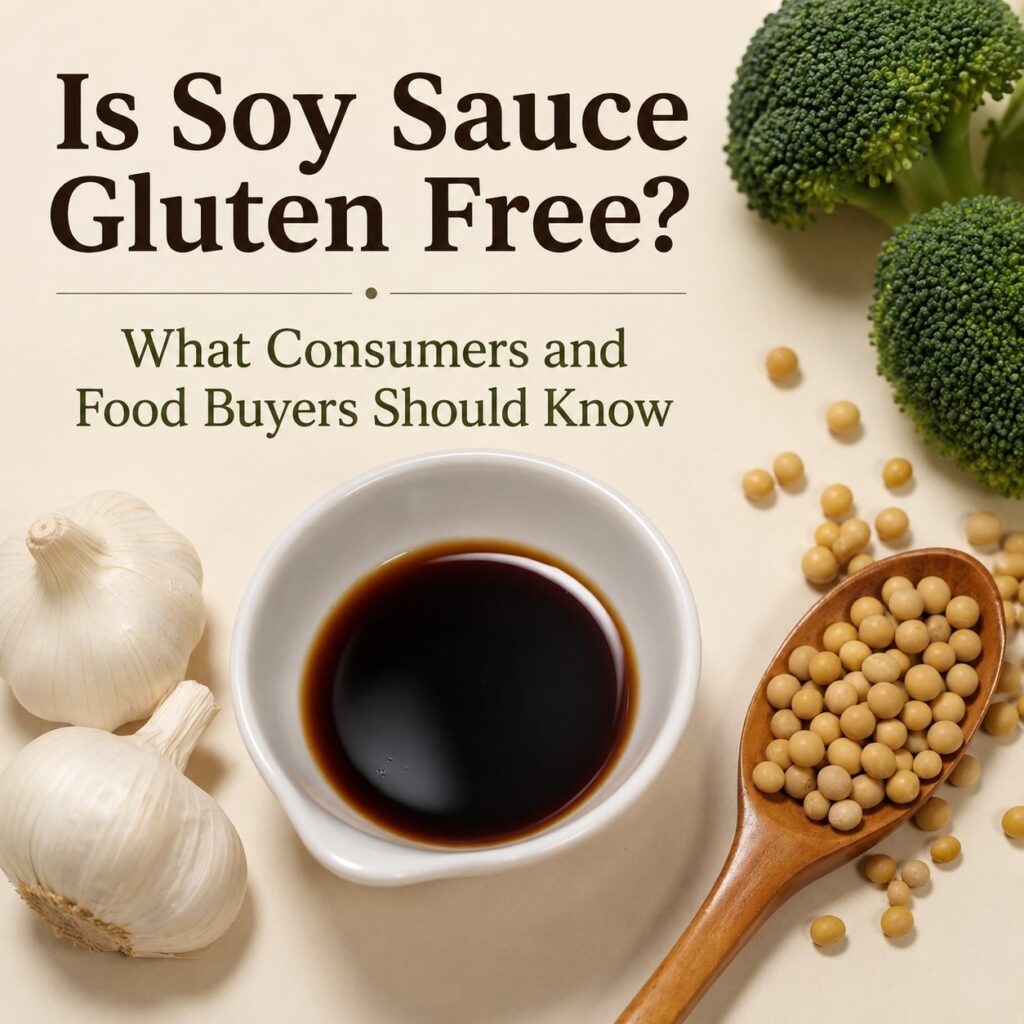
O molho de soja é isento de glúten? O que os consumidores e compradores de alimentos devem saber.
Trecho em destaque: A maioria dos molhos de soja tradicionais não é isenta de glúten, pois o trigo é comumente utilizado durante a fermentação. Opções sem glúten, como o tamari ou molhos de soja formulados especificamente para esse fim, estão disponíveis e geralmente são as preferidas por pessoas com doença celíaca ou sensibilidade ao glúten. Para compras em grande quantidade, é importante escolher um fornecedor que ofereça documentação e certificação claras sobre alérgenos.
Introdução
O molho de soja é um dos condimentos mais utilizados no mundo. De refogados e marinadas a sushi, molhos para mergulhar, refeições prontas e aplicações em serviços de alimentação, molho de soja fermentado naturalmente Desempenha um papel importante tanto na culinária caseira quanto na produção de alimentos.
Uma pergunta comum que as pessoas fazem é: O molho de soja é isento de glúten?
A resposta curta é: A maioria dos molhos de soja tradicionais não é isenta de glúten..
O molho de soja tradicional geralmente é produzido com trigo, o que significa que contém glúten. Isso é importante para pessoas com doença celíaca, sensibilidade ao glúten ou alergia ao trigo.
Para empresas como restaurantes, importadores, compradores de supermercados e fabricantes de alimentos, o teor de glúten também é importante para a rotulagem de alérgenos, conformidade do produto, confiança do consumidor e fornecimento de molho de soja sem glúten.
Neste guia, explicaremos:
- O molho de soja contém glúten?
- Por que o molho de soja tradicional geralmente inclui trigo?
- O tamari contém glúten?
- Como escolher molho de soja sem glúten
- O que os compradores em grande quantidade devem verificar antes de fazer compras
1. Do que é feito o molho de soja tradicional?
Molho de soja tradicional geralmente contém quatro ingredientes básicos:
Esses ingredientes são fermentados naturalmente ao longo do tempo para desenvolver o aroma, a cor, o sabor salgado e o umami característicos do molho de soja.
O trigo desempenha um papel importante em muitas receitas tradicionais de molho de soja. Ele ajuda a equilibrar o sabor, favorece a fermentação e contribui para o aroma final.
Como o trigo contém glúten, o molho de soja comum geralmente não é adequado para pessoas que precisam evitar o glúten.
2. Por que a maioria dos molhos de soja não é isenta de glúten?
O principal motivo é simples: O trigo contém glúten..
Na fabricação tradicional de cerveja, o trigo é misturado com soja durante a fermentação. Mesmo após um longo processo de fermentação, o glúten ainda pode permanecer no produto final.
Existem três preocupações comuns relacionadas ao glúten no molho de soja convencional.
Trigo na fórmula
A maioria dos molhos de soja comuns utiliza trigo como parte do processo de fabricação.
Isso pode incluir:
Risco de contágio cruzado
Mesmo quando uma fórmula não inclui trigo intencionalmente, linhas de produção ou equipamentos compartilhados podem causar contaminação cruzada se o controle de alérgenos não for gerenciado adequadamente.
Ingredientes Adicionados
Alguns molhos de soja compostos ou molhos temperados podem conter aditivos à base de trigo, espessantes, realçadores de sabor ou ingredientes derivados do malte.
Devido a esses fatores, pessoas com as seguintes condições devem ter cuidado ao escolher molho de soja:
- Doença celíaca
- Sensibilidade ao glúten
- Alergia ao trigo
3. Todo molho de soja contém glúten?
Não. Nem todo molho de soja contém glúten.
Os produtos à base de molho de soja geralmente se enquadram em duas categorias principais.
Molho de soja regular
A maioria dos molhos de soja comuns contém trigo e não é isenta de glúten.
Este é o tipo mais comum usado no dia a dia na culinária, em restaurantes e na indústria alimentícia.
Molho de soja sem glúten
As alternativas sem glúten são feitas sem trigo ou com formulações especialmente controladas.
As opções comuns incluem:
- Tamari sem glúten
- Molho de soja fermentado sem trigo
- Molho de soja certificado sem glúten
- Aminoácidos de coco
Para pessoas que precisam evitar o glúten, a abordagem mais segura é escolher um produto que seja claramente rotulado ou certificado como livre de glúten.
4. O molho de soja Tamari é isento de glúten?
O molho tamari costuma ser isento de glúten, mas nem sempre.
O tamari tem origem no Japão e é tradicionalmente feito com pouco ou nenhum trigo. Comparado ao molho de soja comum, o tamari geralmente contém:
- Um sabor umami mais rico
- Menos doçura
- Uma cor mais escura
- Um acabamento mais suave
Isso o torna popular por:
- Sushi
- Sashimi
- Molhos para mergulhar
- Marinadas premium
- Cozinha sem glúten
No entanto, nem todos os produtos à base de tamari são isentos de trigo. Alguns molhos do tipo tamari podem conter trigo ou ser produzidos em instalações que processam trigo.
Antes de comprar tamari, verifique:
- Selo certificado sem glúten
- Declaração de ausência de trigo
- Lista de ingredientes
- Declaração de alérgenos
- Informações sobre testes de terceiros
Tamari vs Molho de Soja Comum
| item | Molho de soja regular | Tamari |
|---|
| Trigo | Geralmente contém trigo | Geralmente pouco ou nada. |
| Sem glúten | Normalmente não | Muitas vezes sim |
| Sabor | Equilibrado e salgado | Umami mais intenso |
| Cor | Brown | Marrom escuro |
| Uso comum | Cozinha geral | Molhos, sushi, culinária sem glúten |
5. O molho de soja Kikkoman é isento de glúten?
O molho de soja Kikkoman tradicional contém trigo e não é isento de glúten.
No entanto, a Kikkoman também oferece produtos de tamari sem glúten, feitos especificamente para consumidores com sensibilidade ao glúten.
O ponto principal é simples:
- Molho de soja Kikkoman tradicional: não é isento de glúten
- Tamari sem glúten da Kikkoman: sem glúten
Sempre verifique o rótulo do produto em vez de confiar apenas na marca. Linhas de produtos diferentes da mesma marca podem ter fórmulas diferentes.
6. O molho de soja La Choy é isento de glúten?
As fórmulas dos produtos podem variar de acordo com o país, o mercado e a linha de produtos.
Para La Choy ou qualquer outra marca de molho de soja, sempre verifique:
- Lista de ingredientes
- Declaração de alérgenos
- Rótulo sem glúten
- Informação de certificação
Não presuma que todos os produtos da mesma marca seguem a mesma fórmula. Se evitar o glúten for importante, o rótulo do produto e a declaração de alergénios devem ser a sua primeira referência.
7. Como escolher molho de soja sem glúten
A escolha do molho de soja sem glúten depende se você está comprando para uso pessoal ou comercial.
Para os consumidores
Procure três coisas.
Ingredientes
Evite produtos que contenham:
- Trigo
- Cevada
- malte
- Aditivos à base de trigo
Etiqueta de embalagem
Procure por afirmações claras, como:
- Sem glúten
- Sem glúten certificado
- Sem Trigo
Transparência da marca
Marcas confiáveis fornecem informações claras sobre alérgenos e detalhes dos ingredientes. Se o rótulo não for claro, escolha outro produto ou entre em contato com o fabricante.
Para quem está comparando opções de condimentos mais saudáveis, também pode ser útil entender se O molho de soja é saudável., se O molho de soja é ácido., quanto sódio contém e se existem alternativas como molho de soja com baixo teor de sódio or molho de soja orgânico atender às suas necessidades.
8. O que os compradores em grande quantidade devem verificar
Para importadores, distribuidores, restaurantes e fabricantes de alimentos, as informações nos rótulos, por si só, não são suficientes.
Antes de comprar molho de soja sem glúten a granelÉ importante solicitar a documentação comprobatória ao fornecedor.
Os documentos principais podem incluir:
- Ficha de especificações dos ingredientes
- COA, ou Certificado de Análise
- Declaração de alérgenos
- Especificação do produto
- Certificações de segurança alimentar
- Documentação de exportação
As certificações comuns podem incluir:
Esses documentos auxiliam no cumprimento das normas, no desenvolvimento de produtos, no desembaraço aduaneiro e nos requisitos de rotulagem em diferentes mercados. Para compradores que planejam fornecimento a longo prazo, também pode ser útil revisá-los. atacado de produtos acabados opções e capacidades de serviço OEM.
9. Crescente demanda por molho de soja sem glúten
Com o aumento da demanda dos consumidores por alimentos sem alérgenos, mais marcas estão adicionando opções de condimentos sem glúten às suas linhas de produtos.
Essa tendência é especialmente visível em:
- América do Norte
- Europa
- Australia
- Sudeste da Ásia
Aplicações comuns incluem:
- Refeições prontas
- Marinadas
- molhos
- Temperos para lanches
- Embalagens para serviços de alimentação
- Condimentos de marca própria
Para temperos de aperitivos e aplicações de tempero seco, alguns fabricantes também podem comparar o molho de soja líquido com molho de soja em póPara marcas e distribuidores, oferecer molho de soja sem glúten pode ajudar a atender às mudanças nas preferências do consumidor e a fortalecer o posicionamento do produto.
Perguntas frequentes
O molho de soja é seguro para quem tem doença celíaca?
A maioria dos molhos de soja comuns não é adequada para pessoas com doença celíaca, pois geralmente contém trigo. Recomenda-se o uso de molho de soja certificado sem glúten ou tamari sem glúten.
A fermentação remove o glúten?
Não. A fermentação pode alterar algumas proteínas, mas não elimina o glúten de forma confiável. Se você precisa evitar o glúten, escolha um produto certificado sem glúten. Você também pode aprender mais sobre Fermentação, armazenamento e prazo de validade do molho de soja.
Qual é o melhor substituto sem glúten para o molho de soja?
O tamari é um dos substitutos mais comuns porque seu sabor é semelhante ao do molho de soja tradicional. O aminoácido de coco também pode ser usado, mas o sabor costuma ser mais adocicado e menos salgado.
O molho de soja escuro é isento de glúten?
Na maioria dos casos, o molho de soja escuro não é isento de glúten, pois geralmente contém trigo. Sempre verifique a lista de ingredientes e a declaração de alérgenos.
O molho de soja contém glutamato monossódico (MSG)?
Alguns produtos de molho de soja podem conter glutamatos naturais ou realçadores de sabor adicionados. Para mais detalhes, leia este guia sobre se o molho de soja contém glutamato monossódico (MSG)..
Os restaurantes podem oferecer molho de soja sem glúten?
Sim. Muitos restaurantes agora oferecem tamari sem glúten ou molho de soja certificado sem glúten como alternativa para clientes que evitam glúten.
Procurando molho de soja sem glúten a granel?
A Qianhe é uma fabricante de molho de soja fermentado naturalmente, com mais de 30 anos de experiência em produção, atendendo distribuidores, varejistas, restaurantes e fabricantes de alimentos em todo o mundo.
Qianhe fornece molho de soja sem glúten Fornecemos suporte com procedimentos de controle de alérgenos, capacidade de produção estável, serviço OEM e documentação de exportação para mercados globais.
Nossas soluções de molho de soja sem glúten incluem:
- Procedimentos específicos de controle de alérgenos para ajudar a reduzir o risco de contaminação cruzada.
- Capacidade de produção estável para fornecimento a longo prazo
- Diversas opções de embalagem para varejo e serviços de alimentação.
- Suporte OEM e de marca própria
- Documentação para exportação e certificações de segurança alimentar
As certificações disponíveis incluem:
Por que trabalhar com a Qianhe?
Os clientes escolhem Qianhe por:
- Mais de 30 anos de experiência em fabricação de cerveja natural
- Capacidade de produção estável e em grande escala
- Soluções flexíveis para OEM e marcas próprias
- Diversos formatos de embalagem para mercados globais
- Suporte internacional para exportação e conformidade
- Suporte personalizado para formulações que atendam às diferentes necessidades do mercado.
Para discutir especificações de ingredientes, embalagens, documentos de certificação ou requisitos de exportação, você pode contato Qianhe para obter mais informações.
Conclusão
então, O molho de soja não contém glúten?
Na maioria dos casos, não.
O molho de soja tradicional geralmente é produzido com trigo, o que significa que contém glúten.
Se você precisa de uma alternativa sem glúten, o tamari ou um molho de soja especialmente formulado sem trigo geralmente são opções melhores.
Para compradores comerciais, trabalhar com um fornecedor que ofereça documentação clara sobre alergénios e certificação de segurança alimentar pode tornar o processo de aquisição mais fácil e confiável.
Observação: As fórmulas dos produtos e os requisitos de alérgenos podem variar de acordo com o mercado. Sempre verifique o rótulo do produto, os documentos do fornecedor e os requisitos regulamentares locais antes de comprar.